

Walking into a nail salon (or scrolling through an online menu) can feel a little overwhelming. Classic, gel, dip, acrylic, BIAB…the list of types of manicures keeps growing. The good news? Every option exists because different nails, lifestyles, and budgets call for different solutions.
In this guide you’ll get clear definitions for each manicure type, a look at who it suits best, typical wear time, honest pros and cons, and tips for aftercare and safe removal. No hype, no hard sells—just the info you need so your next appointment (or at-home session) feels like a confident choice.
Before you pick: what’s included in a basic manicure
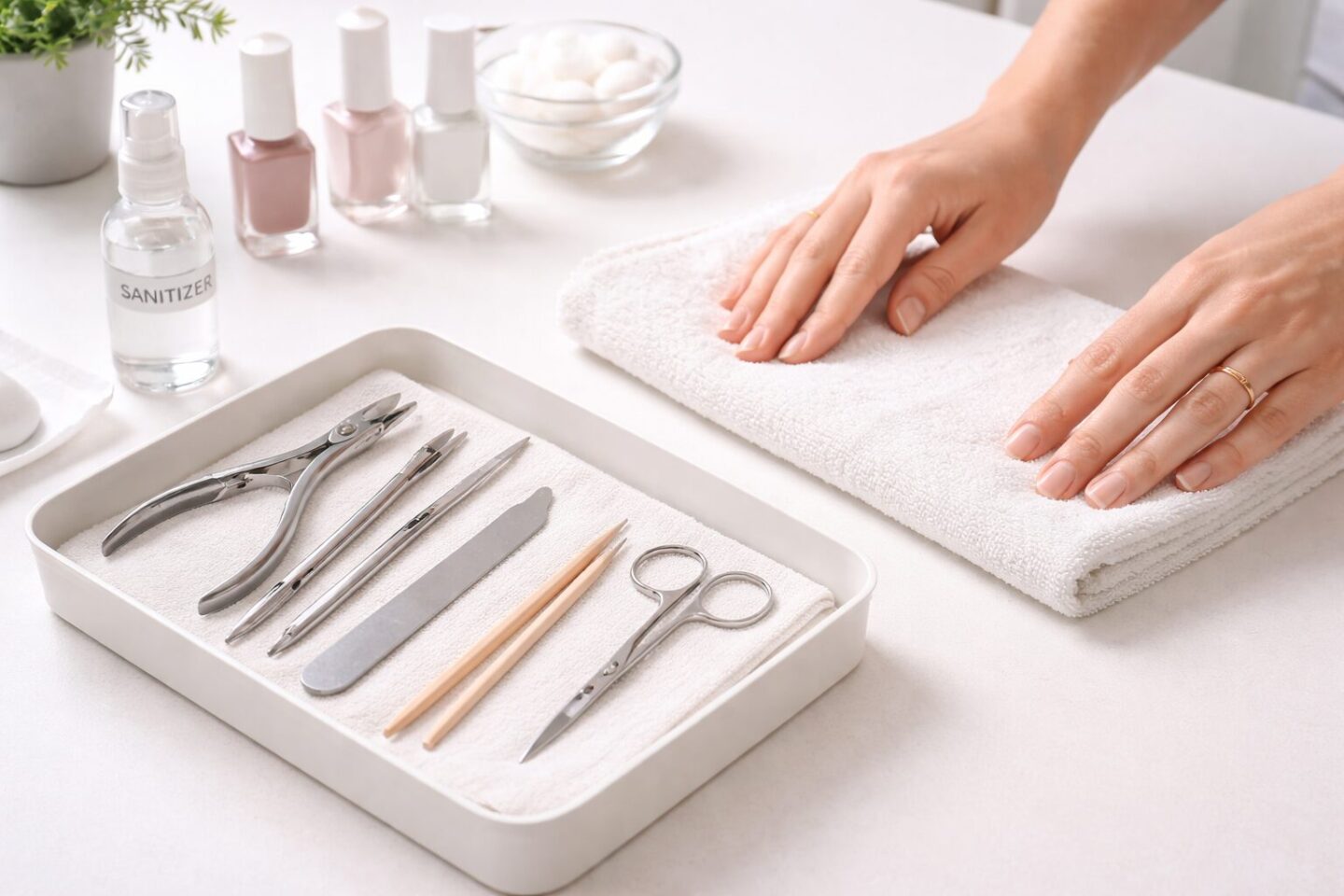
Almost every manicure starts with the same core steps. Your nails are shaped with a file, cuticles are gently pushed back (or softened with a remover), the nail surface may be lightly buffed, and a base coat, color, and top coat are applied. Many salons finish with cuticle oil and a hand massage.
What changes from type to type is the product that goes on your nails (regular lacquer vs. gel vs. powder), how it’s cured or dried (air-dry, UV or LED lamp, activator liquid), how long it typically lasts, and how it comes off. That’s really it—the foundation is the same; the finish is what makes each type unique.
The American Academy of Dermatology advises against cutting or forcefully pushing back cuticles, because the cuticle acts as a seal that helps protect the nail root from bacteria and infection. If cuticles are pushed back at all, dermatologists recommend doing so gently and only after the skin has been softened (source: AAD, aad.org). Keep this in mind when you’re in the chair—it’s okay to tell your technician you prefer a gentle touch.
Hygiene basics to watch for: tools should be sanitized between clients, buffers and nail files should ideally be single-use, and no live skin should be cut. A clean salon is a non-negotiable.
Types of manicures explained (with quick profiles)
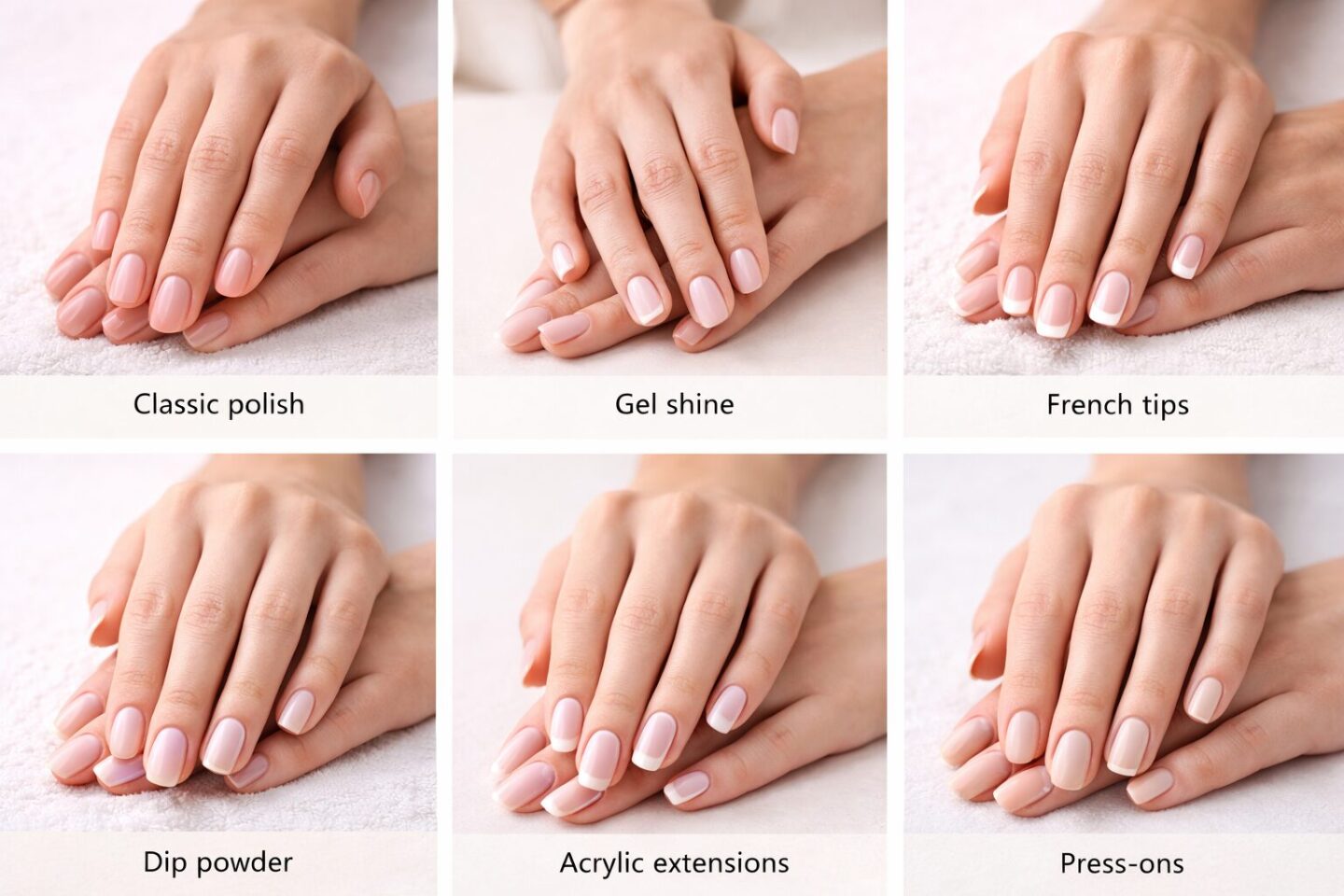
Below you’ll find a quick profile for each popular manicure type. Use the same format to compare apples to apples—then jump to the “How to Choose” section to narrow it down.
Classic polish manicure
What it is: The traditional manicure: shaping, cuticle care, a base coat, one or two coats of regular nail lacquer, and a top coat. It air-dries (no lamp needed).
Best for: Beginners, anyone who likes to switch colors often, and people who prefer a quick, budget-friendly appointment.
Typical wear time: About three to seven days before noticeable chipping, though this varies by product and daily activity.
- Pros: Widest color selection, quickest appointment, easy DIY at home.
- Gentle on nails—removal is a simple swipe of polish remover.
- Lowest cost of any salon manicure.
- Cons: Chips and wears faster than other types.
- Needs drying time—smudges are a real risk if you’re in a hurry.
Removal: Non-acetone or acetone polish remover at home.
Price tier: Low.
Gel manicure
What it is: A gel formula is brushed on like polish but cured (hardened) under a UV or LED lamp between coats. The result is a high-gloss, chip-resistant finish.
Best for: People who want long-wearing shine without extensions or added length.
Typical wear time: Roughly two to three weeks, depending on nail growth and daily wear.
- Pros: Dries instantly under the lamp—no smudge risk.
- High-shine finish that resists chips longer than regular polish.
- No added thickness, so nails feel natural.
- Cons: Removal involves soaking in acetone or filing, which can be drying if done improperly.
- UV/LED lamp exposure—the AAD recommends applying broad-spectrum SPF 30+ sunscreen to hands or wearing dark, opaque fingerless gloves before curing.
- Higher cost than classic polish.
Removal: Professional soak-off or gentle filing. Avoid peeling.
Price tier: Medium.
Soft gel extensions
What it is: Pre-shaped soft gel tips are adhered to the natural nail and cured under a lamp. They add length without the rigidity of acrylics.
Best for: Anyone who wants extra length with a lighter, more flexible feel.
Typical wear time: Two to three weeks on average.
- Pros: Lighter and more flexible than acrylic extensions.
- Natural-looking finish.
- Faster application than sculpted acrylics.
- Cons: May not hold up for very long nails or heavy-duty activities.
- Still requires lamp curing and professional removal.
Removal: Professional soak-off recommended.
Price tier: Medium to high.
Dip powder manicure
What it is: Your nails are coated with a bonding liquid, then dipped into a fine colored powder (or the powder is brushed on). An activator seals the layers. No lamp required.
Best for: People who want long wear and added strength without UV/LED curing.
Typical wear time: Roughly three to four weeks.
- Pros: Durable and long-lasting.
- No UV or LED lamp needed.
- Can feel lighter than acrylics.
- Cons: Removal requires filing and acetone soaking—patience is key.
- Communal dip jars in some salons raise hygiene questions; look for salons that pour or brush powder instead.
- Can be thick if over-applied.
Removal: File down the top layer, soak with acetone wraps. Professional removal recommended.
Price tier: Medium.
Acrylic manicure
What it is: A liquid monomer and powder polymer are mixed to form a paste that’s sculpted onto the nail (or a tip) and air-hardens into a strong, rigid extension.
Best for: Anyone who wants dramatic length, structural strength, or intricate nail art.
Typical wear time: Two to three weeks before a fill is needed; the set can last longer with regular maintenance.
- Pros: Very strong—great for length and elaborate shapes.
- Widely available at most salons.
- Long track record in the industry.
- Cons: Can feel heavy and rigid.
- Strong chemical odor during application; good ventilation matters.
- Improper removal (pulling or prying) can damage the natural nail.
Removal: Professional filing and acetone soak. Never pry them off.
Price tier: Medium to high.
Builder gel manicure
What it is: A thick, self-leveling gel applied in thin layers over the natural nail and cured under a lamp. It adds strength and a small amount of thickness without extensions.
Best for: People with thin, bendy, or peeling nails who want reinforcement while they grow their nails out.
Typical wear time: Two to four weeks.
- Pros: Strengthens and protects the natural nail.
- Flexible enough to move with the nail.
- Can be rebalanced or infilled.
- Cons: Requires a skilled technician for smooth, even application.
- Still needs lamp curing and careful removal.
Removal: Gentle filing or professional soak-off.
Price tier: Medium to high.
BIAB manicure (builder in a bottle)
What it is: A branded variation of builder gel that’s applied from a polish-style bottle. It acts as a base, color, and strengthener in one and is cured under a lamp.
Best for: Nail-health-focused clients who want gel-level wear with a strengthening benefit.
Typical wear time: Two to four weeks.
- Pros: Combines strength and color in one product.
- Thinner profile than traditional builder gel.
- Promotes natural nail growth underneath.
- Cons: Limited color range compared with regular gel.
- Not every salon carries it.
Removal: Professional soak-off or gentle e-file by a trained technician.
Price tier: Medium to high.
French manicure
What it is: A style, not a separate product: a sheer pink or nude base with crisp white tips. It can be done with classic polish, gel, dip, or acrylics.
Best for: Classic lovers, job interviews, weddings, and anyone who wants a polished, clean look.
Typical wear time: Depends on the base product used (see each type above).
- Pros: Timeless and universally flattering.
- Works on any nail length.
- Easy to modernize with colored tips or micro-French lines.
- Cons: Precise tip line can be tricky for DIY beginners.
- Grow-out shows faster than a single-color manicure.
Removal: Same as whichever base product is used.
Price tier: Varies (may cost a small add-on fee for the detail work).
American manicure
What it is: A softer cousin of the French: the tip color is off-white or cream instead of stark white, and the base is usually a warm nude. The line between base and tip is blended rather than sharp.
Best for: Anyone who likes the French concept but wants a more natural, blended finish.
Typical wear time: Same as the base product chosen.
- Pros: Looks ultra-natural.
- More forgiving as nails grow out.
- Subtle enough for conservative workplaces.
- Cons: Can look too understated for those who prefer bold nails.
- Fewer salons list it by name (you may need to describe it).
Removal: Same as the base product used.
Price tier: Similar to French.
Russian manicure (dry/e-file)
What it is: A cuticle-prep technique (not a polish type) that uses an electric file to carefully clean and remove excess skin around the nail before polish or gel is applied. Done dry—no soaking.
Best for: Those who want an extremely clean cuticle line and longer-lasting results at the nail edge.
Typical wear time: Depends on the polish or gel applied afterward.
- Pros: Very precise, clean look around the cuticle.
- Can extend the time before grow-out is noticeable.
- Pairs with any finish (gel, BIAB, classic, etc.).
- Cons: Requires a highly trained, experienced technician—improper e-file use can damage the nail or surrounding skin.
- Not regulated or widely available everywhere.
- Strict hygiene practices are essential; make sure the salon follows thorough sanitation protocols.
Removal: N/A (it’s a prep technique; removal depends on the product applied).
Price tier: Medium to high (often a premium add-on).
Note: This guide does not provide e-file technique instructions. If you’re interested, seek out a licensed, well-reviewed technician with specific Russian manicure training.
Paraffin manicure
What it is: A warm paraffin wax dip added to a standard manicure. Your hands are coated in melted wax, wrapped, and allowed to cool. The wax is peeled off before polish.
Best for: Dry skin, rough hands, or anyone who wants an extra-pampering experience.
Typical wear time: Same as the polish type applied afterward; the wax benefit is immediate and temporary.
- Pros: Deeply moisturizing and relaxing.
- Can soothe stiffness in hands and fingers.
- Great as a seasonal treat in cold, dry months.
- Cons: Added time and cost.
- Not suitable for people with heat sensitivity or certain skin conditions—ask your technician if you’re unsure.
Removal: The wax peels off during the service; polish removal follows the normal route.
Price tier: Medium (add-on).
Spa manicure
What it is: An extended version of a classic manicure that typically includes extras like a hand soak, exfoliating scrub, mask or serum, hot towel wrap, and an extended massage.
Best for: Self-care days, gift certificates, or anyone who wants a longer, more relaxing experience.
Typical wear time: Same as the polish type applied.
- Pros: Feels luxurious and pampering.
- Improves skin texture and hydration on hands.
- A nice option before a special event.
- Cons: Longest appointment time.
- Higher cost than a basic manicure.
Removal: Depends on the polish type chosen.
Price tier: Medium to high.
Press-on manicure
What it is: Pre-made nails (plastic, gel, or acrylic) applied with adhesive tabs or nail glue at home. Quality ranges from drugstore basics to handmade, salon-grade sets.
Best for: Budget-conscious nail lovers, commitment-phobes, travelers, and anyone who wants a quick style swap.
Typical wear time: A few days with adhesive tabs; up to one to two weeks with nail glue, depending on the brand and your routine.
- Pros: No salon needed—apply at home in minutes.
- Reusable sets available.
- Minimal commitment; easy to change looks.
- Cons: Can pop off with water exposure or heavy use.
- Fit can be hit-or-miss with very curved or flat nail beds.
- Glue removal still requires care to avoid roughing up the nail surface.
Removal: Soak in warm soapy water to loosen adhesive; gently slide off. Use a cuticle oil afterward.
Price tier: Low to medium.
Nail art manicure (as an add-on)
What it is: Not a standalone manicure type, but a creative add-on to any of the above. Includes hand-painted designs, stamping, foils, chrome powder, 3D charms, decals, and more.
Best for: Self-expression, special events, seasonal themes, or anyone who sees their nails as a canvas.
Typical wear time: Depends on the base manicure; elaborate art is best paired with gel or dip for durability.
- Pros: Completely customizable.
- Can elevate a simple manicure into a statement.
- Constantly evolving trends keep it fresh.
- Cons: Adds time and cost to the appointment.
- Intricate 3D art can snag on clothing or hair.
- Quality depends heavily on the technician’s skill.
Removal: Same as the base product.
Price tier: Varies widely (small accents may be free; full sets of art can be high).
How to choose the right manicure for your life

Your perfect manicure isn’t about what’s trending—it’s about what fits the way you actually live. Think of it like choosing shoes: stilettos are gorgeous, but they’re not what you’d wear to chase a toddler around a park.
Here are three lifestyle lanes to help you narrow it down.
Low-maintenance: You don’t want to think about your nails for weeks. Go with dip powder, builder gel, or BIAB. These options are durable, and grow-out tends to look more natural than gel or acrylics. Press-ons with adhesive tabs are also great if you only want polish for certain days.
Long-wear, chip-resistant: You need nails that can keep up with a busy schedule, lots of hand washing, or physical work. Gel, dip, and acrylics are your friends here. Pair any of them with cuticle oil and gloves for cleaning and you’ll get the most mileage.
Event-ready (photos and special occasions): You want your nails to look flawless for a specific date. Gel with nail art, soft gel extensions, or acrylics with a French or chrome finish will photograph beautifully. A spa manicure beforehand gives your hands an extra glow.
Quick decision checklist:
- How many weeks between salon visits are you comfortable with?
- Do you work with your hands a lot (cooking, cleaning, typing, gym)?
- What’s your budget comfort per visit?
- Are your natural nails strong, average, or on the brittle side?
- Do you want added length or just color and shine on your natural nails?
- Is UV lamp exposure a concern for you?
- How important is easy, at-home removal?
If you have brittle nails or sensitivities, mention that to your technician before the service. A patch test for new products is always a smart move if you’re prone to reactions, and good ventilation matters—especially with acrylics.
Aftercare that makes any manicure last longer
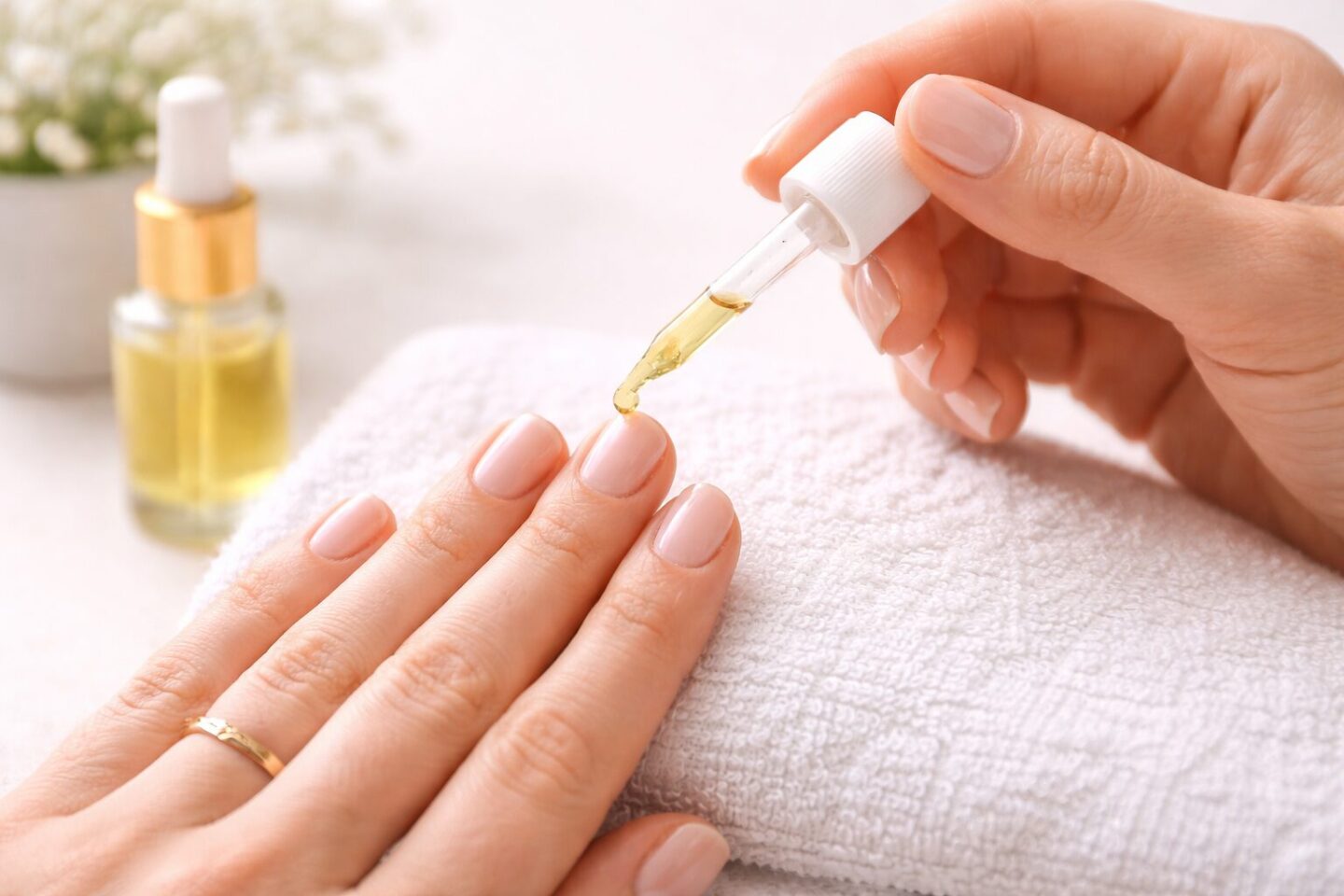
No matter which manicure you choose, a few small habits can seriously extend how long it looks fresh.
Make cuticle oil a daily thing. A drop or two around each nail keeps the skin hydrated and the manicure flexible. It takes ten seconds and makes a noticeable difference.
Wear gloves for wet work. Dishwashing, cleaning sprays, and hot water are polish’s worst enemies. A cheap pair of rubber gloves is the easiest way to protect your investment.
Don’t pick or peel. Peeling off gel, dip, or acrylics pulls layers of your natural nail with it. If something lifts, see your technician or use a gentle file to smooth the edge and apply a drop of nail glue as a temporary fix.
Cap the free edge (DIY tip). When painting at home, swipe the brush along the tip of the nail to “seal” the edge. This helps prevent chips starting at the tips.
Quick fixes between appointments. For classic polish, a thin layer of clear top coat every few days adds life. For snags on enhancements, a gentle file and cuticle oil can tide you over.
Safe removal basics (and when to go back to the salon)
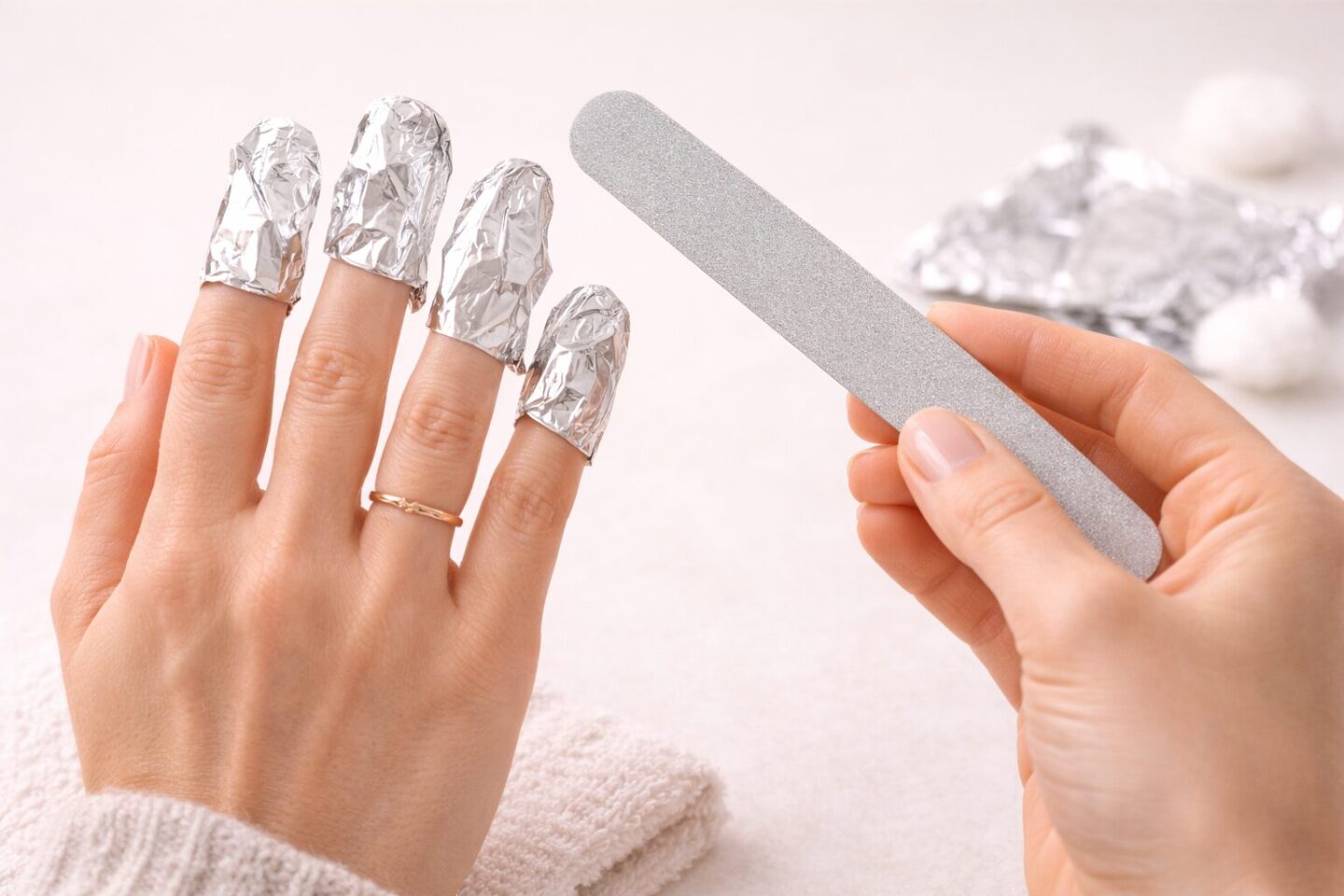
Removing a manicure incorrectly can leave your nails thin, rough, and peeling. The golden rule? Never peel, pry, or force anything off your nails. Peeling gel or dip literally strips layers of the nail plate away.
Classic polish: Use a cotton pad with polish remover (acetone-free is gentler on skin). Simple, no drama.
Gel and dip: These require filing the shiny top layer, then soaking with acetone (usually wrapped in foil or clips). If you’re not confident with the process, let a professional handle it.
Acrylics: Similar to gel—file down, soak off. Because acrylics are thicker, professional removal is strongly recommended to avoid over-filing.
Press-ons: Soak hands in warm soapy water until the adhesive loosens. Gently rock the press-on off—don’t yank.
When to stop and seek help:
- Pain during or after removal.
- Green, black, or unusual discoloration under or around the nail.
- Lifting accompanied by redness, swelling, or irritation.
- Any sign of infection.
If you notice any of these signs, see a dermatologist or your primary care provider. This guide is not a substitute for professional medical advice.
FAQ
What’s the difference between gel and dip powder?
Gel is a liquid-to-solid formula cured under a lamp. Dip uses a colored powder set with a chemical activator no lamp needed. Both last longer than classic polish, but removal and application feel quite different. Neither is universally “better”; it depends on your priorities.
Are acrylics bad for your nails?
Acrylics themselves aren’t inherently damaging, but improper application, rough removal, or skipping breaks can weaken your natural nails over time. A skilled technician and safe removal practices make a big difference. If you notice thinning, consider taking a break and using a strengthening treatment.
What manicure lasts the longest?
Dip powder and acrylics tend to have the longest wear times—often three to four weeks before a fill or refresh is needed. Gel and builder gel come close at two to three weeks. Your mileage will vary based on nail growth, daily activities, and aftercare.
What manicure is best for weak or brittle nails?
Builder gel and BIAB are popular choices because they add a protective layer that supports the natural nail while it grows. Classic polish with a nail-strengthening base coat is another gentle option. Always talk to your technician about your nail condition—what works for one person may not work for another.
Can I bring my own tools to a salon?
Yes! Many salons are fine with it, and some dermatologists recommend bringing your own nail file and cuticle pusher for hygiene reasons. Just let your technician know at the start of the appointment.
There’s no single “right” manicure—there’s just the right one for you, right now. Whether you’re loyal to a quick classic polish, experimenting with dip for the first time, or going all-in on sculpted acrylics, matching the manicure to your lifestyle and budget is what keeps your nails (and your wallet) happy.
Tell us: what’s your go-to finish—natural and glossy, bold matte, full-on nail art, or something else entirely? Drop it in the comments—we’d love to know what’s on your nails right now.