

The most common standard garage door sizes in the U.S. are 8’ × 7’ and 9’ × 7’ for single-car garages, and 16’ × 7’ for double-car garages. If you know your opening dimensions and clearance measurements, picking the right door is straightforward.
But here’s what trips up most homeowners: the door size is only one piece of the puzzle. You also need headroom for springs, sideroom for tracks, and backroom for the door to travel along the ceiling. Skip any of those measurements and you could end up with a door that technically fits the opening but can’t actually be installed.
I’ve walked through hundreds of garage door discussions with homeowners planning replacements and new builds. In this guide, you’ll get every common dimension in one place, a step-by-step measuring method, a cost breakdown, and the mistakes I see people make most often so you can avoid them.
What makes standard garage door sizes actually matter

Garage doors aren’t like interior doors where close enough is usually fine. A garage door has to slide on tracks, coil against springs, and clear a moving vehicle multiple times a day. Getting the size right affects four things that matter long after installation day.
Vehicle clearance and daily usability. A door that’s technically wide enough but leaves only an inch of clearance on each side of your truck mirrors turns every parking attempt into a stress test. The 9-foot single door has become the new default in new construction precisely because modern vehicles are wider than those built 30 years ago.
Structural fit and installation success. Every door style sectional, roll-up, carriage needs a specific amount of space above, beside, and behind the opening. If your clearance measurements are off, the installer may have to modify the framing, switch to a specialty track system, or in worst cases, order a different door.
Energy efficiency and weather sealing. A properly sized door sits flush inside the opening with tight seals on all four edges. An oversized or undersized door creates gaps that let in cold drafts, moisture, and pests especially in insulated garages used as workshops.
Resale value. According to the 2025 Cost vs. Value report published by Zonda (formerly Remodeling Magazine), garage door replacement returned an average of 268% ROI nationally the highest of any home improvement project surveyed. Getting the size right is the foundation of that return.
A quick sizing plan that prevents costly re-orders
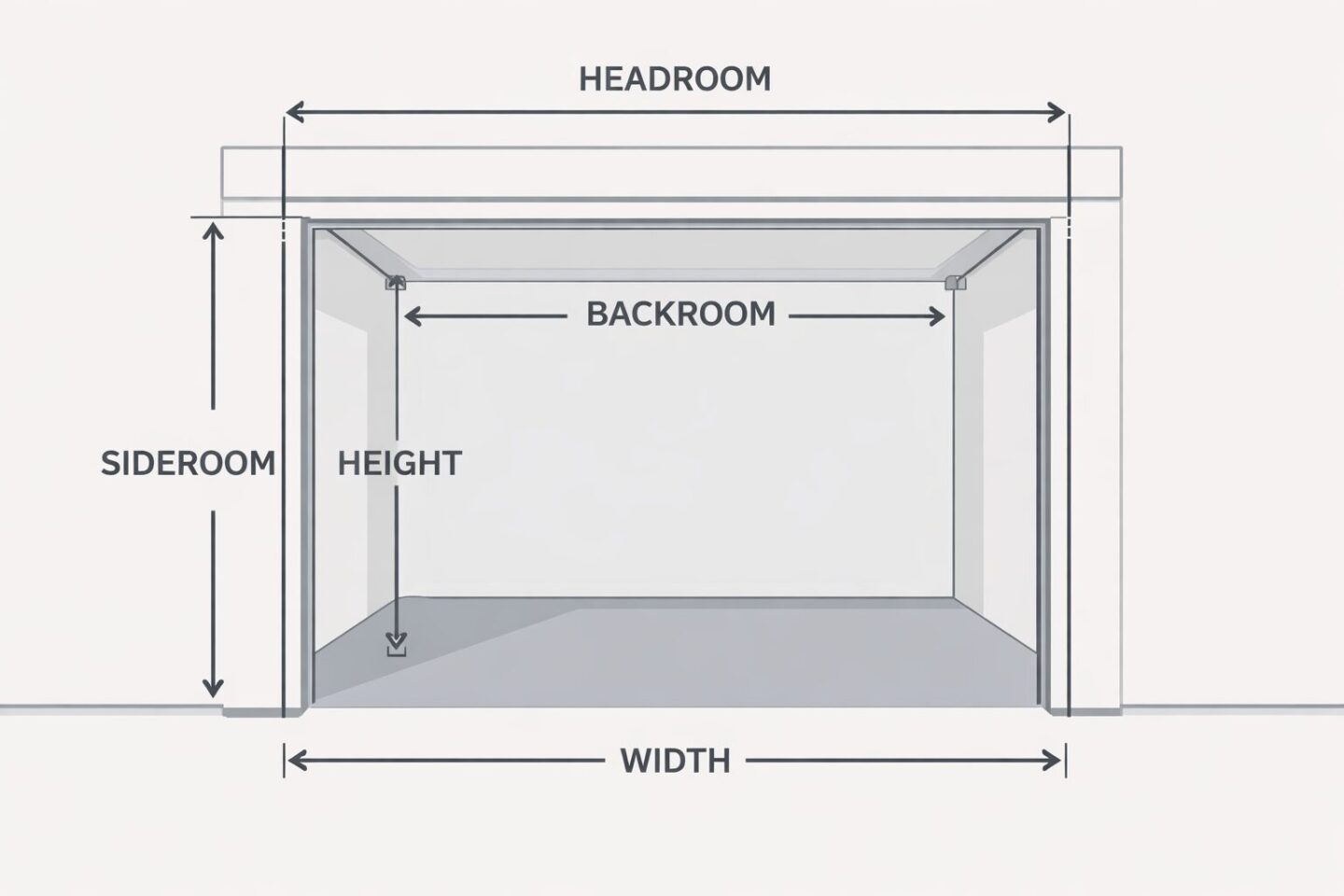
Before you shop, you need three categories of measurements: the opening, the clearances, and a vehicle check. Here’s the fastest way to gather everything an installer or manufacturer will ask for.
Step 1: Assess your opening
Measure the width (inside edge of left jamb to inside edge of right jamb) and the height (floor to bottom of the header). Take each measurement in two spots and record the smaller number. This is your rough opening, and the door you order should match it.
Step 2: Check your clearances
Sideroom is the space between the opening and the nearest wall on each side most standard setups need at least 4 to 5 inches. Headroom is the distance from the top of the opening to the ceiling or lowest obstruction plan for 12 inches minimum, or 15 inches if you’re adding a ceiling-mounted opener. Backroom is measured from the opening straight back to the rear wall; you need at least the door’s height plus 18 inches so the panels can lie flat overhead.
Step 3: Do a vehicle reality check
- Park your largest vehicle inside and measure clearance from each side mirror to the nearest wall or track location.
- Check height clearance with roof racks, ladder racks, or any cargo carriers attached.
- If you’re planning a future vehicle upgrade (say, from a sedan to a full-size truck), size for the bigger vehicle now.
- Walk around the vehicle with the door open to make sure you can move comfortably.
Tip: Take photos of the opening from inside and outside, plus any ceiling obstructions. Installers find this incredibly useful when quoting a job remotely.
10 standard garage door sizes and who they’re best for
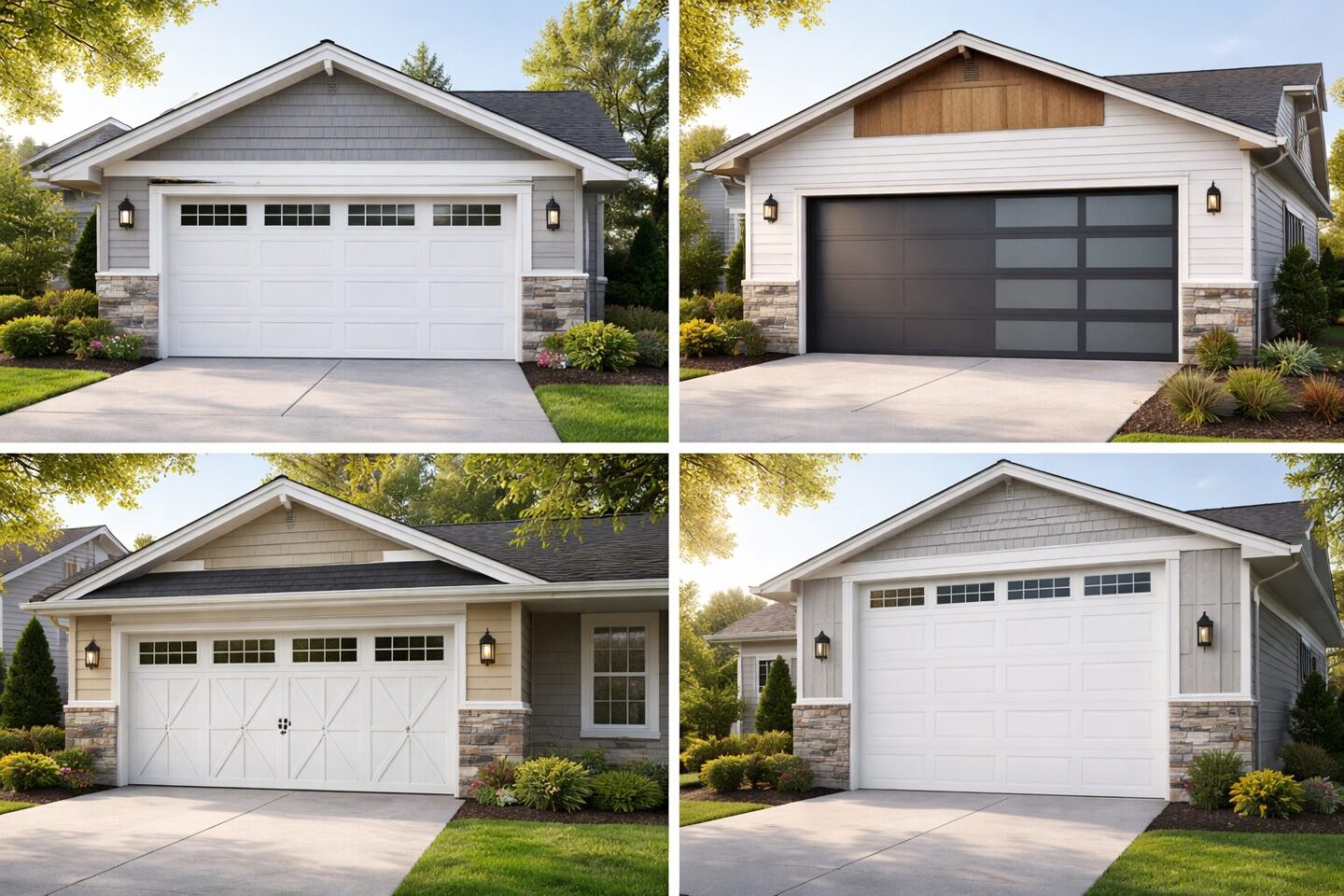
Below are the most common residential garage door dimensions available from major U.S. manufacturers. Each one suits a different situation pick the size that matches your opening and your vehicle, not just the one that looks standard on paper.
- 8’ × 7’ (single car, classic)
Best for: Compact cars, sedans, and older single-car garages built before the 1990s.
Why it works: This was the go-to single-car size for decades. It’s still widely stocked, making it the fastest and most affordable option for a straightforward replacement in an older home.
Practical tip: If you drive a mid-size SUV, test your side-mirror clearance before committing. Many homeowners with this size find it uncomfortably tight for modern crossovers.
- 9’ × 7’ (single car, modern standard)
Best for: Mid-size SUVs, crossovers, and any homeowner who wants a bit of breathing room.
Why it works: The extra foot of width compared to the 8-footer makes a noticeable difference in daily comfort. This is now the most common single-car size in new construction across the U.S.
Practical tip: If you’re replacing an 8’ door and your rough opening is 9 feet, you may be able to upgrade to this size with zero framing changes.
- 10’ × 7’ (single car, oversized)
Best for: Full-size trucks, large SUVs, and homeowners who use the garage for workshop access or equipment storage.
Why it works: It gives you ample clearance on both sides even for the widest consumer trucks. Some homeowners choose this size to allow easier loading and unloading of bulky items.
Practical tip: Not all manufacturers stock this size off the shelf confirm availability and lead times before committing to a timeline.
- 8’ × 8’ (single car, tall)
Best for: Trucks with roof racks, camper shells, or lifted suspensions in a single-car garage.
Why it works: The extra foot of height clears most aftermarket roof accessories without requiring a custom door. You will need at least 13 inches of headroom instead of the usual 12.
Practical tip: Verify your headroom and backroom measurements first the taller door needs more space to travel along the ceiling.
- 9’ × 8’ (single car, modern + tall)
Best for: Newer homes with taller ceilings and owners of full-size SUVs or trucks with accessories.
Why it works: Combines the wider modern standard with the taller height. This is becoming the premium single-car spec in higher-end residential builds.
Practical tip: If you’re building new, framing for 9’ × 8’ costs essentially the same as 9’ × 7’ and future-proofs the garage for larger vehicles.
- 16’ × 7’ (double car, standard)
Best for: Two average-size vehicles parked side by side the classic American two-car garage setup.
Why it works: This is by far the most common double-car size. It’s universally stocked, competitively priced, and fits the rough openings of the vast majority of two-car garages in the U.S.
Practical tip: With two vehicles inside, you’ll have roughly 2 to 3 feet between them. That’s enough to open doors, but not much room for wall-mounted storage. Plan accordingly.
- 16’ × 8’ (double car, tall)
Best for: Two-car garages housing trucks, SUVs, or vehicles with roof-mounted accessories.
Why it works: The 8-foot height handles taller vehicles that a 7-foot door clips. This size is rapidly gaining popularity as more households own at least one truck or large SUV.
Practical tip: Double-check that your garage ceiling height can support the extra headroom needed for the taller door plus springs and opener rail.
- 18’ × 7’ (double car, wide)
Best for: Homeowners who want extra side clearance, plan to store equipment along the walls, or have wider-than-standard openings.
Why it works: The extra 2 feet of width compared to the 16-footer gives breathing room for wall storage and easier vehicle maneuvering.
Practical tip: Wider doors are heavier. Make sure your spring system and opener are rated for the weight—this usually means upgrading from a standard 1/2 HP opener to 3/4 HP.
- 12’ × 7’ (1.5-car garage)
Best for: Older homes with a “1.5-car” garage—too wide for a standard single, too narrow for a true double.
Why it works: Instead of forcing a 16-foot double door into a space that can’t accommodate it, the 12-footer fills the opening correctly and gives you room for one vehicle plus a workbench or storage along the side.
Practical tip: This is a less-common stock size. Get quotes from at least two manufacturers, as pricing varies more than it does for standard 8/9/16-foot doors.
- 10’–12’ wide × 12’–14’ tall (RV / oversized)
Best for: RVs, motorhomes, boats on trailers, and lifted trucks with extreme clearance needs.
Why it works: Standard residential heights cap at 8 feet, which is nowhere near enough for most recreational vehicles. These taller doors are built with reinforced sections and heavier-duty hardware to handle the extra weight and wind load.
Practical tip: RV doors almost always require a special-order timeline (4–8 weeks in most cases) and beefed-up framing. Budget extra for structural engineering if your garage wasn’t originally built for this size.
Quick-reference size chart
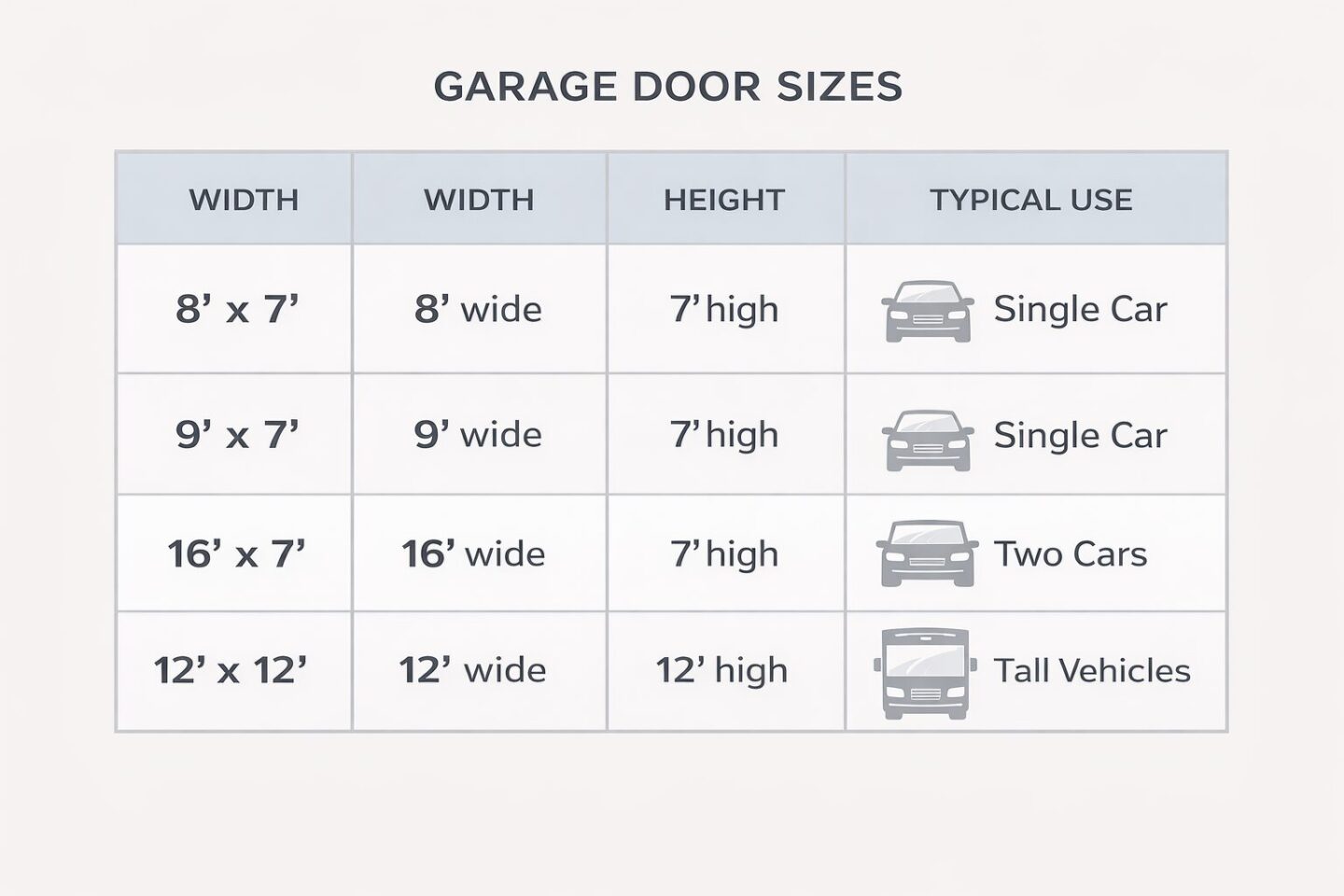
| Size (W × H) | Type | Best vehicle fit | Stock availability |
| 8’ × 7’ | Single | Sedans, compacts | Widely stocked |
| 9’ × 7’ | Single | Mid-size SUVs, crossovers | Widely stocked |
| 10’ × 7’ | Single | Full-size trucks | Limited stock |
| 8’ × 8’ | Single (tall) | Trucks with roof racks | Widely stocked |
| 9’ × 8’ | Single (tall) | Large SUVs with accessories | Widely stocked |
| 16’ × 7’ | Double | Two average vehicles | Widely stocked |
| 16’ × 8’ | Double (tall) | Two trucks/SUVs | Widely stocked |
| 18’ × 7’ | Double (wide) | Two vehicles + wall storage | Limited stock |
| 12’ × 7’ | 1.5-car | One vehicle + workspace | Special order |
| 10’–12’ × 12’–14’ | RV / Oversized | RVs, motorhomes, boats | Special order |
All sizes reflect common U.S. residential dimensions. Availability varies by manufacturer and region.
Clearance requirements that keep installation on track
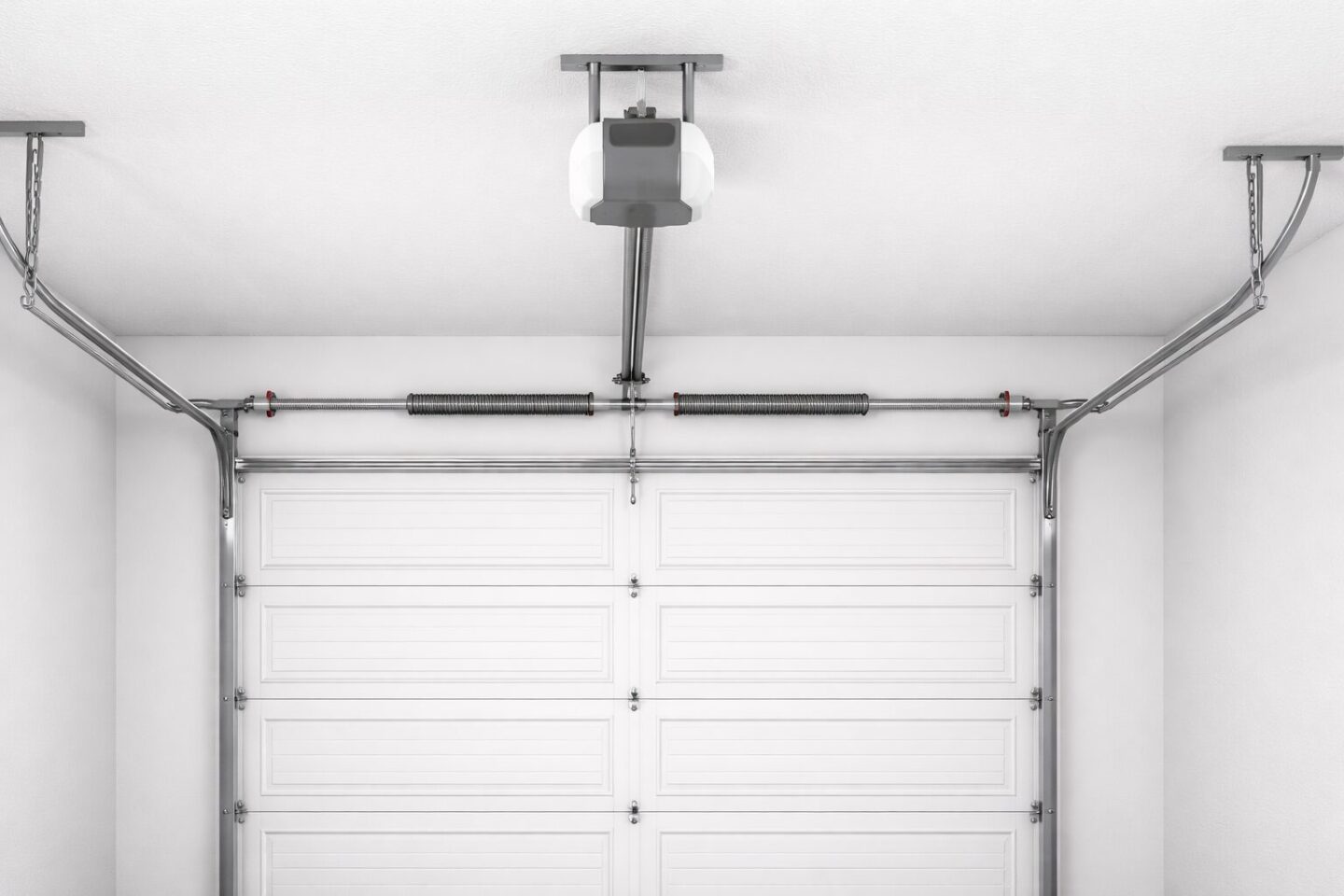
Your door size is only half the equation. Here are the clearance specs that installers check before confirming a door will work in your garage.
| Clearance type | Where to measure | Minimum needed |
| Sideroom | Opening edge to nearest wall (each side) | 4–5 inches per side |
| Headroom (torsion spring) | Top of opening to ceiling/lowest obstruction | 12 inches |
| Headroom (with opener) | Top of opening to ceiling/lowest obstruction | 15 inches |
| Backroom (depth) | Inside of opening to rear wall | Door height + 18 inches |
| Floor level | Level across the opening at floor | Slight slope OK; large dips need correction |
Low-headroom track systems can cut the headroom requirement to as little as 6 inches, and wall-mounted (jackshaft) openers need almost no overhead space. These specialty setups cost more but solve problems in tight garages.
How materials and insulation affect your door choice
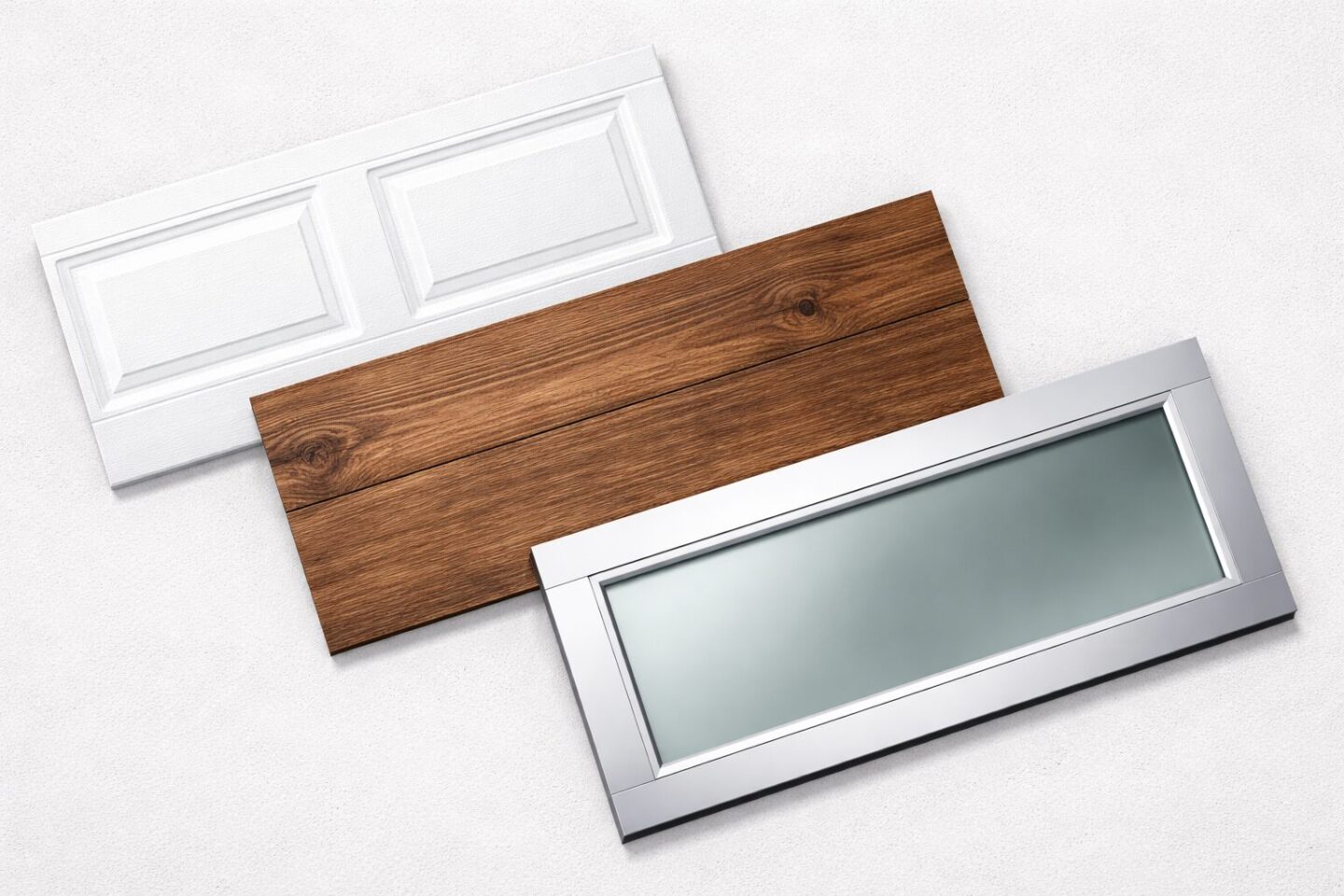
The material you choose changes the weight, thickness, and thermal performance of the door—all of which affect sizing decisions.
| Material | Typical thickness | Weight (single 9’×7’) | Best for |
| Steel (non-insulated) | 1– 1 3/8″ | ~80–100 lbs | Budget-friendly, low maintenance |
| Steel (insulated, polyurethane) | 1 3/4″–2″ | ~130–160 lbs | Energy efficiency, quiet operation |
| Wood (solid or overlay) | 1 3/4″–2 1/4″ | ~150–250+ lbs | Traditional aesthetics, custom builds |
| Aluminum + glass | 1 3/8″–2″ | ~80–120 lbs | Modern look, natural light |
Thicker insulated panels slightly reduce the clear opening height and width once installed. On a 7-foot door, the difference is usually less than an inch not a dealbreaker, but worth knowing if your vehicle clearance is already tight.
Heavier doors require stronger torsion springs and may need a more powerful opener. A standard 1/2 HP chain-drive opener handles most steel doors up to about 150 lbs. Above that, step up to 3/4 HP or a belt-drive unit rated for heavier loads.
Costs for materials vary significantly by region and manufacturer. Treat any price figures as rough estimates and get local quotes.
A simple maintenance routine (so your door keeps fitting right)
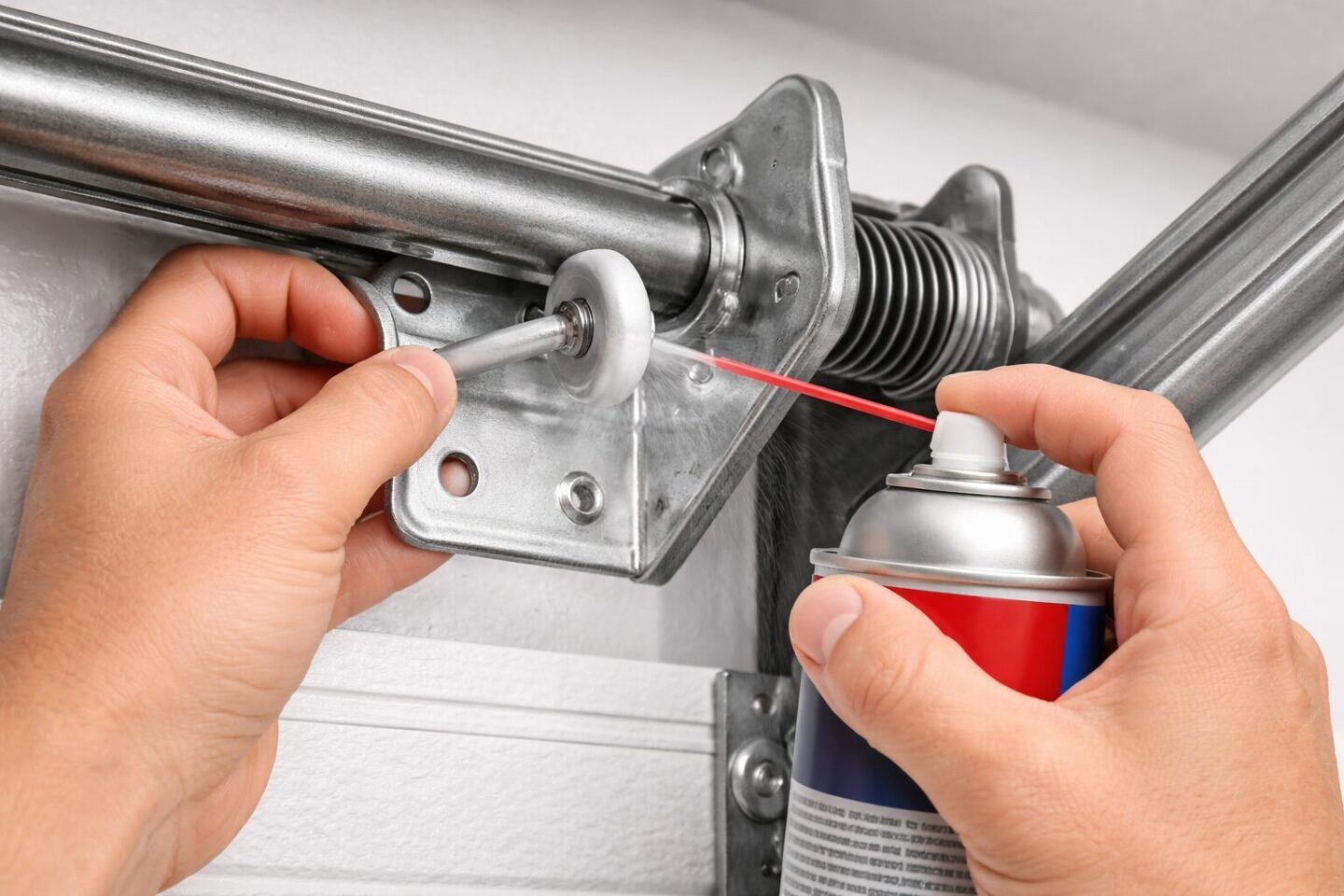
A garage door that’s properly sized and installed still needs regular attention. Here’s a low-effort schedule that prevents the most common problems.
Monthly (5 minutes)
Visually inspect the bottom seal for cracks or gaps. Look at the tracks for debris or misalignment. Test the auto-reverse safety feature by placing a 2×4 board flat on the floor under the door it should reverse within two seconds of contact.
Every 6 months (20 minutes)
Lubricate the rollers, hinges, and torsion spring with a silicone-based or lithium-based spray (never WD-40) it’s a solvent, not a lubricant). Tighten any loose hardware on the brackets and tracks. Check the weatherstripping around the sides and top of the door.
Annually (30–60 minutes)
Have a professional inspect the spring tension, cable condition, and opener safety sensors. Springs are under extreme tension and should never be adjusted by a non-professional. This annual check catches small problems before they become expensive ones.
Budget tiers for a new garage door (so you can plan ahead)
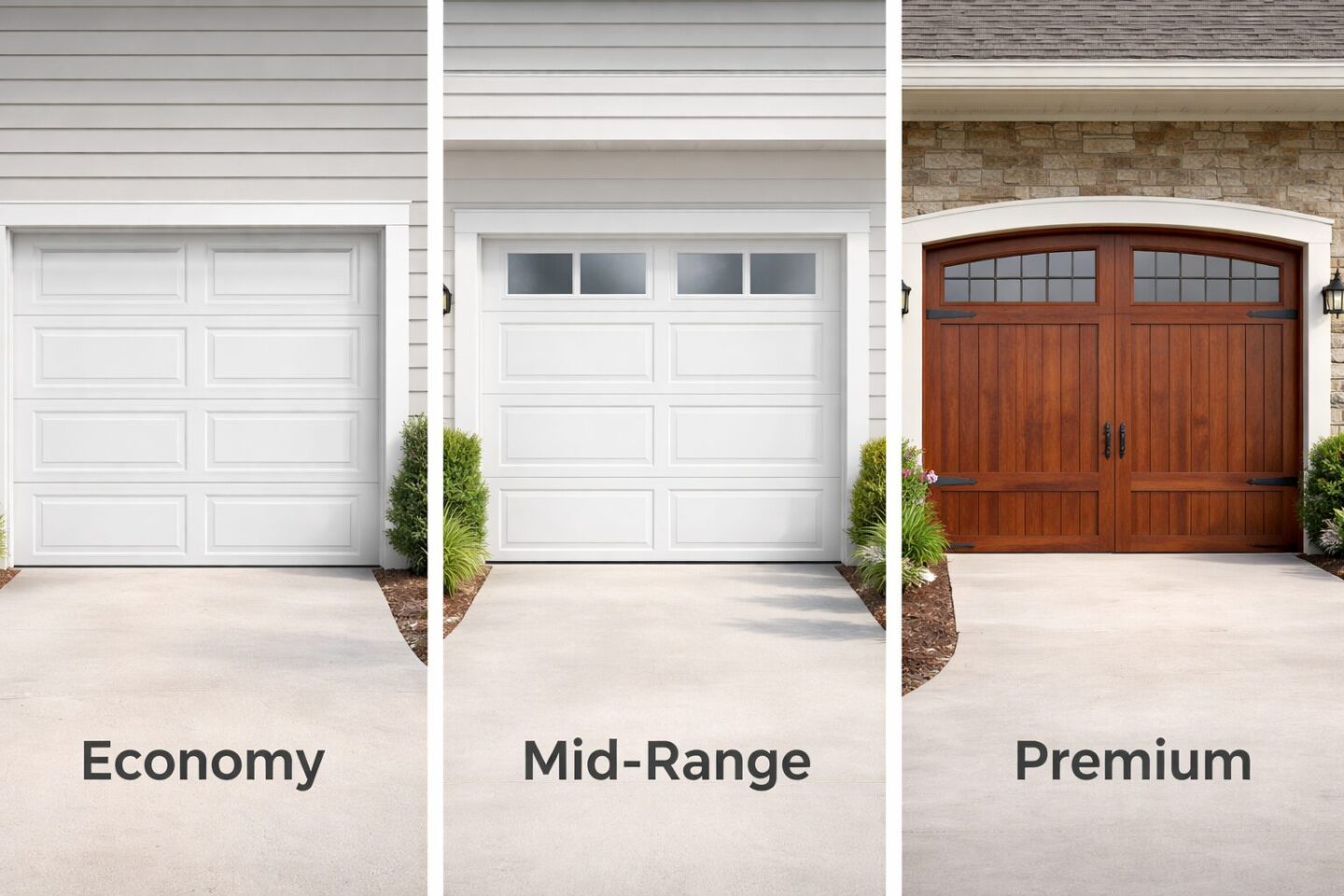
All costs below are rough national averages for a standard single-car door, including basic installation. Prices vary by region, door style, and installer. Always get at least two local quotes.
Under $800: Basic replacement
A non-insulated, single-layer steel door in a standard size (8’ or 9’ × 7’). This covers the door, hardware, and professional installation for a straightforward swap where no framing changes are needed. You get a clean, functional door without extras.
$800–$2,000: Mid-range upgrade
An insulated steel door (R-value 6–12) with a more refined panel design, possibly with decorative windows or hardware. This tier is where most homeowners land. You get better energy performance, quieter operation, and noticeably improved curb appeal.
$2,000+: Premium transformation
Thick polyurethane-insulated steel, solid wood, or aluminum-and-glass carriage doors. Custom sizes, specialty finishes, and smart-home-compatible openers fall in this range. If you’re targeting maximum resale value or have a specific aesthetic in mind, this is the tier to explore.
5 sizing mistakes that cost homeowners time and money

- Measuring the old door instead of the opening. This is the single most common mistake. The existing door might not match the framed opening—especially if it was a poor fit to begin with. Always measure jamb to jamb and floor to header.
- Ignoring clearance measurements. Knowing the opening size is only half the job. Without headroom, sideroom, and backroom numbers, you risk ordering a door that fits the hole but can’t be installed because there’s no space for tracks or springs.
- Assuming all two-car garages use a 16-foot door. Some have two separate single doors. Others have oddball widths like 14 or 15 feet. Never assume—measure every opening individually.
- Forgetting to check floor level. Garage floors slope for drainage. If the slope is uneven or extreme, one side of the door can leave a visible gap at the bottom. Your installer can fix this with seal adjustments, but only if they know about it before showing up.
- Not accounting for insulation thickness. An insulated door panel is thicker than a non-insulated one. If your vehicle clearance is already marginal, that extra inch of panel depth could make the difference between a comfortable fit and a daily headache.
Frequently asked questions
What is the most common single garage door size?
The 9’ × 7’ door is now the most widely installed single-car size in new U.S. construction. The 8’ × 7’ remains very common in older homes. If you have a wider vehicle or simply want more maneuvering room, a 10-foot width is available from most manufacturers.
What is the standard double garage door size?
A 16’ × 7’ door is the standard for two-car garages in the United States. Some homeowners choose 18-foot widths for extra clearance, and 8-foot heights are becoming more popular as trucks and SUVs dominate the vehicle market.
Can I change from two single doors to one double door?
Yes, but it’s structural work. You’ll need to remove the center post and reframe the header to span the wider opening. Hire a licensed contractor, pull a permit if your jurisdiction requires one, and check with your HOA if applicable.
How much headroom do I need for a garage door opener?
A standard ceiling-mounted opener with torsion springs needs about 15 inches above the door opening. Low-headroom track kits can reduce this to 6–9 inches, and wall-mounted jackshaft openers need almost no overhead space. Always verify with the specific door and opener manufacturer.
Do garage door sizes differ outside the United States?
Yes. Countries using metric systems have their own standard dimensions. In the UK, for example, a common single-car door is roughly 2.1 m × 2.1 m (about 7’ × 7’). If you’re researching international sizes, convert to the measurement system your manufacturer uses before ordering.
Is a garage door replacement worth the investment?
The data says yes. Garage door replacement has ranked as the number-one ROI home improvement project for multiple consecutive years in the annual Cost vs. Value report, most recently returning an average of 268% in 2025. It’s one of the least expensive exterior upgrades with one of the highest payoffs at resale.
Your next step
Grab a steel tape measure, a notepad, and spend 15 minutes in your garage. Measure the opening, check the clearances, and take a few photos. With those numbers in hand, you’ll be able to compare doors confidently—and avoid the re-order headaches that catch unprepared homeowners off guard.
If you’ve already measured, drop your width, height, and whether you’re replacing or building new in the comments. It’s the fastest way to get a specific recommendation.