


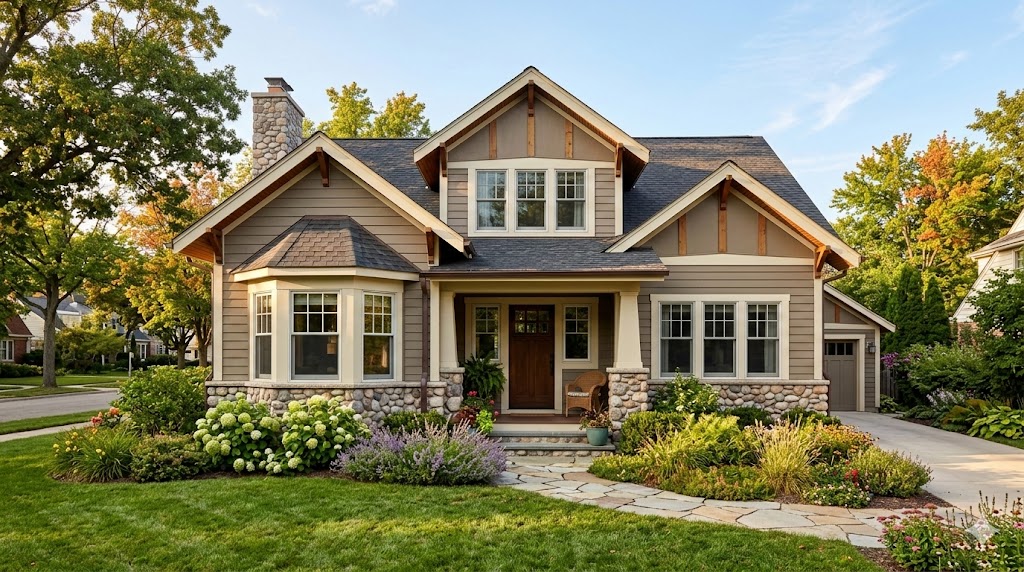
Walk into any window showroom and you’ll face a wall of options — double-hung, casement, awning, bay, bow, skylight — each with its own strengths. The honest truth? There’s no single best window. The right choice depends on the room, your climate, your budget, and how much you like cleaning.
This guide cuts through the noise. You’ll find different types of windows explained, a room-by-room match table, glass option basics, and the most common (and costly) mistakes homeowners make so you can walk into any showroom with confidence.
Start with Your Priorities
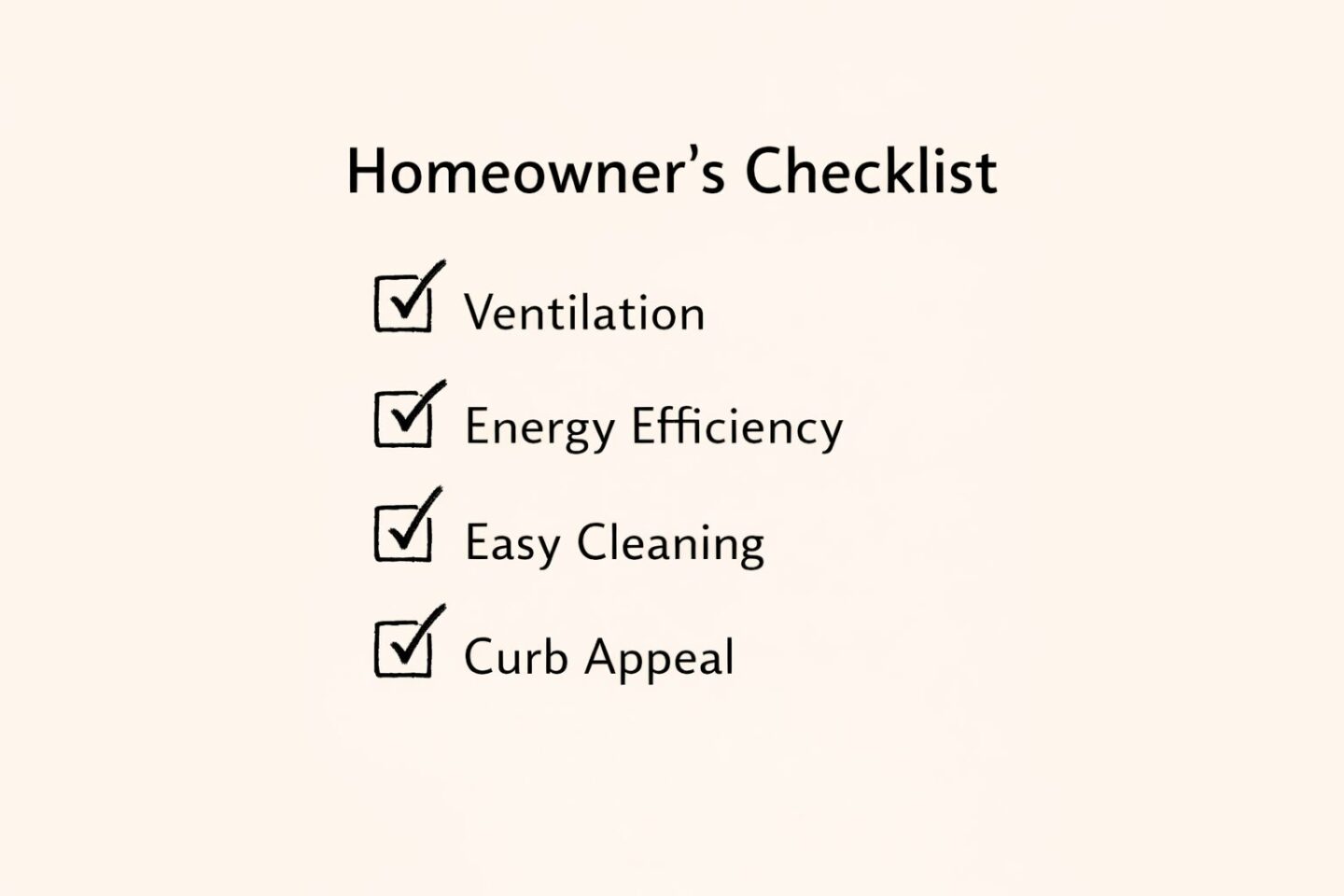
Before falling in love with a look, ask yourself: what do I actually need this window to do? Most homeowners care about some mix of four things — ventilation, energy performance, easy cleaning, and curb appeal. Different rooms tip the balance in different directions.
Room-by-Room Priority Guide
- Kitchen: Ventilation and easy cleaning rank highest. Cooking steam and grease demand a window you can open and wipe down effortlessly.
- Bathroom: Privacy, moisture control, and ventilation. Frosted glass or high placement keeps it discreet.
- Bedroom: Flexible airflow for sleep comfort, plus good light control. Second-story rooms need tilt-in sashes.
- Living Room: Maximum natural light, views, and style impact. This is where you can go big.
- Basement: Compact size, security, and as much daylight as the space allows. Check local codes — a basement bedroom almost certainly requires an egress window.
- Upper Floors: Tilt-in or easy-access designs save you from balancing on a 24-foot ladder just to clean the exterior glass.
| Climate Tip: Your local weather shapes your glass choices as much as your window style. A hot southern climate calls for a low SHGC; a cold northern climate wants a low U-factor. When in doubt, consult a local contractor or certified energy auditor before you buy. |
All Different Types of Windows Explained
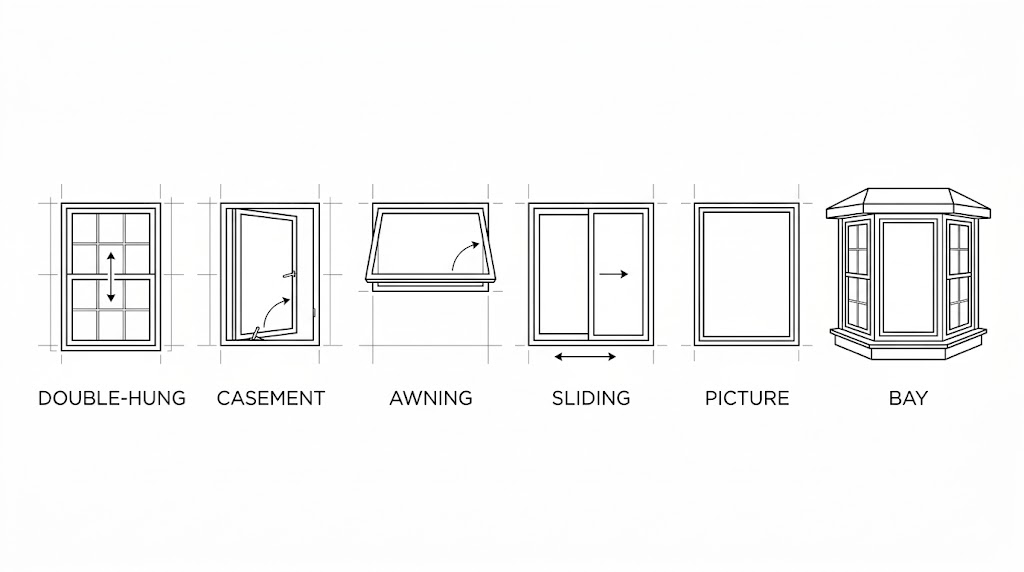
Below you’ll find every major residential window style profiled in the same format so you can compare side by side. Real-world performance always depends on the manufacturer, glass package, and installation quality — use these as a starting framework.
| Single-Hung Windows · BUDGET: LOW | |
| Two stacked sashes — but only the bottom one slides up. The top stays fixed. Simple, affordable, and widely used in traditional home styles. | |
| ✓ PROS
• Most affordable operable window style • Fewer moving parts — less maintenance risk • Natural fit for colonial and craftsman homes |
✗ CONS
• Only the bottom half opens — limited airflow • Upper exterior pane is hard to clean on upper floors |
| BEST FOR: Hallways, guest rooms, and budget-conscious projects |
| Double-Hung Windows · BUDGET: LOW–MEDIUM | |
| Both sashes slide up and down independently, and most models tilt inward for cleaning — a game-changer on second stories. The most popular residential window style in the U.S. | |
| ✓ PROS
• Open top, bottom, or both for flexible airflow control • Tilt-in sashes let you clean exterior glass from inside • Available in every price range and material |
✗ CONS
• More moving parts than single-hung • Slightly pricier than a single-hung equivalent |
| BEST FOR: Bedrooms, living rooms, almost any room — genuinely versatile |
| Casement Windows · BUDGET: MEDIUM | |
| Hinged on one side, the entire sash swings outward like a door via a crank handle. When closed, it presses tight against the frame — one of the best air seals of any operable style. | |
| ✓ PROS
• Full-sash opening catches side breezes effectively • Excellent compression air seal when closed • Crank works even behind a counter or sink |
✗ CONS
• Outward swing can interfere with walkways or patios • Crank mechanism needs occasional lubrication • Screens sit on the interior side |
| BEST FOR: Kitchens (especially over sinks), bathrooms, modern and craftsman homes |
| Awning Windows · BUDGET: MEDIUM | |
| Hinged at the top, opening outward from the bottom — creating a mini canopy effect. You can leave them open in light rain without water getting in. | |
| ✓ PROS
• Rain-resistant — ventilate even in light showers • Good air seal when closed, similar to casement • Compact — fits narrow or small wall openings |
✗ CONS
• Outward swing limits placement near walkways • Smaller opening than a full casement |
| BEST FOR: Bathrooms, laundry rooms, basements; excellent paired above or below a fixed window |
| ↔️ Sliding Windows (Gliders) · BUDGET: LOW–MEDIUM | |
| Think of a double-hung rotated 90°. One or both sashes glide horizontally along a track. No outward swing, no cranks — simple and clean. | |
| ✓ PROS
• No outward projection — ideal near patios and decks • Simple operation, no cranks or springs to maintain • Wide-format sliders let in generous natural light |
✗ CONS
• Track collects dirt and needs regular cleaning • Only half the window area opens at once • Slightly weaker air seal than compression-sealed styles |
| BEST FOR: Contemporary bedrooms, living areas, ranch-style homes |
| Picture Windows (Fixed) · BUDGET: LOW–MEDIUM | |
| A picture window does not open. It is a single fixed pane designed for light and views only. No moving parts means no air leakage — making it one of the most energy-efficient options per square foot. | |
| ✓ PROS
• Maximum unobstructed natural light and views • Excellent energy performance — no sash air gaps • Often the most affordable option for large glass areas |
✗ CONS
• Zero ventilation — must pair with operable windows nearby • Exterior cleaning requires outside access on upper floors |
| BEST FOR: Living rooms, stairwells — always pair with flanking operable windows |
| Bay Windows · BUDGET: HIGH | |
| A large center picture window flanked by two angled side windows (typically casements or double-hungs) at 30° or 45°. Projects outward, creating an interior nook and serious curb appeal. | |
| ✓ PROS
• Creates a cozy interior shelf or seating nook • Significant curb appeal and architectural character • Side windows open for ventilation |
✗ CONS
• High cost — structural support and custom sizing required • Professional installation is typically necessary • Exterior mini-roof above bay needs periodic maintenance |
| BEST FOR: Living rooms, dining rooms, primary bedrooms in traditional or Victorian homes |
| Bow Windows · BUDGET: HIGH | |
| Like a bay, but with four or more panels set at equal, gentle angles — creating a smooth outward curve rather than an angular projection. Wider panoramic view, softer aesthetic. | |
| ✓ PROS
• Soft, graceful curve adds elegance • Wider panoramic view than a standard bay window • Some or all panels can be operable for airflow |
✗ CONS
• Typically more expensive than a bay window • Precise installation required for a smooth curve • Furnishing around the curve can be tricky |
| BEST FOR: Formal living rooms and primary bedrooms in traditional and Victorian homes |
| Garden Windows · BUDGET: MEDIUM–HIGH | |
| A small box-shaped window that projects outward with glass sides, a fixed front pane, and a glass top — essentially a mini greenhouse built into your wall. | |
| ✓ PROS
• Built-in sun-lit shelf for herbs, plants, or décor • Side vents offer gentle airflow without full opening • Charming in cottage, farmhouse, and traditional kitchens |
✗ CONS
• Can overheat plants in intense direct sun • Fewer manufacturers and limited size options |
| BEST FOR: Kitchens — especially for herb growing and brightening a sink area |
| Hopper Windows · BUDGET: LOW | |
| An awning window flipped upside down — hinged at the bottom, tilting inward from the top. The compact size fits foundation wall openings, and the inward tilt avoids interference with outside landscaping. | |
| ✓ PROS
• Fits small basement and utility room openings • Inward tilt avoids exterior obstructions • Good seal against moisture and cold drafts |
✗ CONS
• Limited ventilation compared to larger styles • Inward tilt can conflict with blinds or curtains |
| BEST FOR: Basements, utility rooms, small bathrooms |
| Transom Windows · BUDGET: LOW–MEDIUM | |
| A narrow window installed above a door or another window. Can be fixed or operable, and comes in rectangular, arched, or semicircular shapes. | |
| ✓ PROS
• Natural light without sacrificing wall space or privacy • Adds architectural detail to entryways and tall walls • Operable versions vent warm air near the ceiling |
✗ CONS
• Fixed versions offer no ventilation • High placement makes cleaning and operation awkward |
| BEST FOR: Entryways, hallways, tall walls in craftsman, traditional, and farmhouse homes |
| Skylights (Fixed & Venting) · BUDGET: MEDIUM–HIGH | |
| Installed in the roof to bring daylight from above. Fixed skylights are light-only; venting models open partially to release warm air and moisture — useful in bathrooms and kitchens. | |
| ✓ PROS
• Floods interior spaces with overhead natural light • Venting models help cool rooms and manage humidity • Makes small or windowless rooms feel dramatically larger |
✗ CONS
• Complex installation — involves cutting through roof structure • Leak risk if flashing degrades over time • May increase summer heat gain without proper glazing |
| BEST FOR: Bathrooms, hallways, stairwells, rooms with no available wall space |
| Egress Windows · BUDGET: MEDIUM–HIGH | |
| Code-required in habitable basement rooms and bedrooms, an egress window must be large enough for a person to climb through in an emergency. Typically a casement or slider. Minimum size requirements vary by local jurisdiction — always check before planning. | |
| ✓ PROS
• Provides an emergency escape route from below-grade rooms • Brings significant daylight and fresh air into basements • Makes a basement legally habitable as living space |
✗ CONS
• Installation may require excavation — a major project • Window well, cover, and drainage add substantial cost |
| BEST FOR: Finished basements, basement bedrooms — always verify local code requirements first |
| Arched & Specialty-Shape Windows · BUDGET: MEDIUM–HIGH | |
| Arches, half-circles, octagons, triangles — architectural accent pieces. Most are fixed; some sit above operable rectangular units. Custom lead times and costs apply. | |
| ✓ PROS
• Instant curb appeal and architectural character • Lights awkward spaces standard windows can’t reach • Pairs beautifully with operable windows below |
✗ CONS
• Custom shapes cost more and have longer lead times • Typically fixed — no ventilation on their own • Non-standard openings can complicate future replacement |
| BEST FOR: Entryways, gable walls, stairwells — Mediterranean, Victorian, and craftsman homes |
Glass & Performance Options
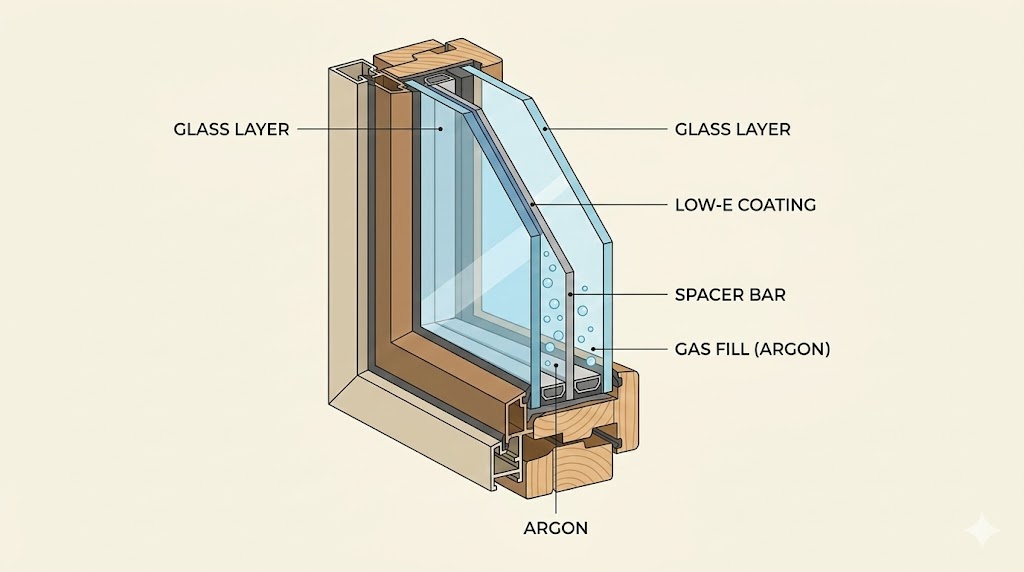
The frame and style get all the attention, but the glass package is where energy performance actually lives. Here’s what you need to know without drowning in jargon.
| Option | What It Does | Worth It? |
| Double-pane | Two glass layers with a sealed air gap. The residential standard today. | Baseline for most homes — yes |
| Triple-pane | Three layers + two sealed gaps. Better insulation and noise reduction, but heavier and pricier. | Yes — cold climates or noisy areas |
| Low-E Coating | Microscopically thin metallic film: reflects heat, lets light through. Keeps warmth in winter; blocks solar heat in summer. | Yes — standard on quality windows |
| Argon Fill | Dense inert gas between panes slows heat transfer better than plain air. Low cost to add. | Yes — modest upgrade, modest cost |
| Krypton Fill | Denser than argon; used in triple-pane where the gap between panes is narrower. | For triple-pane — yes |
| Laminated Glass | Two glass layers bonded with an interlayer for better noise reduction and security. | Yes — if noise or safety is a priority |
Reading the NFRC Label
Every ENERGY STAR certified window carries an NFRC (National Fenestration Rating Council) label showing independently tested performance numbers. The two most important metrics:
| Metric | Range | What to Look For |
| U-Factor | ~0.15 – 0.60 | Lower = better insulation. Prioritize in cold climates. |
| SHGC | 0 – 1 | Lower = less solar heat entering. Good for hot climates. Higher = free solar warmth in cold climates. |
| Important: According to the U.S. Department of Energy, NFRC ratings measure whole-unit performance — frame, spacer, and glass together — not just the center of the glass. Always compare NFRC labels directly, not manufacturer center-of-glass claims alone. |
Room-by-Room Match Guide
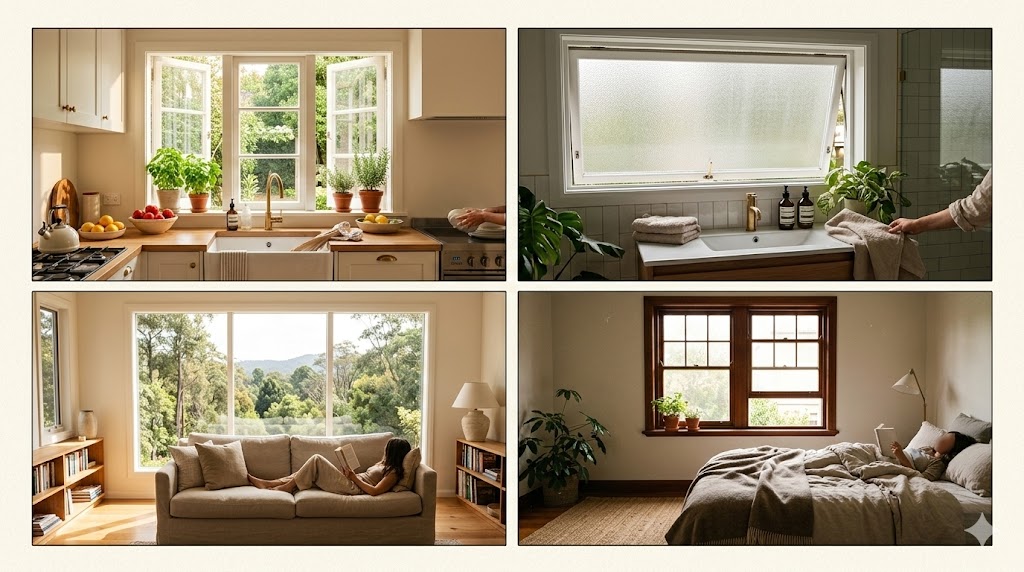
Use this as a quick-reference when planning any room. You can mix styles — a large center picture window flanked by two casements is a classic combination that delivers both drama and fresh air.
| Room | Top Priority | Best Style(s) | Why It Works |
| Kitchen | Ventilation, easy cleaning | Casement, Awning | Crank works over counters; tight seal when closed |
| Bathroom | Privacy, moisture control | Awning, Hopper | High placement + frosted glass for privacy with airflow |
| Bedroom | Airflow, light control | Double-Hung | Open top/bottom independently; tilt-in for upper floors |
| Living Room | Views, light, style | Picture + Casement, Bay, Bow | Picture gives drama; casements add airflow; bay adds character |
| Basement | Daylight, security, code | Hopper, Slider, Egress | Compact fits foundation openings; egress for habitable rooms |
| Hallway / Stairwell | Light, no wall sacrifice | Transom, Skylight, Specialty | Light from above or over doors without losing wall space |
| Entryway | Curb appeal, character | Transom, Arched | Sets architectural tone; frames the front door beautifully |
Six Costly Mistakes to Avoid
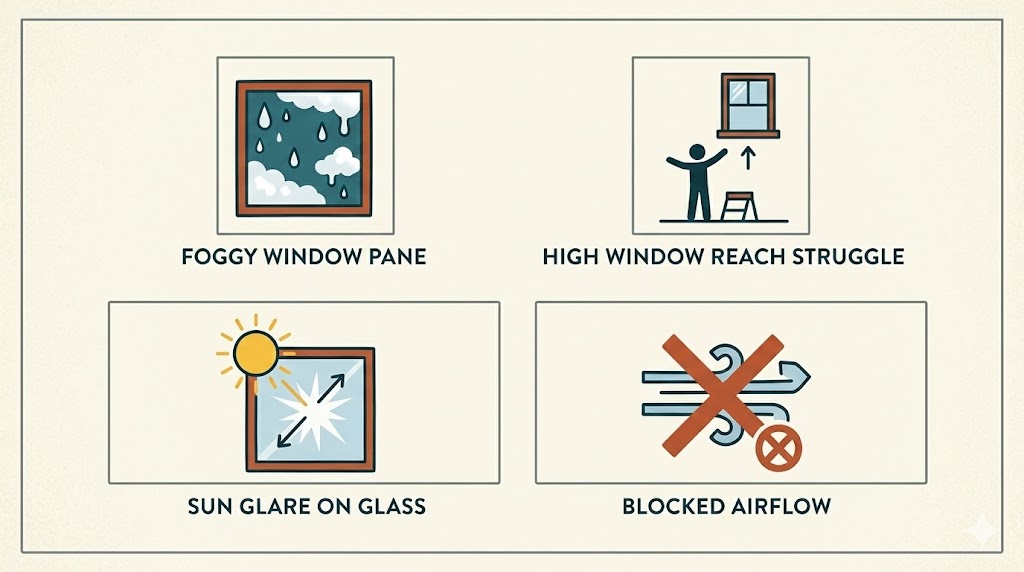
These are the errors that cost homeowners real money — or years of quiet frustration after installation.
| 01 | Choosing style before function
A wall of picture windows looks stunning — until the room won’t breathe. Make sure at least some windows in every room can open. |
| 02 | Forgetting cleaning access on upper floors
That impressive second-story window becomes a nightmare when you can’t reach the exterior glass without a 24-foot ladder. Look for tilt-in sashes on any upper-floor installation. |
| 03 | Making every window operable
Not every window needs to open. Fixed glass where ventilation isn’t needed gives you cleaner aesthetics and often better energy performance — and usually costs less. |
| 04 | Ignoring performance labels in extreme climates
If your summers hit 100°F or winters dip below zero, the U-factor and SHGC on that NFRC label matter enormously. Don’t default to the cheapest option without checking the numbers. |
| 05 | Forgetting screens and exterior shading
Every operable window needs a well-fitted screen. West-facing windows often need exterior shading for comfort. Plan for both upfront — retrofitting later always costs more. |
| 06 | Skipping egress code checks in basements
If you’re finishing a basement bedroom, local code almost certainly requires an egress window. Find this out before you frame walls around a future non-compliant opening. |
Frequently Asked Questions
What is the most popular window type for homes?
Double-hung windows are the most common residential style in the U.S. Their popularity comes from versatility — they work in almost every room and complement nearly any home style. That said, popularity doesn’t mean best for your situation. Let your room’s specific needs drive the decision.
Which window type provides the best ventilation?
Casement windows are often considered the best for ventilation because the entire sash opens outward, catching side breezes effectively. Double-hung windows are a close second — you can open the top, bottom, or both sashes independently, which is useful for controlling airflow direction.
Are casement windows more energy-efficient than double-hung?
Generally yes — casement windows achieve a tighter compression seal when closed, which reduces air leakage compared to the sliding mechanism of a double-hung. However, the glass package and installation quality matter more than style alone. Always compare NFRC labels for the specific products you’re considering.
What’s the difference between bay and bow windows?
A bay window typically has three panels at sharper angles (30° or 45°), creating an angular projection. A bow window uses four or more panels at equal, gentler angles to produce a smooth outward curve. Both add interior shelf space and curb appeal — a bow window simply has a softer, more rounded appearance.
Do I need full window replacement, or just new glass?
If your frames are structurally sound and only the glass unit has failed (fogging between panes, cracked, or inefficient), sash or glass-unit replacement may be sufficient and less expensive. If the frames are rotting, warped, or poorly insulating, full replacement is usually the smarter long-term investment. A qualified contractor can assess your situation honestly.
What window type is best for a finished basement?
For utility or storage areas, hopper or slider windows fit compact foundation openings well. If the basement includes a bedroom or habitable living space, local building codes typically require an egress window large enough for emergency escape. Always verify specific requirements with your local building department before starting any basement window project.
Your Next Step
Choosing the right type of window doesn’t have to be overwhelming. Start with the room, identify your top priority — light, airflow, efficiency, or easy cleaning — and match it to the right style and glass package. The profiles and room-by-room table above give you a solid foundation to walk into any showroom with real confidence.
One last tip: always ask to see the NFRC label before you commit to any window, and get at least two installation quotes. The window itself is only half the equation — a poor install undermines even the best product.