

If your strawberry puree keeps turning out watery, brown, or just kind of sad, you’re not alone. I’ve been there, staring at a blender full of pink liquid that looks nothing like the thick, vibrant stuff you see drizzled over cheesecakes or swirled into cocktails. The good news: it’s almost never the berries’ fault. It’s the method.
This article gives you three tested ways to make strawberry puree that actually works, whether you need it thick for cocktails, quick for smoothies, or somewhere in between. I’ll cover fresh and frozen berries, walk you through fixes for every common fail, and share real drink recipes with exact ratios. No guesswork.
Why Your Strawberry Puree Turns Out Wrong (And How to Fix It)
Most recipes online tell you to “blend until smooth” and call it a day. That’s fine if you’re making a smoothie, but if you want puree with body, it’s terrible advice. Here are the problems people run into over and over, along with what actually solves them.
| Problem | Likely Cause | Fix | Extra Time Needed |
|---|---|---|---|
| Watery, thin texture | Too much liquid from fresh berries or thawed frozen ones | Simmer on low for 10 to 15 minutes to reduce excess water | 10-15 min |
| Browning or dull color | Oxidation from blending too long, or berries sat out too long | Add 1 tsp lemon juice before blending; blend in short bursts | 0 min |
| Too seedy | Strawberry seeds not strained out | Push finished puree through a fine mesh strainer | 3-5 min |
| Too sweet or too tart | Berry ripeness varies wildly batch to batch | Taste before adding sugar; start with half the amount | 0 min |
| Separates when stored | Natural water content rises to top in fridge | Stir before use, or cook briefly to emulsify | 0-5 min |
That lemon juice tip matters more than you’d think. Citric acid does two things at once: it keeps the puree bright red by slowing oxidation, and it balances sweetness so you can use less sugar. A single teaspoon per pound of berries is all you need.
The Base Strawberry Puree Recipe (Jump Here)
This is the no-cook version, the fastest of the three methods. It works with fresh or frozen strawberries and takes about 10 minutes from start to finish. Use it as your starting point, then adjust from here depending on what you’re making.
Ingredients
1 pound fresh strawberries (hulled) or frozen strawberries (partially thawed)
1 to 3 tablespoons granulated sugar (adjust to taste)
1 teaspoon lemon juice
Steps
1. If using frozen berries, let them sit at room temperature for 10 minutes. You want them soft but still cold, not fully thawed and swimming in juice.
2. Add strawberries, sugar, and lemon juice to a blender or food processor.
3. Pulse 5 to 6 times, then blend on medium for 20 to 30 seconds. You want smooth but not frothy.
4. Taste. Adjust sugar or lemon juice.
5. For seedless puree, press through a fine mesh strainer with a spatula. This takes about 3 minutes and makes a real difference for drinks.
Yield: About 1.5 to 2 cups
Prep time: 10 minutes
Equipment: Blender or food processor, fine mesh strainer (optional)
This no-cook method keeps the most nutrients intact. One cup of raw pureed strawberries contains roughly 74 calories, 18 grams of carbs, and nearly 5 grams of fiber, according to the University of Rochester Medical Center’s nutrition database.
Method 1: No-Cook Blender Puree (Fastest for Drinks)

The recipe above is your Method 1. It’s the best choice when you need strawberry puree for drinks like lemonade, iced tea, or milkshakes. The texture is light, pourable, and blends easily into cold liquids without clumping.
A few notes for getting the best results with this approach:
Fresh vs. frozen matters here. Fresh berries give a brighter flavor and thinner consistency. Frozen berries release more water as they thaw, which can dilute things. If you’re using frozen, drain off any pooled liquid before blending. Expect about 20% less yield from frozen compared to fresh, pound for pound.
Don’t over-blend. More than 30 seconds in a high-speed blender introduces air and makes the puree foamy. Short pulses followed by a brief blend keeps the color vivid and the texture dense.
No blender? No problem. A food processor works just as well. An immersion blender in a tall container also gets the job done, though you may need to strain more aggressively for smoothness.
Method 2: Simmered Thick Puree (Best for Cocktails)
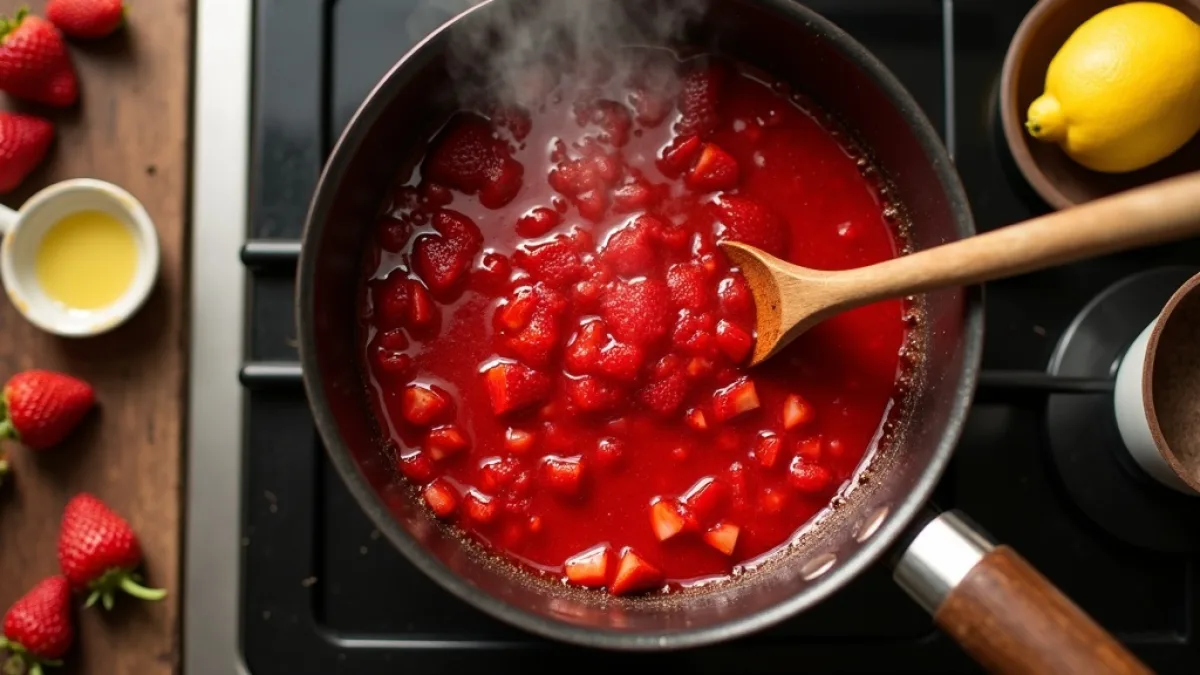
If you’re making strawberry puree for cocktails, you want it thicker than what a blender alone can deliver. Thin puree waters down drinks. A quick simmer concentrates the flavor and gives you a syrupy consistency that holds up in a shaker or a glass.
Ingredients
1 pound fresh or frozen strawberries (hulled if fresh)
3 tablespoons granulated sugar
1 teaspoon lemon juice
2 tablespoons water
Steps
1. Roughly chop the strawberries and add them to a saucepan with sugar and water.
2. Cook over medium heat, stirring occasionally, until the berries break down and the mixture begins to bubble. This takes about 5 minutes.
3. Reduce heat to low. Simmer for 10 to 15 minutes, stirring every few minutes. The puree should reduce by about a third.
4. Remove from heat. Add lemon juice and stir.
5. Blend briefly with an immersion blender or transfer to a standard blender. Pulse until smooth.
6. Strain through a fine mesh strainer if you want a silky, seed-free result.
Yield: About 1 to 1.25 cups
Total time: 20 to 25 minutes
Best for: Cocktails, mocktails, drizzling over desserts
The simmered version is what bartenders typically use. It mixes cleanly into spirits without separating, and the slightly caramelized sugar adds depth you just can’t get from raw blending.
5 Cocktail and Drink Recipes Using This Puree
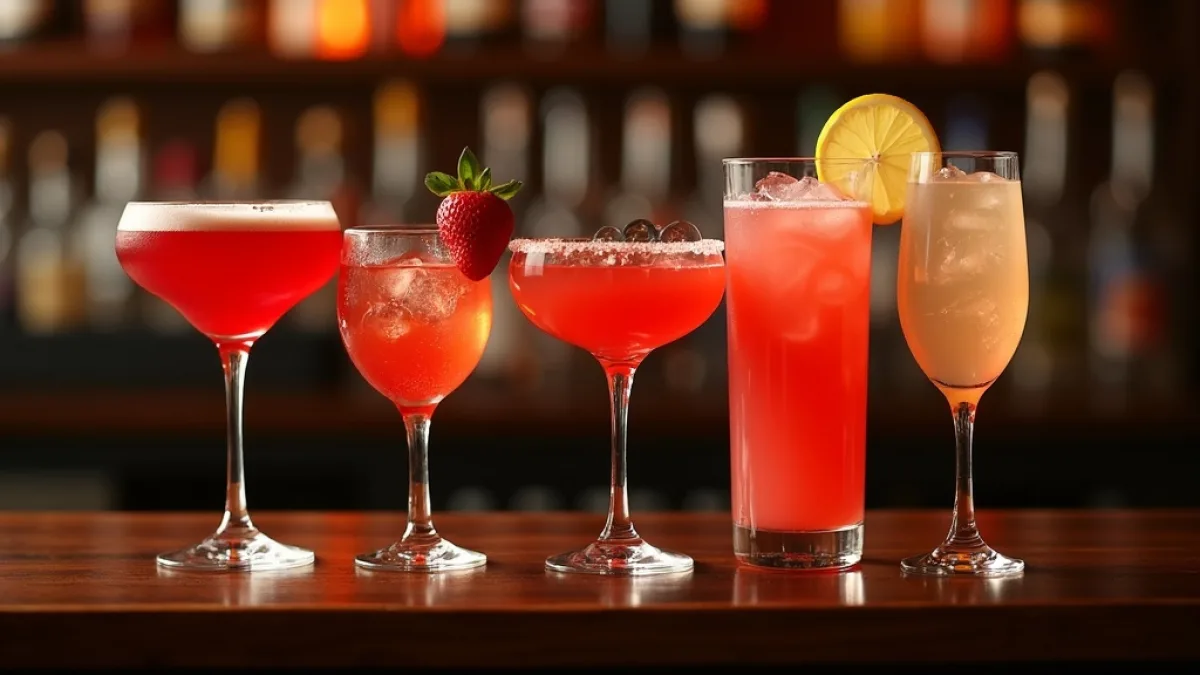
Here are tested ratios that work. Each makes one drink.
Strawberry Daiquiri: 2 oz white rum, 1.5 oz simmered puree, 0.75 oz fresh lime juice. Shake with ice, strain into a coupe glass.
Strawberry Margarita: 2 oz tequila blanco, 1 oz simmered puree, 0.75 oz lime juice, 0.5 oz triple sec. Shake and strain over ice in a salt-rimmed glass.
Strawberry Gin Fizz: 1.5 oz gin, 1 oz simmered puree, 0.5 oz lemon juice, top with 3 oz club soda. Build over ice in a tall glass.
Strawberry Lemonade (Non-Alcoholic): 2 oz simmered puree, 6 oz fresh lemonade. Stir over ice. Gorgeous and simple.
Strawberry Champagne Spritz: 1 oz simmered puree in a flute, top with 4 oz dry sparkling wine. No stirring needed; it layers beautifully.
For all of these, the simmered puree works best because it’s concentrated enough to flavor the drink without thinning it out. The no-cook version is fine for smoothies, but it’ll make a cocktail taste diluted.
Method 3: No-Blender Stovetop Reduction (Pro Texture)
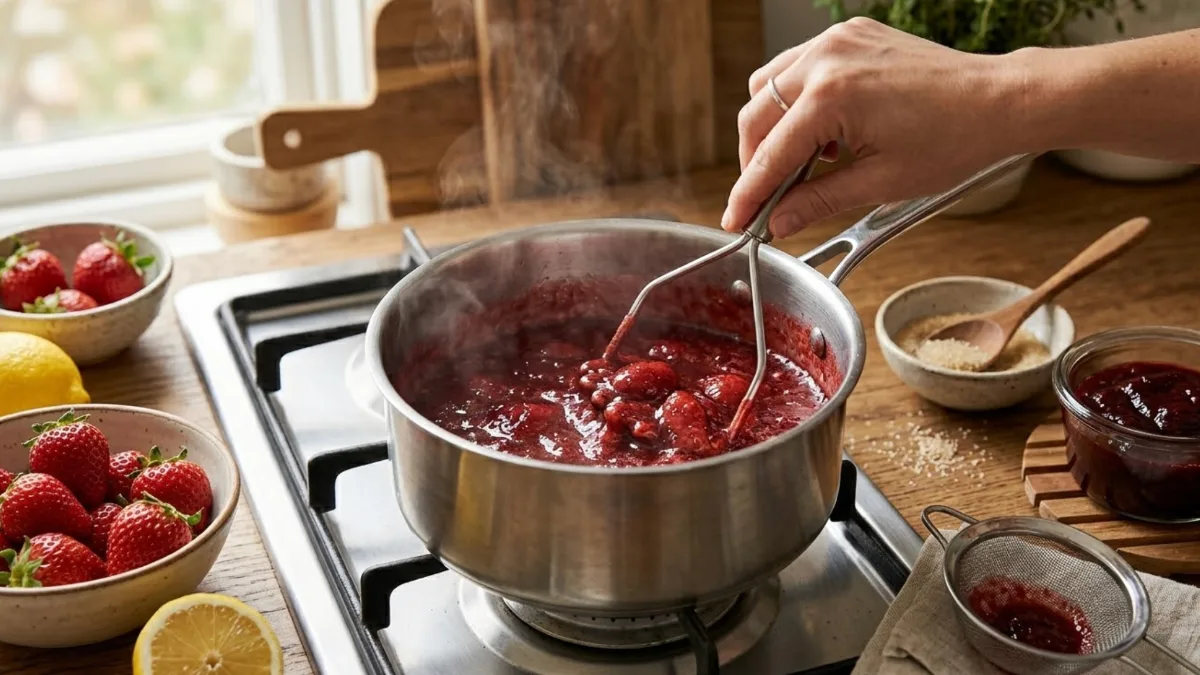
Don’t have a blender or food processor? This method uses just a saucepan and a potato masher or fork. It takes longer, but it gives you the thickest, most jam-like result of the three. It’s excellent for layering into cakes, swirling into yogurt, or spooning over pancakes.
Steps
1. Add 1 pound of hulled, quartered strawberries to a saucepan with 2 tablespoons sugar and 1 teaspoon lemon juice.
2. Cook over medium-low heat. As the berries soften (about 5 minutes), begin mashing with a potato masher or the back of a fork.
3. Keep mashing and stirring. Reduce heat to low and let the mixture simmer for 20 to 30 minutes. The longer you cook, the thicker it gets.
4. For a smoother result, press through a fine mesh strainer after cooking. For a chunkier texture, skip straining.
5. Let cool completely before storing.
Yield: About 0.75 to 1 cup
Total time: 30 to 40 minutes
Best for: Baking, topping, baby food
One thing to watch: the color deepens to a darker red as you cook longer. If you want to keep it bright, add the lemon juice at the start and don’t go past 20 minutes. The Sugarologie no-blender method also suggests this approach for preserving color.
Comparing the Three Methods
| Method | Time | Equipment | Best For | Texture |
|---|---|---|---|---|
| No-Cook Blender | 10 min | Blender or food processor | Smoothies, lemonade, quick drinks | Light, pourable |
| Simmered | 20-25 min | Saucepan + blender | Cocktails, drizzles, sauces | Thick, syrupy |
| No-Blender Reduction | 30-40 min | Saucepan + masher | Baking, yogurt, baby food | Jam-like, dense |
Pick the method based on what you’re using the puree for, not just how much time you have. A cocktail made with no-cook puree won’t taste bad, but it won’t taste as good as one made with the simmered version. And if you’re folding puree into cake batter, the reduction’s thickness prevents soggy layers.
Fresh vs. Frozen Strawberries for Puree
Both work. But they behave differently, and most recipes don’t tell you how.
| Factor | Fresh Strawberries | Frozen Strawberries |
|---|---|---|
| Yield per pound | ~2 cups puree | ~1.6 cups puree (about 20% less) |
| Flavor | Brighter, more aromatic | Slightly muted, sweeter |
| Prep needed | Hull and wash | Partially thaw, drain liquid |
| Best method | Any of the three | Simmer or reduction (handles excess moisture) |
| Color | Vivid red | Slightly darker |
Frozen berries are often picked at peak ripeness and flash-frozen, so their flavor is consistent year-round. Fresh berries vary by season. In winter, frozen is usually the better choice. In June, grab fresh from a farmers’ market if you can.
One tip that saves a lot of frustration: when using frozen berries, drain them in a colander for 5 minutes before blending. That pooled juice is mostly water, and it’s the number one reason homemade puree turns out thin.
How to Store Strawberry Puree (and Make It Last)
Storage is where a lot of good puree goes to waste. Here’s what actually keeps it fresh.
| Storage Method | Container | Shelf Life | Notes |
|---|---|---|---|
| Refrigerator | Airtight glass jar or container | 5 to 7 days | Stir before each use; separation is normal |
| Freezer (bulk) | Freezer-safe bags or containers | Up to 3 months | Leave 1 inch headspace for expansion |
| Freezer (portioned) | Ice cube trays, then transfer to bags | Up to 3 months | Perfect for single-drink portions |
The ice cube tray trick is my favorite for cocktails. Freeze the simmered puree into cubes, pop them into a freezer bag, and pull out exactly what you need. Each cube is roughly 1 ounce, which makes measuring for drinks almost effortless.
When thawing, move frozen puree to the fridge overnight. Microwaving works in a pinch but can cook the edges and change the texture. If you’re adding it to a hot recipe, you can toss it in frozen and let the heat do the work.
Nutrition Per Serving
Strawberries are one of those rare foods that taste indulgent but are genuinely good for you. Here’s what a half-cup serving of unsweetened puree looks like, based on University of Rochester nutrition data.
| Nutrient | Per 1/2 Cup (Unsweetened) |
|---|---|
| Calories | ~37 kcal |
| Carbohydrates | ~9 g |
| Fiber | ~2.3 g |
| Protein | ~0.8 g |
| Vitamin C | High (strawberries are a top source) |
Adding sugar obviously changes the calorie count. Each tablespoon of granulated sugar adds about 48 calories. For a lower-sugar version, try using ripe, in-season berries that are naturally sweet, or substitute stevia to taste. I’d suggest starting with half the amount of stevia you think you need and working up. It’s easier to add sweetness than to fix an over-sweetened batch.
On the health side, a 2010 NCBI study found that participants who consumed strawberries daily for 8 weeks saw their total cholesterol drop by about 10% and LDL cholesterol by 11%. That’s not a reason to drink puree by the glass, but it’s a nice bonus when your dessert or drink happens to be packed with polyphenols and anthocyanins.
Frequently Asked Questions
How long does strawberry puree last in the fridge?
In an airtight container, it stays fresh for 5 to 7 days. You’ll notice some separation after a day or two. That’s just water rising to the top. Give it a stir and it’s perfectly fine.
Can I use frozen strawberries for puree?
Absolutely. Partially thaw them first and drain off excess liquid. Expect about 20% less yield than fresh, and consider the simmer method if you want a thicker result.
How do I remove the seeds?
After blending, push the puree through a fine mesh strainer using the back of a spoon or spatula. It takes 3 to 5 minutes and gives you a completely smooth, seed-free result. This step matters most for cocktails and drinks where you want a clean texture.
What’s the best puree for cocktails?
The simmered method, hands down. It’s concentrated, mixes cleanly into spirits, and won’t water down your drink. Try it in the daiquiri or margarita recipes above for a test run.
Does cooking the puree destroy nutrients?
Some vitamin C is lost through heat, but most of the beneficial compounds in strawberries, including polyphenols, hold up well during brief cooking. The no-cook method retains the most nutrients if that’s your priority.
Can I make a sugar-free version?
Yes. If your berries are ripe and sweet, you may not need any sweetener at all. For under-ripe berries, a small amount of stevia or monk fruit sweetener works. Start with less than you think you need. Artificial sweeteners don’t cook down the way sugar does, so the flavor can sneak up on you.
That’s everything. Three methods, each one suited to a different purpose, with real fixes for the problems that trip people up. Pick the one that matches what you’re making, trust the ratios, and you’ll end up with puree that looks and tastes like it came from a professional kitchen. No fancy equipment required.