

You’ve hit the six-month mark, and suddenly everyone has an opinion about what your baby should eat first. Carrot puree sits at the top of nearly every list, praised for its natural sweetness and gentle introduction to solids. But between conflicting advice about nitrates, confusion over cooking methods, and that one batch that turned out gritty enough to feel like sandpaper, it’s easy to second-guess yourself.
This guide walks you through everything that actually matters: cooking methods that preserve nutrients, age-appropriate textures your baby won’t gag on, and safety concerns worth paying attention to. You’ll get tested recipes that work, not generic instructions that leave you wondering why your puree looks nothing like the photos.
Why Carrot Puree Works as a First Food
Carrots bring a mild sweetness that babies tend to accept without the face-scrunching rejection you might see with greens. They rank as a low-allergen food, which means you can introduce them early without the same caution you’d use for eggs or peanuts. The smooth texture after cooking makes them easy to puree into a consistency that suits brand-new eaters.
Beyond ease, carrots pack beta-carotene, which the body converts into vitamin A. This nutrient supports developing vision and immune function, both critical during the first year. The fiber content helps establish healthy digestion patterns as your baby transitions from exclusive milk feeds. Potassium and small amounts of other minerals round out the nutritional profile without overwhelming an immature system.
Carrot Puree Nutrition Breakdown
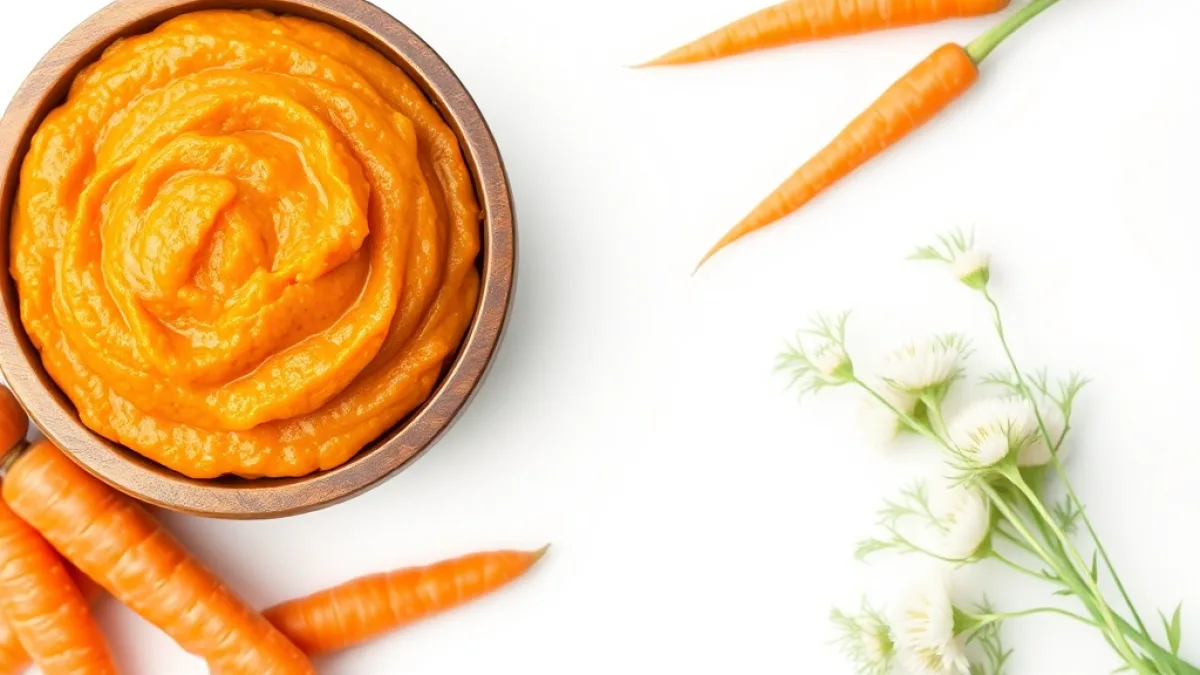
Understanding what’s in each serving helps you balance your baby’s diet as you add more foods. Here’s what 100 grams of cooked, pureed carrots typically contains:
| Nutrient | Amount per 100g |
|---|---|
| Vitamin A | 16,706 IU |
| Fiber | 2.8g |
| Potassium | 235mg |
| Vitamin C | 3.6mg |
| Calories | 35 |
These numbers shift slightly depending on whether you steam, boil, or roast your carrots. Cooking method affects both nutrient retention and flavor, which we’ll address in detail shortly.
Safety First: Debunking Nitrates and Common Myths
You’ve probably seen warnings about nitrates in root vegetables causing methemoglobinemia, sometimes called blue baby syndrome. The concern stems from nitrates converting to nitrites in the body, which can interfere with oxygen transport in infants under three months. But current pediatric guidelines recommend waiting until six months to introduce solids anyway, which drastically reduces this risk.
Here’s what actually prevents problems:
| Risk Factor | Prevention Step |
|---|---|
| High nitrate concentration in well water | Use filtered or tested water for cooking and thinning |
| Storing puree in warm conditions | Refrigerate immediately after cooling, use within three days |
| Overfeeding single vegetables | Rotate between different produce to vary nutrient intake |
| Reusing boiling water | Discard cooking water, don’t use it to thin puree |
Organic carrots contain fewer pesticide residues if that’s a concern for your household, though both organic and conventional options work safely when prepared correctly. The greater risk comes from improper storage or preparing puree for babies younger than four months, not from the carrots themselves.
Carotenemia is another topic that sparks unnecessary panic. If your baby’s skin develops an orange tint, especially on palms and soles, it means they’re consuming more beta-carotene than their body can process. It’s harmless and reversible by simply reducing carrot portions and rotating in other vegetables. It’s not an allergy or toxicity issue.
Best Cooking Methods: Steam vs. Roast vs. Boil
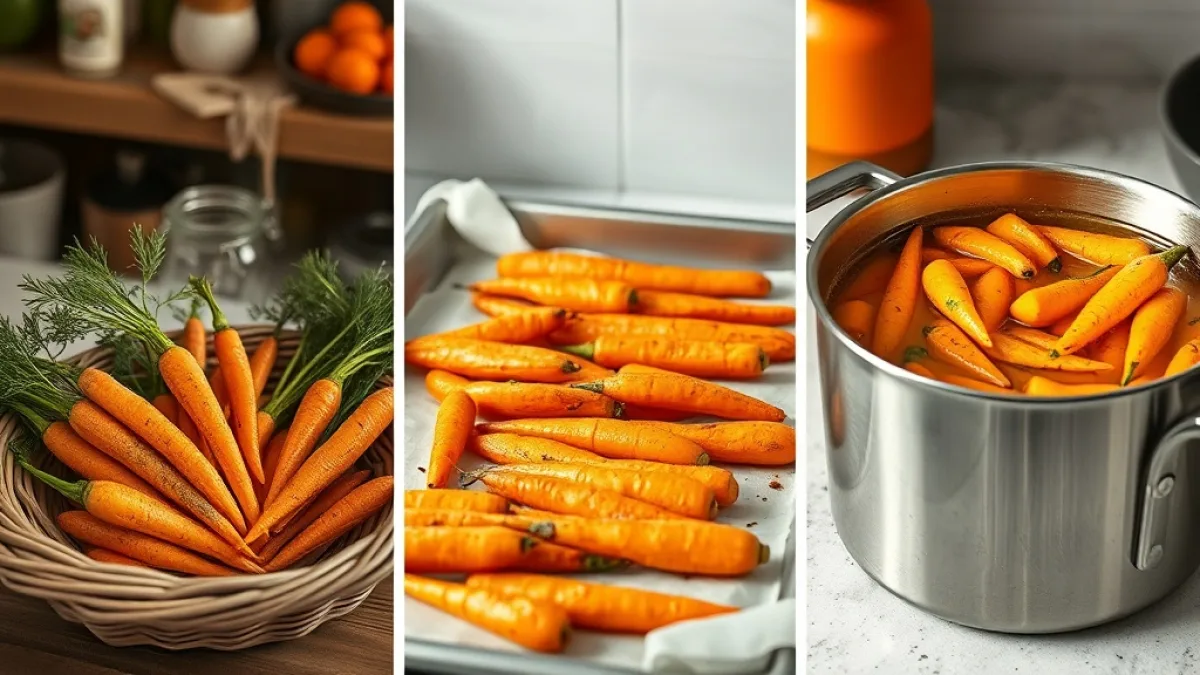
The way you cook carrots changes both nutrient content and flavor. Boiling leaches vitamins into the water, which you’ll discard to avoid nitrates. Steaming and roasting preserve more of what matters.
| Method | Time | Nutrient Retention | Best For |
|---|---|---|---|
| Steaming | 15-20 minutes | Retains 75-80% of vitamins | First purees, neutral flavor |
| Roasting | 25-30 minutes | Retains 70-75% of vitamins | Older babies, caramelized sweetness |
| Boiling | 10-15 minutes | Retains 50-60% of vitamins | Quick prep, but least nutritious |
Steaming keeps the flavor mild and preserves texture control, which matters when you’re aiming for silky-smooth puree. Roasting concentrates natural sugars through caramelization, creating a richer taste that older babies often prefer once they’ve accepted blander versions. Boiling speeds up the process but sacrifices nutrition and risks waterlogged carrots that produce thin, watery puree.
I learned this the hard way after boiling a batch that turned out so runny it dripped off the spoon before reaching my daughter’s mouth. Switching to steaming fixed the consistency issue immediately.
Classic Steamed Carrot Puree Recipe
This version works for babies just starting solids around six months. The texture stays smooth, and the flavor remains gentle enough for first tastes.
Ingredients:
- 2-3 medium carrots, peeled and chopped into 1-inch pieces
- Breast milk, formula, or filtered water for thinning
Instructions:
- Fill a pot with 1-2 inches of water and bring to a simmer. Place carrots in a steamer basket above the water.
- Cover and steam for 15-20 minutes until carrots pierce easily with a fork. They should feel completely tender with no resistance.
- Transfer carrots to a blender or food processor. Let them cool for 2-3 minutes.
- Blend on high, adding liquid one tablespoon at a time until you reach a smooth, pudding-like consistency. Start with 2-3 tablespoons total.
- Test texture by dragging a spoon through the puree. It should slowly fall off the spoon without dripping rapidly.
- Serve immediately or transfer to an airtight container and refrigerate within 30 minutes.
Yield: Approximately 1 cup (8-10 servings for a six-month-old)
Storage: Refrigerate up to 3 days or freeze in ice cube trays for up to 3 months.
Roasted Carrot Puree Upgrade
Once your baby accepts the steamed version and reaches around eight months, roasting adds complexity without introducing new allergens. The caramelized edges create natural sweetness that makes this version feel less like baby food.
Ingredients:
- 3 medium carrots, peeled and cut into 1-inch chunks
- 1 teaspoon olive oil
- Breast milk or formula for thinning
Instructions:
- Preheat oven to 400°F. Toss carrot chunks with olive oil until lightly coated.
- Spread carrots in a single layer on a parchment-lined baking sheet. Roast for 25-30 minutes, stirring halfway through, until edges turn golden and carrots feel fork-tender.
- Let cool for 5 minutes, then transfer to a blender.
- Blend on high, adding liquid one tablespoon at a time until smooth. Roasted carrots typically need slightly more liquid than steamed, around 4-5 tablespoons total.
- The puree will have a thicker, creamier texture than the steamed version. Adjust consistency as needed.
The olive oil serves double duty: it prevents sticking during roasting and helps your baby absorb the fat-soluble vitamin A more effectively. Even a small amount of healthy fat improves nutrient uptake significantly.
Age-by-Age Texture Guide and Portions
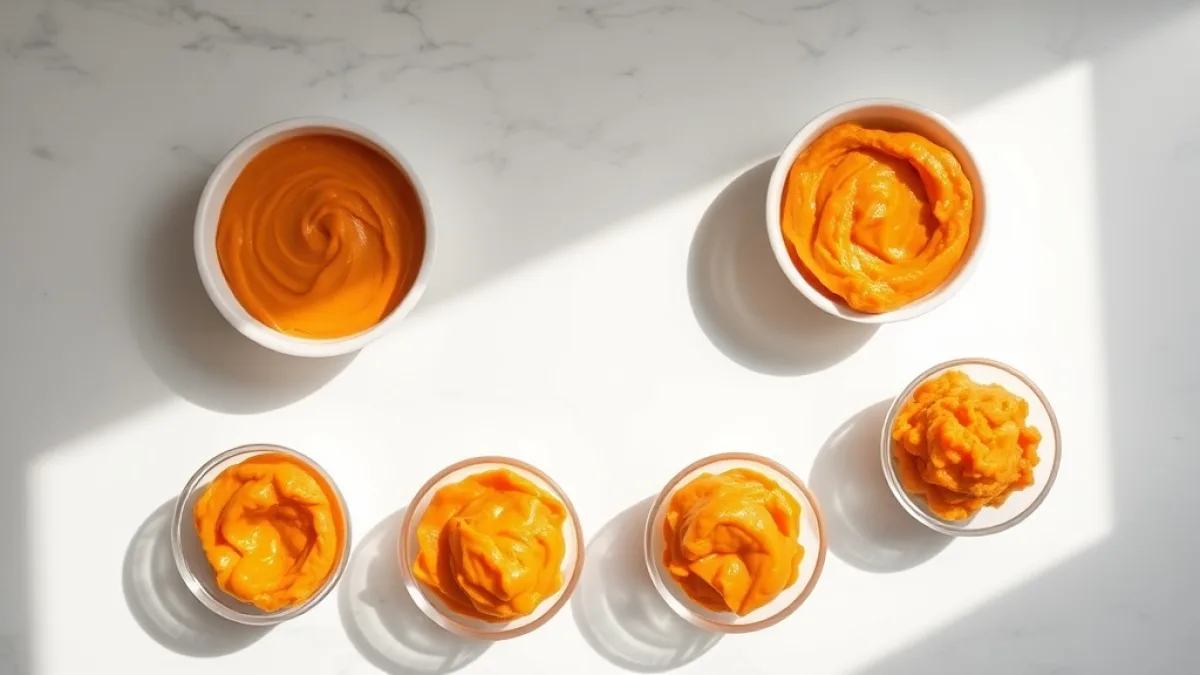
Your baby’s ability to handle different textures evolves quickly during the first two years. What works at six months will bore or frustrate them by ten months.
| Age | Texture | Preparation | Portion Size |
|---|---|---|---|
| 4-6 months | Completely smooth, thin | Blend until liquid-like, no lumps | 1-2 teaspoons to start |
| 6-8 months | Smooth, pudding consistency | Thicker than early stage, still very smooth | 2-4 tablespoons per serving |
| 8-10 months | Mashed with soft lumps | Mash with fork, leave small soft pieces | 4-6 tablespoons per serving |
| 10-12 months | Chopped, soft chunks | Dice into pea-sized pieces, well-cooked | 1/4 to 1/3 cup |
| 12+ months | Soft sticks or rounds | Steam until soft, cut into finger foods | 1/3 to 1/2 cup |
Watch for carotenemia if you’re serving carrots daily. Stick to 2-3 teaspoons maximum for younger babies and no more than 1/3 cup for toddlers. If you notice orange-tinted skin, simply reduce portions and add variety with other vegetables for a week or two.
5 Baby-Approved Combos with Exact Ratios
Once your baby tolerates plain carrot puree, combinations add variety and nutritional balance. Introduce each food alone first to watch for reactions, then mix them after three days of successful single-ingredient tests.
1. Carrot-Apple (2:1 ratio)
Steam 2 carrots and 1 peeled, cored apple together for 15 minutes. Blend until smooth. The apple adds natural sweetness and pectin for smoother texture.
2. Carrot-Sweet Potato (1:1 ratio)
Roast 2 carrots and 1 small sweet potato at 400°F for 30 minutes. Blend with a tablespoon of breast milk. This combo doubles down on beta-carotene for vision support.
3. Carrot-Pea (3:1 ratio)
Steam 3 carrots for 10 minutes, add 1/4 cup frozen peas, steam 5 more minutes. Blend smooth. Peas contribute protein and a subtle savory note.
4. Carrot-Parsnip (2:1 ratio)
Steam 2 carrots and 1 parsnip together for 20 minutes. Blend with olive oil. Parsnip adds earthiness and extra fiber.
5. Carrot-Butternut Squash (1:1 ratio)
Roast equal amounts of carrots and cubed butternut squash at 400°F for 25 minutes. Blend with formula. The squash creates an ultra-creamy consistency babies love.
Storage, Freezing, and Batch Tips
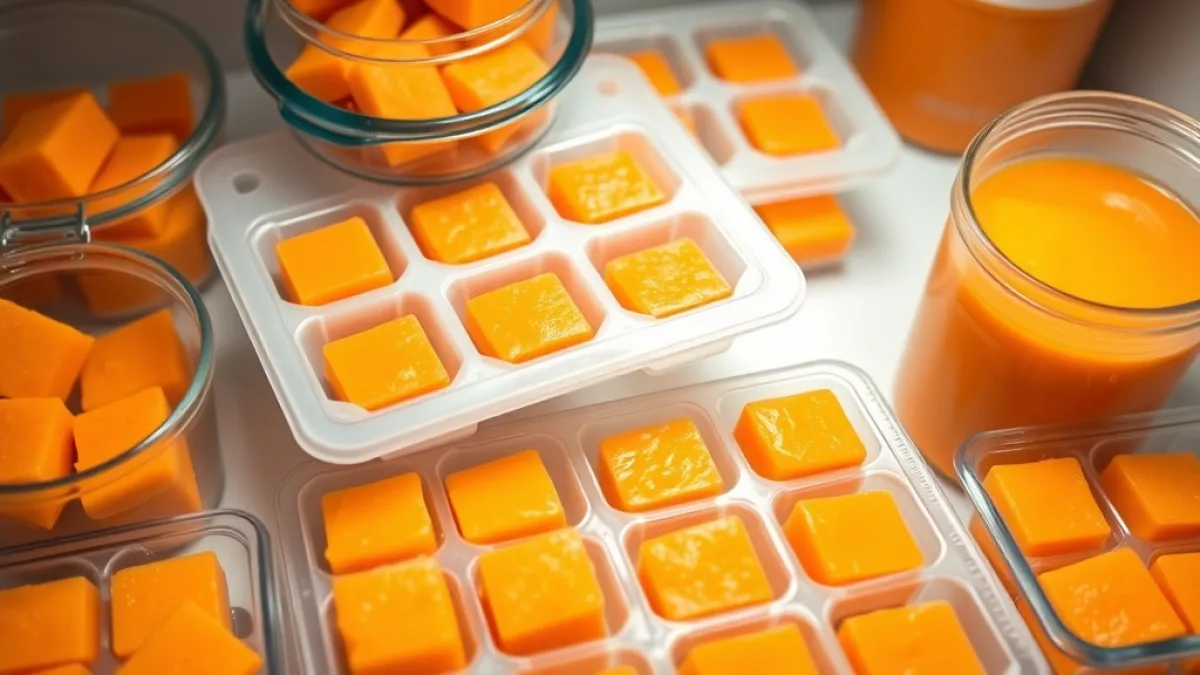
Making larger batches saves time, but only if you store them properly. Carrot puree degrades faster than you’d expect at room temperature.
| Storage Method | Container | Shelf Life | Best Practice |
|---|---|---|---|
| Refrigerator | Airtight glass or BPA-free plastic | 3 days | Cool completely before sealing |
| Freezer | Ice cube trays or silicone molds | 3 months | Pop frozen cubes into freezer bags after 24 hours |
| Thawing | Refrigerator overnight | Use within 24 hours | Never refreeze thawed puree |
Each standard ice cube holds about one ounce, which equals roughly two tablespoons. For a six-month-old, one cube provides a full serving. Label bags with the date and contents so you’re not guessing what’s what three weeks later.
Thaw cubes in the refrigerator overnight rather than using the microwave, which creates hot spots that can burn your baby’s mouth. If you’re in a rush, place the sealed container in a bowl of warm water for 10-15 minutes.
Troubleshooting: Fixes for Gritty, Watery, or Rejected Puree
Problem: Gritty texture that doesn’t smooth out
Cause: Carrots weren’t cooked long enough to break down cell walls completely. Solution: Steam an extra 5 minutes until carrots fall apart when pressed with a fork. A high-powered blender also helps, but cooking time matters more.
Problem: Watery puree that won’t thicken
Cause: Too much liquid added during blending, or carrots boiled instead of steamed. Solution: Add liquid more gradually, one teaspoon at a time. If already too thin, blend in a tablespoon of baby cereal to absorb excess moisture.
Problem: Baby refuses to eat it
Cause: Texture might be too thick for their current stage, or they need more exposure to accept it. Solution: Thin with breast milk to a more familiar consistency. Offer it 10-12 times over two weeks before deciding they truly dislike it. Babies often need repeated exposure to accept new flavors.
Problem: Orange skin tint after a week of daily servings
Cause: Carotenemia from excess beta-carotene. Solution: Reduce carrot portions to every other day and rotate in green vegetables. The tint fades within a week or two without any treatment needed.
When Can Babies Eat Raw Carrots
Raw carrots pose a serious choking risk until at least age four, and even then require supervision. The hard, crunchy texture doesn’t break down easily in small mouths, and babies lack the molars needed to grind them safely.
Stick with cooked, soft preparations until your child demonstrates strong chewing skills and follows directions reliably. Even for toddlers, grate raw carrots finely or cut them into matchstick shapes thin enough to bend easily. Never hand a whole raw carrot or thick rounds to any child under five.
Frequently Asked Questions
How much carrot puree should I give my 6-month-old?
Start with 1-2 teaspoons for the first few attempts. Watch for fullness cues like turning away or closing their mouth. Gradually increase to 2-4 tablespoons per meal over two weeks as they show interest. Let their appetite guide portions rather than forcing a specific amount.
Is it safe to give carrot puree every day?
Daily servings can lead to carotenemia, the harmless but noticeable orange skin tint from excess beta-carotene. Rotate carrots with other vegetables every other day to provide nutritional variety and prevent overload. Aim for a rainbow of colors across the week rather than relying on one food.
Should I steam or boil carrots for baby puree?
Steaming retains about 25% more vitamins compared to boiling, which leaches nutrients into the water you’ll discard. Steaming also produces better texture control for achieving that smooth consistency babies need early on. Roasting works well for older babies who can handle slightly thicker purees.
Do I need organic carrots for baby food?
Organic carrots contain fewer pesticide residues, but conventional carrots are safe when washed and peeled thoroughly. The choice depends on your budget and priorities. Either option provides the same nutritional benefits when prepared correctly.
What are signs of a carrot allergy in babies?
True carrot allergies are rare but can cause hives, facial swelling, vomiting, or difficulty breathing within minutes to two hours after eating. Introduce carrots alone without other new foods so you can identify the source if a reaction occurs. Call your pediatrician immediately if you notice any concerning symptoms.
Can I mix carrot puree with breast milk?
Yes, breast milk makes an excellent thinner for carrot puree, especially during early introductions. It adds familiar flavor and provides extra fat to help absorb vitamin A. Formula works equally well if that’s what your baby drinks. Both options create a smoother consistency than water alone.