

If you’ve ever tried to hit 200 grams of protein in a single day, you know how daunting it can feel. That’s a significant nutrition goal and it’s one that comes with plenty of questions, confusion, and half-finished meal plans scattered across the internet.
This guide cuts through the noise. Whether you’re an athlete, bodybuilder, or fitness enthusiast aiming to build serious muscle, we’ll show you exactly how to hit 200 grams of protein a day with real foods, flexible meal plans, and strategies that actually work for different diets and schedules.
Is 200 Grams of Protein a Day Right for You?
Before diving into meal plans, it’s worth asking: do you actually need this much protein?
200 grams of protein daily is a high intake level most appropriate for:
- Athletes and bodybuilders with significant muscle mass (typically 180–220+ lbs)
- Individuals in an aggressive muscle-building or body recomposition phase
- People with very high daily energy expenditure
For the average active adult, the general recommendation sits between 0.7 and 1.2 grams of protein per pound of body weight. A 150-lb person, for example, may only need 105–150 grams per day.
Consuming too much protein — even from clean sources like chicken breast or salmon — can strain the kidneys over time, crowd out fiber and healthy fats, and cause digestive discomfort. Always consult a registered dietitian or healthcare provider before dramatically changing your protein intake.
Bottom line: If your goals, body weight, and activity level justify it, eating 200 grams of protein a day is achievable and safe. The key is doing it smartly.
How to Eat 200 Grams of Protein a Day: 7 Practical Strategies
1. Spread Protein Across 4–5 Meals
Your body can only utilize roughly 20–40 grams of protein for muscle protein synthesis per meal. Cramming 100 grams into one sitting leads to poor absorption, bloating, and wasted intake. Aim to spread your 200 grams of protein across 4–5 meals and snacks.
2. Build Every Meal Around a Lean Protein Anchor
Chicken breast, turkey, eggs, Greek yogurt, tuna, and lean beef are the workhorses of a 200 gram protein diet. Each delivers 25–35 grams per serving with minimal fat or carbs.
3. Use Protein Powder Strategically
A single scoop of quality whey or plant-based protein powder provides 20–30 grams of protein in minutes. Use it to bridge gaps — not replace whole food meals.
4. Don’t Overlook Snacks
Protein-rich snacks like cottage cheese, hard-boiled eggs, beef jerky, and string cheese can easily add 40–50 grams to your daily total without much effort.
5. Meal Prep in Bulk
Cooking protein sources in large batches at the start of each week eliminates the daily scramble. Grill a week’s worth of chicken breasts, hard-boil a dozen eggs, and portion out Greek yogurt containers in advance.
6. Track Your Intake (At Least Initially)
Use a food tracking app to monitor how close you’re getting. Most people are surprised to find they’re 50–70 grams short without realizing it.
7. Stay Hydrated
High protein intake increases the kidneys’ workload. Drink at least 3–4 liters of water daily to support digestion and kidney health.
200 Grams of Protein Meal Plans by Diet Type
Below are six complete meal plans showing exactly how to hit 200 grams of protein a day across different eating styles. Protein estimates are based on standard serving sizes.
1. Omnivore 200g Protein Meal Plan
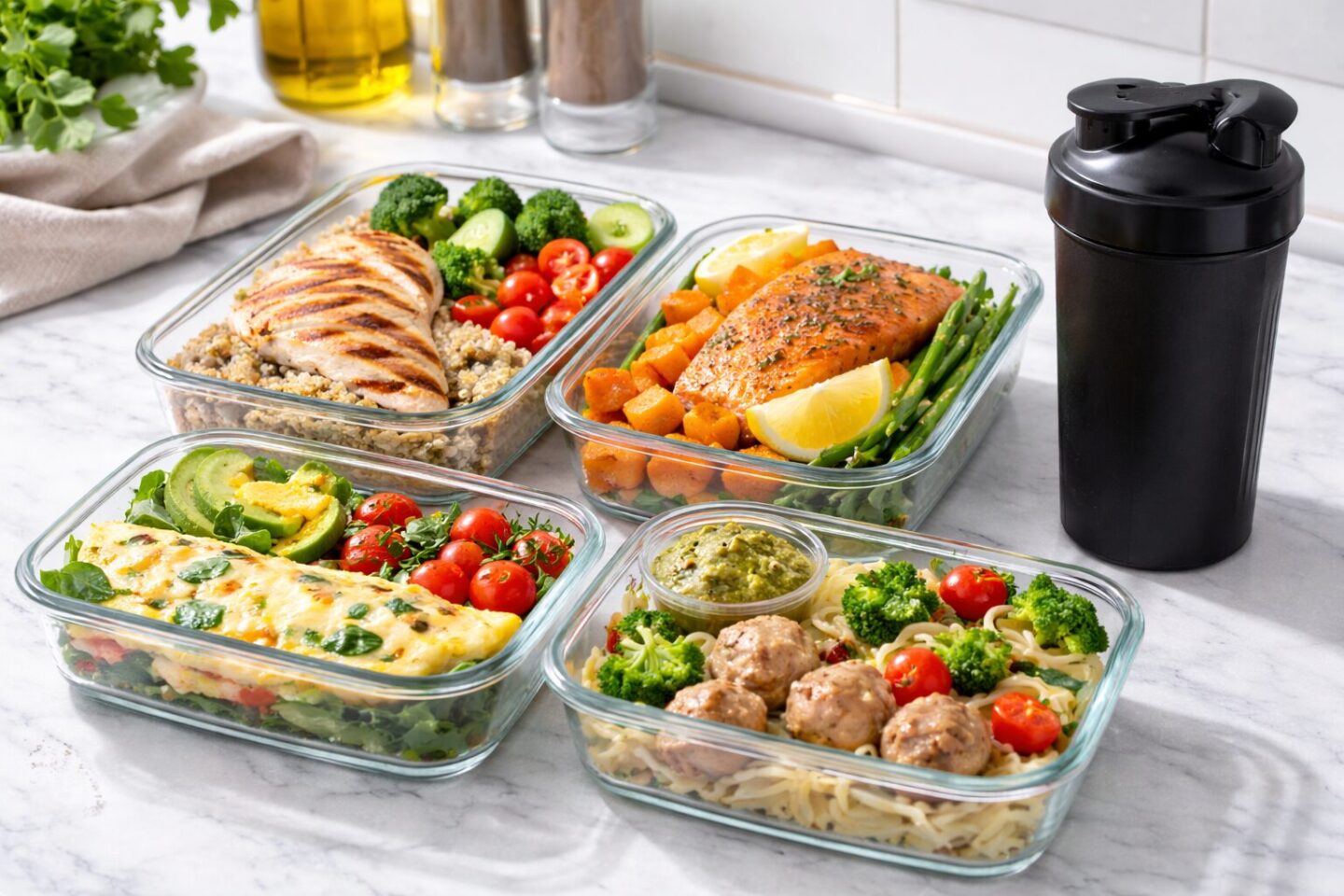
Best for: Most people. Maximum flexibility with animal and plant proteins.
| Meal | Foods | Protein |
| Breakfast | 4-egg omelet with turkey and cheese, OR Greek yogurt with nuts and 2 eggs | 40–50g |
| Lunch | 8 oz grilled chicken breast with quinoa and vegetables | 50–60g |
| Dinner | 8 oz salmon with sweet potato, OR lean steak with roasted vegetables | 50–60g |
| Snacks | Protein shake + cottage cheese with almonds + beef jerky | 40–50g |
| Daily Total | ~200g |
Pro tip: Swap in tuna salad with chickpeas at lunch for a cost-effective, high-protein alternative that still clears 45 grams.
2. Plant-Based 150–200g Protein Meal Plan
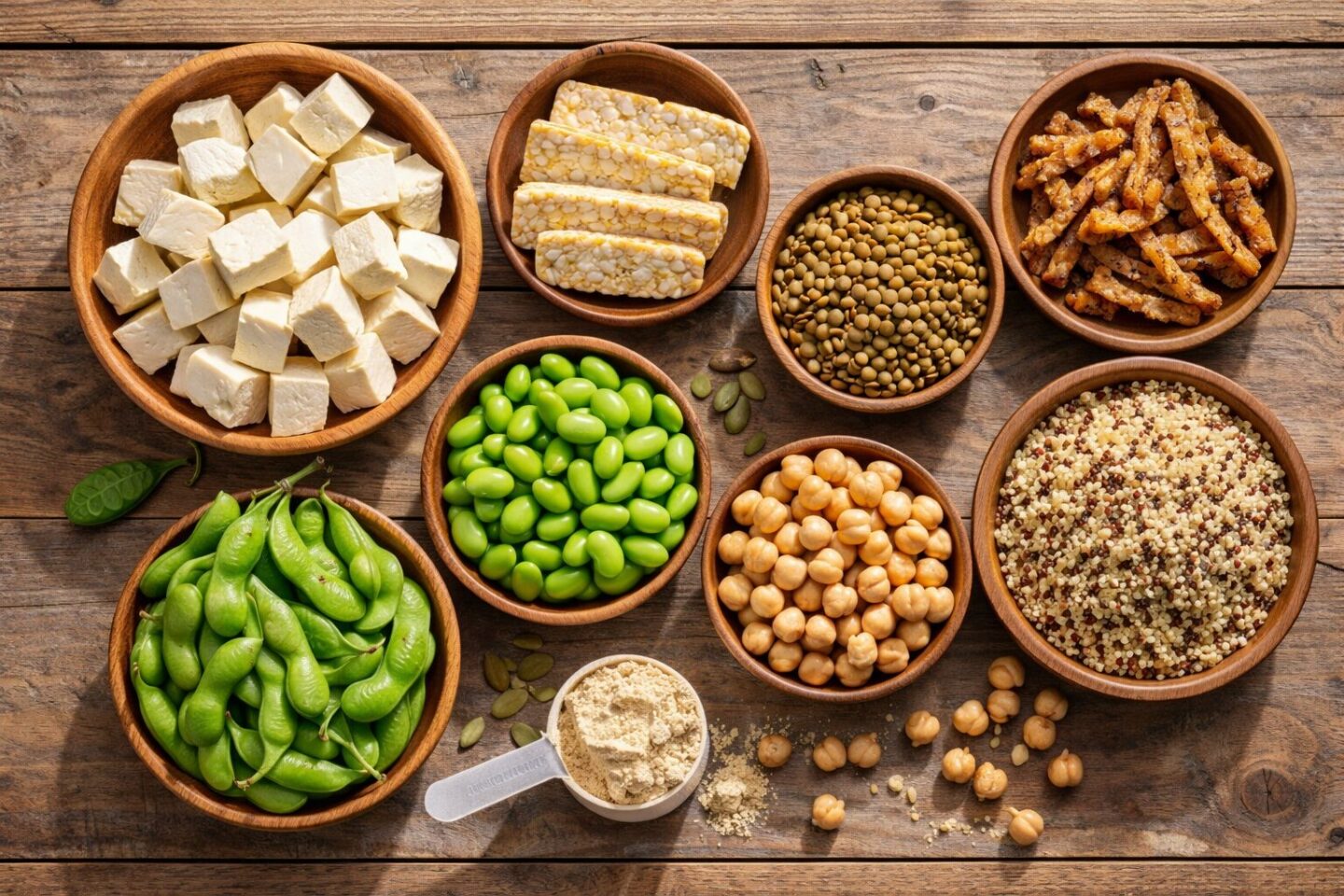
Best for: Vegans willing to use protein powder strategically.
Hitting 200 grams of protein on a vegan diet is challenging but absolutely achievable with the right foods.
| Meal | Foods | Protein |
| Breakfast | Tofu scramble with nutritional yeast, OR oatmeal with hemp seeds and almond butter | 35–40g |
| Lunch | Lentil curry with quinoa and chickpeas, OR tempeh Buddha bowl with edamame | 40–45g |
| Dinner | Seitan stir-fry with tofu, OR chickpea pasta with white beans | 40–45g |
| Snacks | 1–2 plant-based protein shakes + roasted chickpeas + peanut butter on whole grain | 40–50g |
| Daily Total | ~165–185g |
Note: Reaching a full 200 grams of protein on a purely plant-based diet typically requires 2 protein shakes daily and strategic food pairing (rice + beans, hummus + whole wheat pita). Many plant-based athletes target 175g as a realistic ceiling.
Highest-yield plant proteins:
- Seitan: 25–30g per 4 oz (the highest plant protein source by weight)
- Tempeh: 30–35g per cup
- Tofu: 10–20g per cup
- Lentils: 18g per cooked cup
- Edamame: 18g per cup
- Pea protein powder: 20–25g per scoop
3. Vegetarian 200g Protein Meal Plan (With Dairy & Eggs)
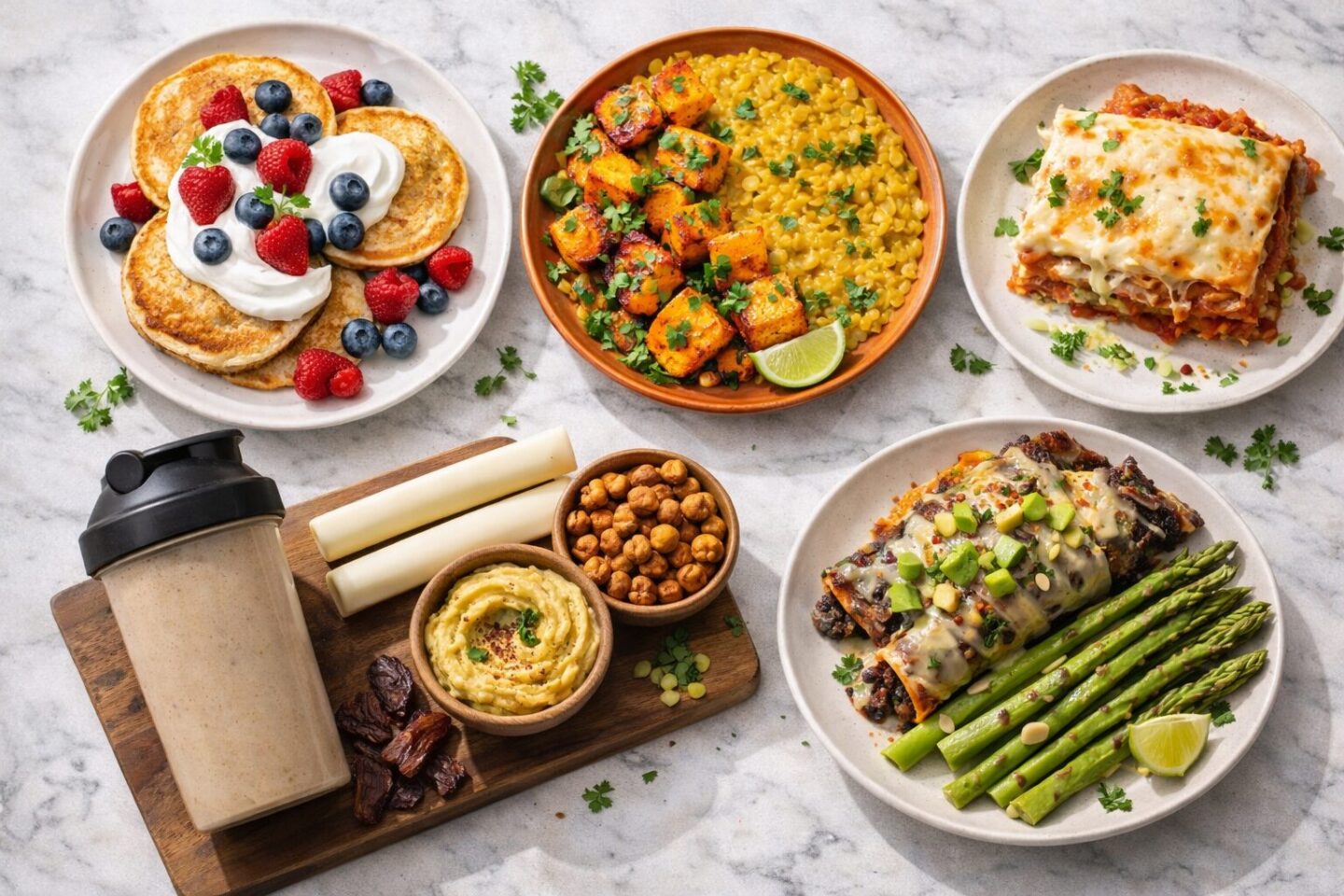
Best for: Lacto-ovo vegetarians with the most flexibility.
| Meal | Foods | Protein |
| Breakfast | Cottage cheese pancakes with Greek yogurt topping | 40–45g |
| Lunch | Paneer tikka with lentil dal, OR grilled cheese with white bean soup | 45–50g |
| Dinner | Vegetarian lasagna with ricotta and mozzarella, OR black bean enchiladas with cheese | 45–50g |
| Snacks | Protein shake + string cheese with nuts + roasted chickpeas with hummus | 35–40g |
| Daily Total | ~175–185g |
4. Keto High-Protein Meal Plan
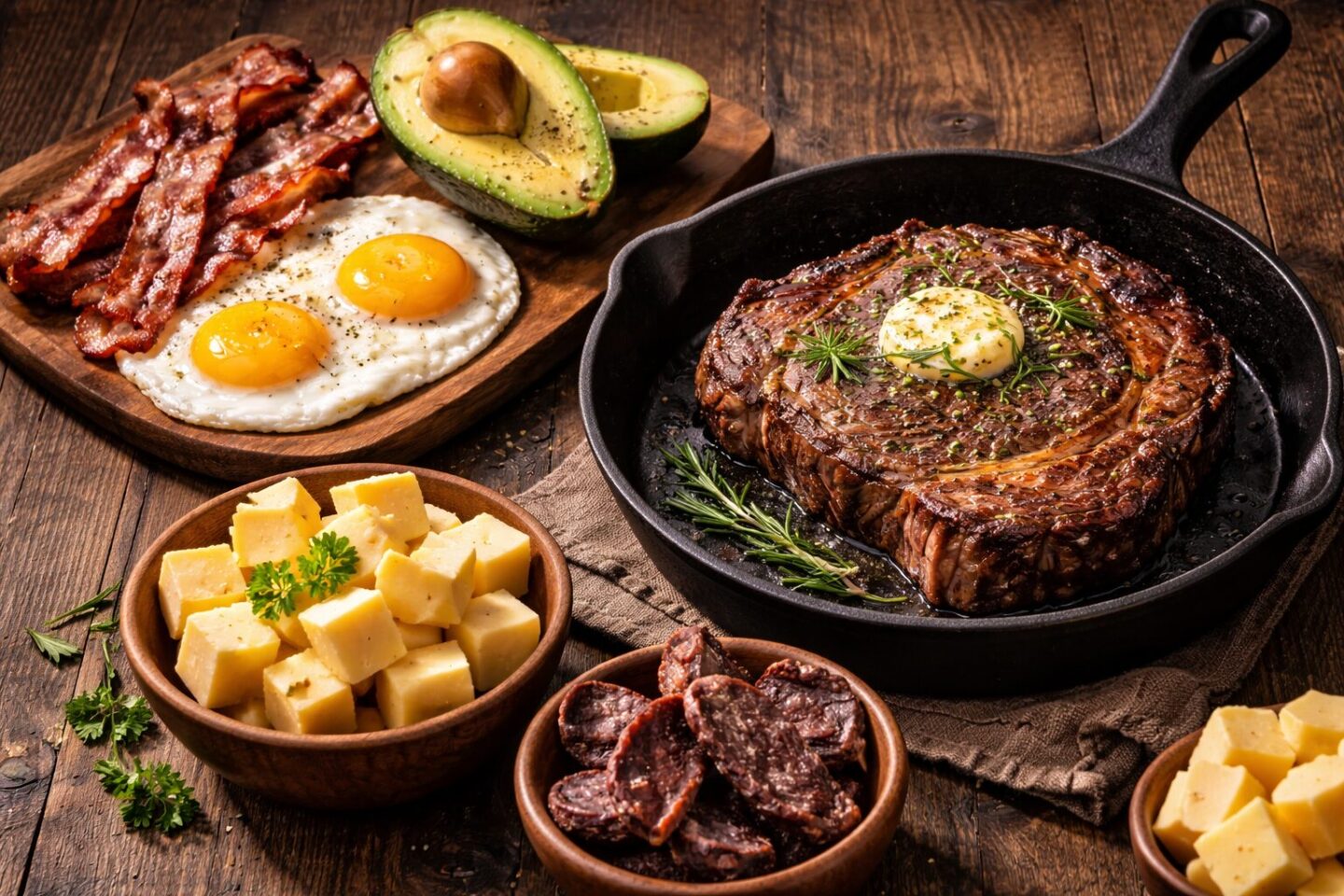
Best for: Those combining high protein with low-carb or ketogenic eating.
| Meal | Foods | Protein |
| Breakfast | Bacon, eggs, avocado, and cheese, OR smoked salmon with cream cheese | 40–45g |
| Lunch | Grilled chicken thighs with Caesar salad, OR bunless burger with bacon and cheese | 50–55g |
| Dinner | Ribeye steak with butter and green beans, OR baked salmon with asparagus | 50–55g |
| Snacks | Beef jerky and cheese cubes + deviled eggs + protein shake with almond milk | 35–40g |
| Daily Total | ~185–195g |
5. Mediterranean High-Protein Meal Plan
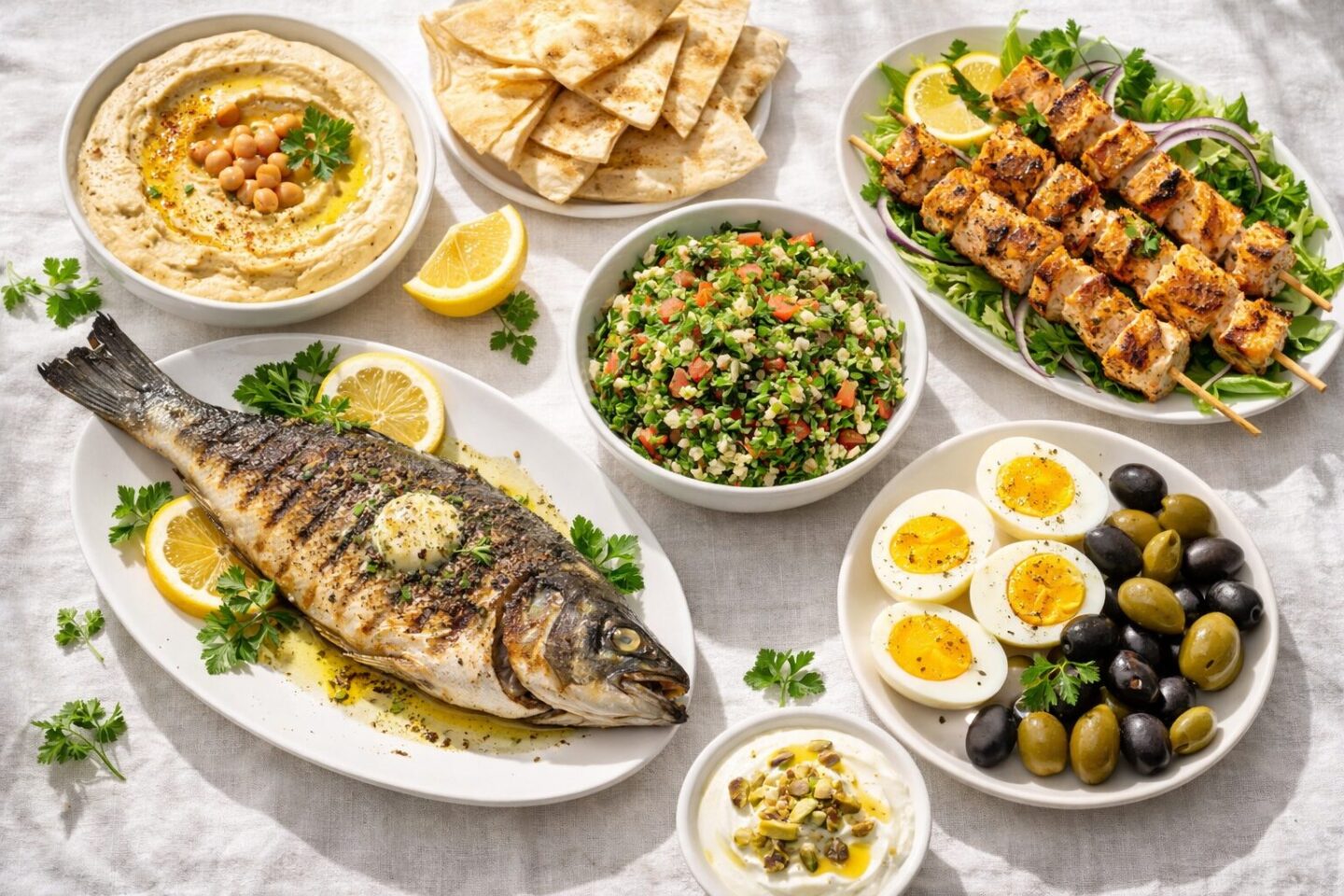
Best for: Those prioritizing heart health alongside muscle building.
| Meal | Foods | Protein |
| Breakfast | Shakshuka with feta and whole grain pita, OR Greek yogurt with walnuts | 35–40g |
| Lunch | Grilled chicken souvlaki with tzatziki, OR Mediterranean tuna with white beans | 45–50g |
| Dinner | Baked sea bass with chickpeas, OR lamb kebabs with hummus and tabbouleh | 45–50g |
| Snacks | Hummus with vegetables + Greek yogurt with pistachios + hard-boiled eggs | 35–40g |
| Daily Total | ~165–180g |
6. Paleo High-Protein Meal Plan
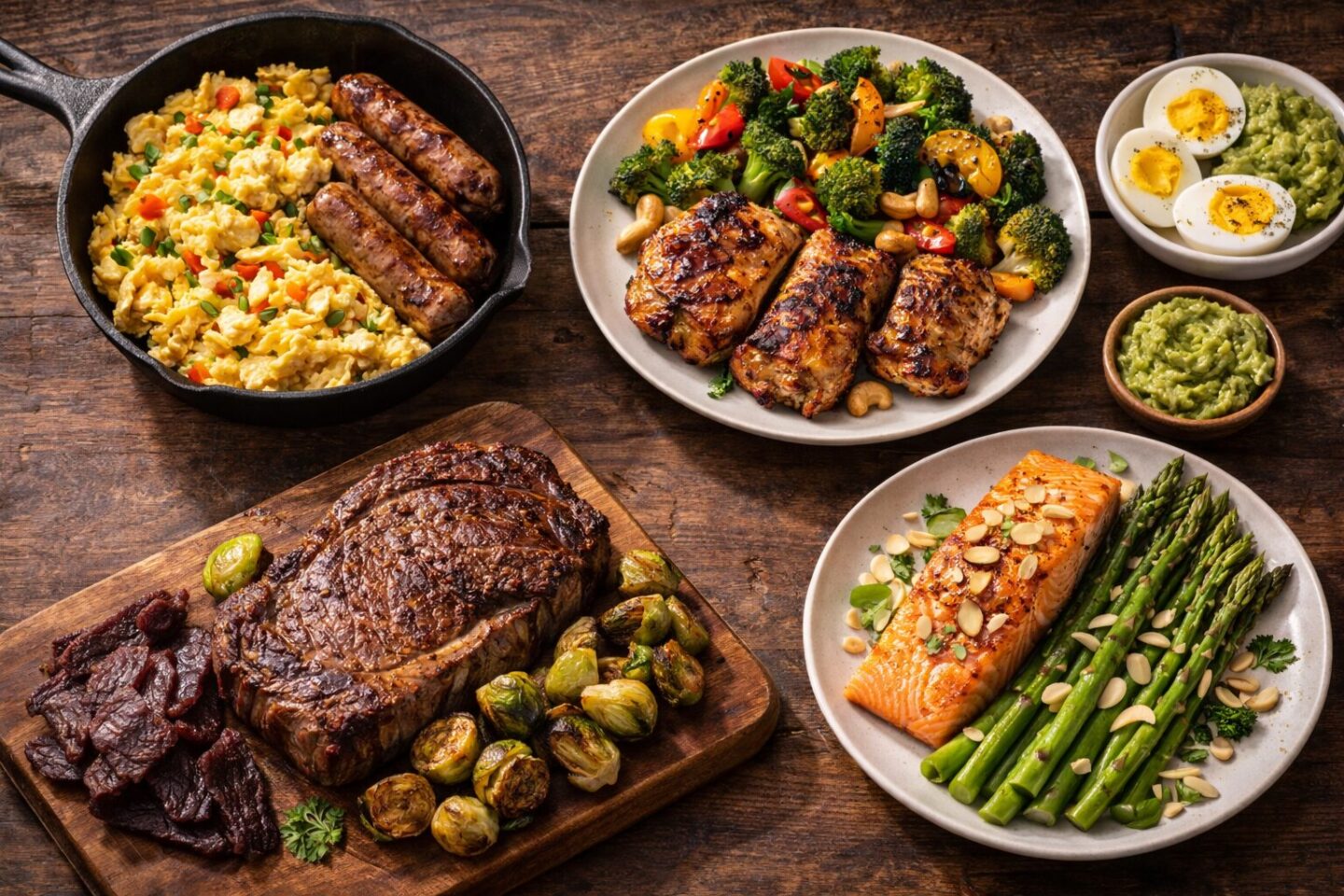
Best for: Those avoiding grains, dairy, and processed foods.
| Meal | Foods | Protein |
| Breakfast | 4-egg scramble with turkey sausage, OR protein smoothie with almond butter and collagen | 40–45g |
| Lunch | Grilled chicken with roasted vegetables and cashews, OR beef stir-fry with cauliflower rice | 50–55g |
| Dinner | Grass-fed steak with Brussels sprouts, OR wild-caught salmon with asparagus and almonds | 50–55g |
| Snacks | Hard-boiled eggs with guacamole + beef jerky + turkey roll-ups | 35–40g |
| Daily Total | ~185–195g |
Why Protein Quality Matters as Much as Quantity
Hitting 200 grams of protein isn’t just about the number — it’s about what kind of protein you’re eating.
Complete proteins (chicken, beef, eggs, fish, dairy, soy) contain all nine essential amino acids and are highly bioavailable. Incomplete proteins (most plant sources) require pairing to deliver the full amino acid spectrum.
Crucially, your body needs approximately 2–3 grams of leucine per meal to trigger muscle protein synthesis. This is why 20 grams of protein from chicken activates muscle growth more effectively than 20 grams from rice — leucine content differs significantly between sources.
Animal vs. Plant Protein: A Quick Comparison
| Factor | Animal Protein | Plant Protein |
| Amino acid completeness | Complete | Often incomplete (except soy, quinoa) |
| Leucine content | High | Moderate to low |
| Bioavailability | 90–99% | 60–80% |
| Additional nutrients | B12, iron, zinc, omega-3s | Fiber, antioxidants, phytonutrients |
| Best for 200g goal | Easier to achieve | Requires more planning and volume |
5 Common Mistakes That Make Hitting 200 Grams of Protein Harder
1. Relying Too Heavily on Protein Shakes
Liquid protein digests quickly and doesn’t trigger the same satiety response as whole foods. Build your 200 gram protein plan primarily around solid meals, using shakes to supplement — not replace — food.
2. Eating All Your Protein in One or Two Sittings
Cramming 80+ grams into a single meal causes bloating, discomfort, and poor utilization. Your muscles benefit more from consistent protein distribution across the day.
3. Cutting Carbs Too Aggressively
Severely restricting carbohydrates tanks your workout performance, which undermines the entire goal of eating this much protein in the first place. Carbs fuel your training — don’t sacrifice them on the altar of protein.
4. Ignoring Hydration
Every 100 grams of protein requires significant water for digestion and kidney filtration. Dehydration on a high-protein diet causes fatigue, constipation, and poor recovery.
5. Skipping Meal Prep
Without prepared protein sources on hand, you’ll consistently fall 40–60 grams short and end up reaching for less nutritious convenience options. Batch cooking is non-negotiable at this protein level.
Frequently Asked Questions About 200 Grams of Protein
Q: Can I eat 200 grams of protein a day to lose weight?
Ans: Yes — high protein intake supports fat loss by increasing satiety, preserving lean muscle during a caloric deficit, and boosting the thermic effect of food. However, protein alone doesn’t guarantee weight loss; total calorie intake still matters.
Q: Is 200 grams of protein too much for my kidneys?
Ans: For healthy individuals without pre-existing kidney conditions, research generally supports high protein intakes as safe. However, anyone with kidney disease, diabetes, or hypertension should consult a doctor before significantly increasing protein.
Q: What’s the cheapest way to eat 200 grams of protein a day?
Ans: Eggs, canned tuna, chicken breast, lentils, cottage cheese, and whey protein powder are the most cost-effective protein sources. Building your meals around these can keep 200 grams of protein daily surprisingly affordable.
Q: How long does it take to see results from eating 200 grams of protein?
Ans: Most people notice improvements in muscle recovery within 2–4 weeks of consistently meeting high protein targets. Visible muscle growth typically becomes apparent after 8–12 weeks when combined with progressive resistance training.
Final Thoughts: Making 200 Grams of Protein Work for You
Learning how to eat 200 grams of protein a day is less about perfection and more about building systems that work with your lifestyle. The meal plans above prove it’s achievable across virtually every dietary preference — from omnivore to plant-based to keto.
Start by choosing the plan that fits your diet type, batch-prep your protein sources on Sunday, and track your intake for the first two weeks until you develop an intuitive feel for it. Some days you’ll hit the target exactly; others you’ll come in at 175 grams — and that’s completely fine.
Consistency over time is what drives results. The best 200 gram protein diet is the one you can actually sustain.
Always consult a registered dietitian or healthcare provider before making major changes to your diet, especially at high protein intake levels.