

You’ve probably made French toast that turned out soggy in the middle, or watched the edges burn while the center stayed stubbornly raw. It’s frustrating, especially when you’ve used good challah bread and followed a recipe to the letter. The truth is, most recipes skip the crucial details that separate fluffy, golden French toast from disappointing breakfast.
This guide explains not just what to do, but why each step matters. You’ll learn how to choose the right bread, adjust soaking time based on your loaf’s condition, and manage heat so every slice cooks evenly. By understanding the principles behind the technique, you can adapt the recipe to whatever challah you have on hand and get consistent results every time.
Why Challah Makes Better French Toast
Challah has a higher egg-to-flour ratio than most breads, which gives it a tender crumb that absorbs custard without falling apart. The slightly dense texture holds its shape during soaking, while the natural sweetness from eggs and a touch of sugar in the dough means you don’t need to load up the custard with sweeteners.
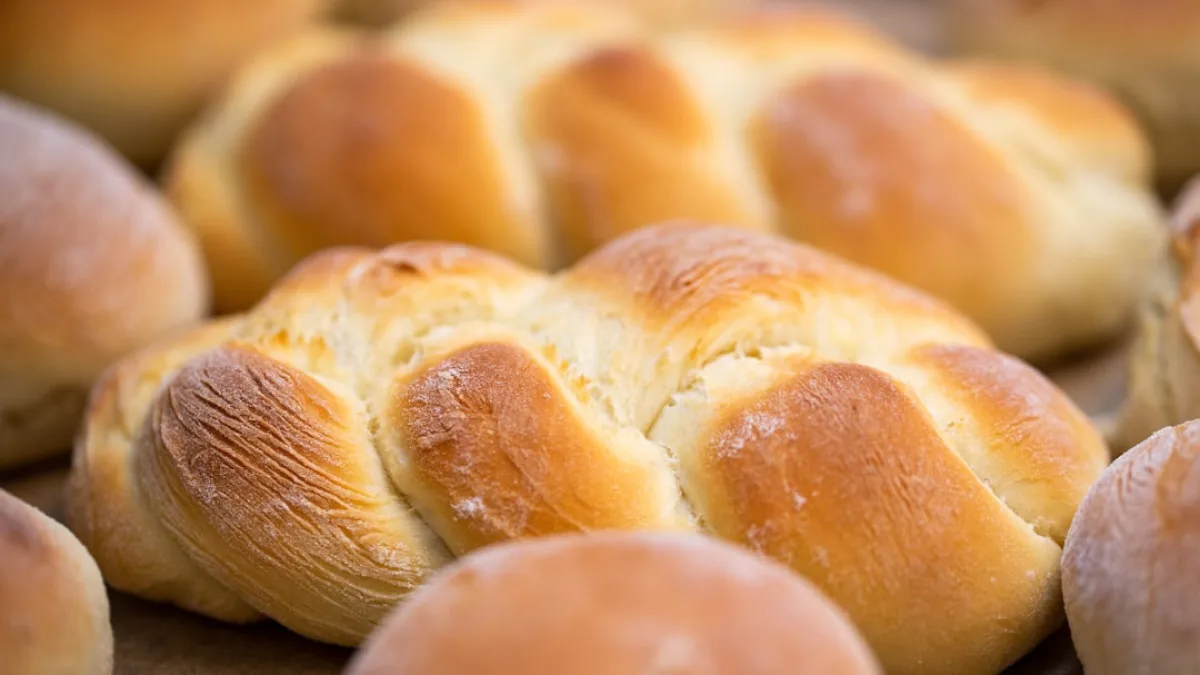
Photo by Evgeni Tcherkasski / Unsplash
Brioche is often suggested as an alternative, but it’s actually less ideal. The high butter content makes brioche too rich when combined with an egg-milk custard. The result feels heavy, and the custard doesn’t penetrate as evenly because the butter creates resistance. Challah’s lower fat content and structured crumb let the custard soak through cleanly, creating that signature fluffy interior.
Regular white bread absorbs too much liquid too quickly and becomes mushy. French bread has a crusty exterior that prevents even soaking. Challah sits in the sweet spot: sturdy enough to handle a proper soak, tender enough to create a custardy center.
How to Choose and Prepare the Bread
Fresh challah straight from the bakery smells amazing, but it’s actually not the best choice for French toast. Day-old bread has lost just enough moisture that it absorbs the custard more readily without becoming waterlogged. If your challah is fresh, leave it uncovered on the counter for 4-6 hours, or toast the slices lightly in a 250°F oven for 10 minutes.
Store-bought challah from the grocery store tends to be drier and less eggy than bakery or homemade versions, as noted by experienced home bakers. It still works fine, but you may need to adjust your soaking time slightly longer to compensate for the denser texture.
Slice your challah about 3/4 to 1 inch thick. Thinner slices cook too quickly on the outside before the custard sets inside. Thicker slices need longer soaking and lower heat to cook through without burning.
The Custard Formula That Actually Works
Most recipes list ingredients without explaining why the ratios matter. The basic custard is eggs and milk, but the proportion determines whether your French toast turns out rich and custardy or thin and rubbery.
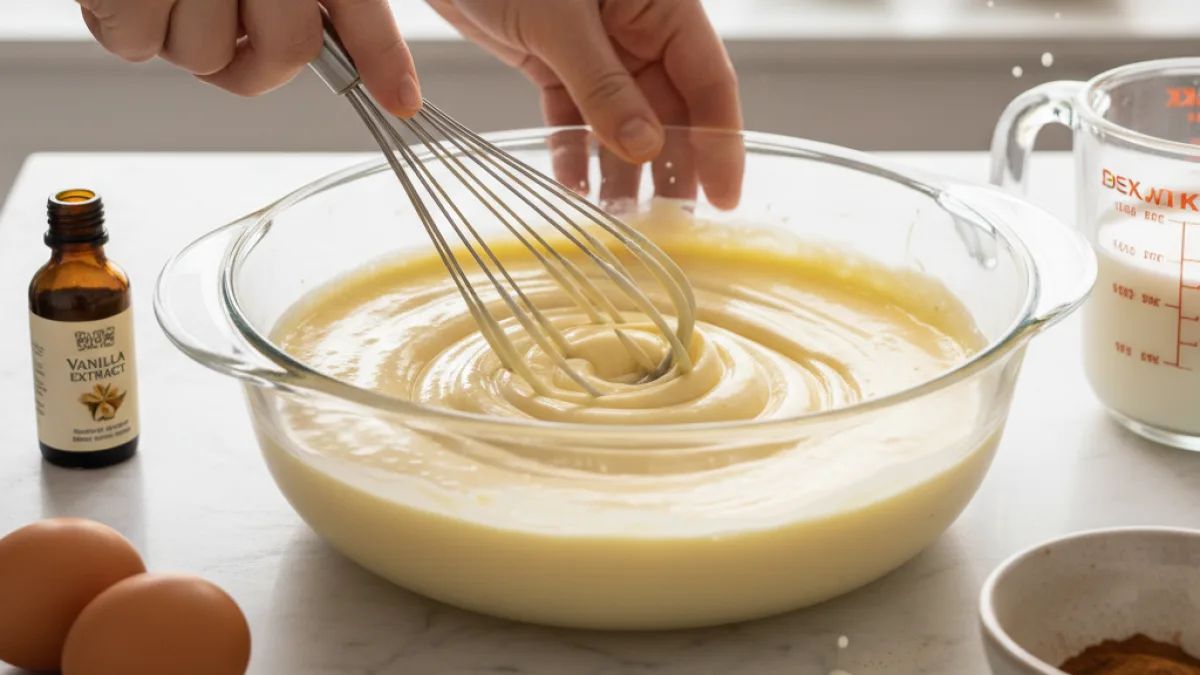
A good starting ratio is 1 large egg to 1/3 cup milk. This creates enough richness to coat the bread and set properly when cooked, without making the texture heavy. For four thick slices of challah, whisk together 3 large eggs with 1 cup whole milk.
Some recipes add flour to thicken the custard, which reduces the soaking time needed and creates a slightly sturdier coating. If you want to try this approach, whisk in 1/4 cup all-purpose flour until smooth. The texture becomes more like a thin pancake batter.
The sugar question confuses many people because recipes contradict each other. Some add a tablespoon of sugar or maple syrup to the custard, while others skip it entirely. The reason: quality challah is already sweetened with sugar and eggs in the dough. Adding more sugar to the custard creates extra sweetness that some people enjoy, but it can overwhelm the bread’s natural flavor. If you’re using bakery challah, skip the sugar in the custard and let people adjust sweetness with toppings. If your bread is plain or store-bought, a tablespoon of brown sugar or maple syrup in the custard helps balance the flavor.
Add 1 teaspoon vanilla extract and a pinch of cinnamon if you want warmth, but keep it subtle. The bread should taste like enriched custard, not a spice cake.
Soaking Time: The Decision Tree
This is where most people fail. Soaking too long makes the bread fall apart or turn soggy. Soaking too briefly leaves a dry, eggy coating that doesn’t cook into the bread.
The right soaking time depends on three factors: how fresh your bread is, how thick you sliced it, and how dense the custard is.
For day-old challah sliced 3/4 inch thick with a standard egg-milk custard, soak each slice for 60-90 seconds total, flipping once halfway through. This gives the custard time to penetrate without saturating the bread.
If your challah is stale or very dry, increase soaking to 2-3 minutes, turning once. The drier crumb needs more time to absorb liquid.
Thicker slices (1 to 1.5 inches) need 3-5 minutes of soaking. Some recipes recommend this extended soak for a restaurant-style custardy interior, turning the bread once during the soak so both sides absorb evenly.
Thinner slices (under 3/4 inch) should only soak for 30-45 seconds. They cook fast and don’t need as much custard.
If you added flour to your custard, reduce soaking time by about 30 seconds across the board. The thicker coating doesn’t need as long to adhere.
Heat Management: Medium Wins Every Time
High heat is tempting because it creates fast browning, but challah’s dense crumb needs time for the interior custard to set. If you cook over medium-high or high heat, the outside burns before the inside finishes cooking.
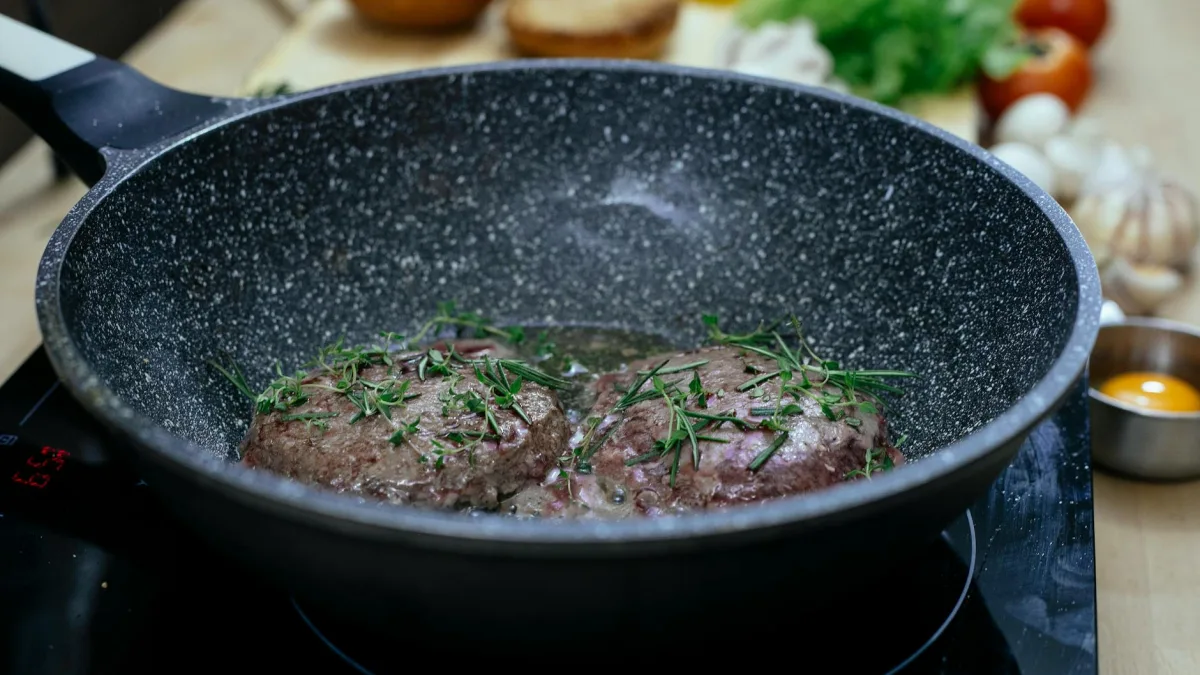
Photo by Katerina Holmes / Pexels
Set your burner to medium. Heat a heavy skillet (cast iron or stainless steel works best) for 2-3 minutes until a drop of water sizzles and evaporates within a few seconds. Add 1 tablespoon butter and let it melt completely, swirling to coat the pan.
When the butter foams but hasn’t browned yet, add your soaked bread. It should sizzle gently on contact. If the butter immediately turns dark brown, your heat is too high. Lower it and wait 30 seconds before adding the bread.
Cook the first side for 3-4 minutes without moving the slice. The edges should look set and golden when you peek underneath. Flip and cook the second side for 2-3 minutes. The French toast is done when both sides are deep golden brown and the center feels slightly firm when pressed gently with a spatula.
If the bread is browning too quickly (under 2 minutes per side), lower your heat slightly. If it’s taking longer than 5 minutes per side and not browning, raise the heat a bit. The sweet spot is a gentle sizzle that gives the custard time to cook through while developing a caramelized surface.
Cooking in Batches Without Losing Quality
If you’re making French toast for more than two people, you’ll need to work in batches. The challenge is keeping the first slices warm without drying them out while you finish cooking.
Preheat your oven to 250°F before you start cooking. Place a wire rack over a baking sheet and set it in the oven. As you finish each batch, transfer the cooked French toast to the rack. The wire rack prevents the bottom from getting soggy, and the low heat keeps everything warm without continuing to cook the custard.
Between batches, wipe out any burnt butter bits from the pan with a paper towel and add fresh butter. Old butter burns and creates bitter flavors that transfer to the next batch.
Give your custard a quick whisk before dipping each new slice. The eggs and milk separate slightly as they sit, and whisking ensures even coating.
The Complete Recipe
This recipe makes 4 servings using thick-sliced challah.
Ingredients:
8 slices day-old challah bread, cut 3/4 to 1 inch thick
3 large eggs
1 cup whole milk
1 teaspoon vanilla extract
1/4 teaspoon ground cinnamon
Pinch of salt
Butter for cooking
Instructions:
1. Preheat your oven to 250°F and place a wire rack over a baking sheet inside.
2. In a shallow dish wide enough to fit your bread slices, whisk together eggs, milk, vanilla, cinnamon, and salt until completely combined.
3. Heat a large skillet over medium heat for 2-3 minutes. Add 1 tablespoon butter and let it melt and foam.
4. While the pan heats, place one slice of bread in the custard. Let it soak for 30-45 seconds, then flip and soak the other side for another 30-45 seconds. The bread should feel saturated but not falling apart.
5. Lift the bread and let excess custard drip back into the dish. Place the slice in the pan immediately. Repeat with a second slice if your pan has room.
6. Cook without moving for 3-4 minutes, until the bottom is deep golden brown. Flip and cook for 2-3 minutes on the second side.
7. Transfer finished slices to the wire rack in the warm oven. Add fresh butter to the pan and repeat with remaining bread slices, whisking the custard between batches.
8. Serve immediately with your choice of toppings.
What to Serve on Top
Every plate needs at least two elements: something to add moisture (butter or syrup) and something to cut the richness (fresh fruit or citrus).
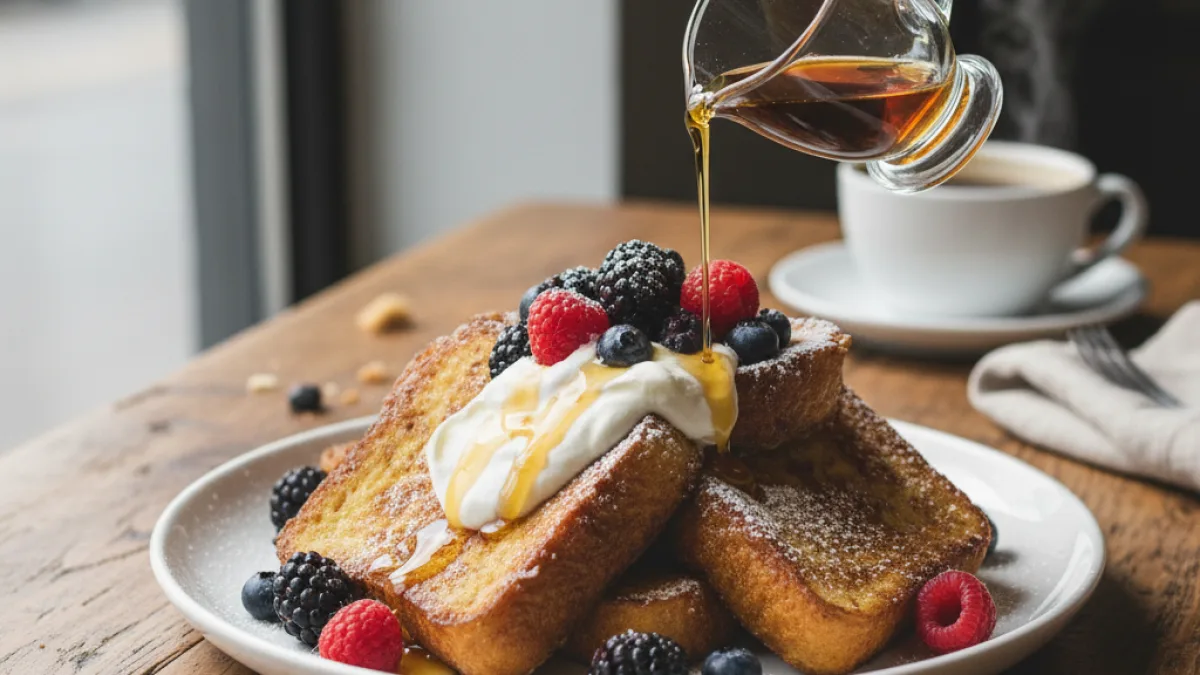
The simplest approach is a pat of butter that melts into the warm bread, plus pure maple syrup. This lets the challah’s flavor come through.
Fresh berries add tartness that balances the sweet custard. Strawberries, blueberries, or raspberries work equally well. If using frozen berries, you can make a quick sauce by simmering them with a tablespoon of sugar until they break down.
Whipped cream is traditional, but whipped cottage cheese offers a lighter alternative with subtle tang. Blend whole-milk cottage cheese on high speed for 60 seconds until completely smooth and fluffy.
A dusting of powdered sugar looks nice but adds texture more than flavor. Sprinkle it on just before serving so it doesn’t dissolve into the moisture.
For something different, zest an orange over the finished French toast and drizzle with honey. The citrus oil cuts through the richness and adds brightness. Some recipes take this further with orange honey syrup or supremed orange segments for a Mediterranean-inspired variation.
Common Problems and How to Fix Them
Soggy interior: You soaked the bread too long, or your custard had too much milk relative to eggs. Next time, reduce soaking by 30 seconds and check your egg-to-milk ratio. The custard should coat a spoon lightly, not run off like water.
Dry interior with eggy coating: You didn’t soak long enough, or your bread was too fresh. Let the bread dry out a bit before using, and give it a full 90 seconds in the custard.
Burnt outside, raw inside: Your heat was too high. Lower to medium and give the bread more time to cook through. The gentle heat lets the custard set all the way to the center.
Bread falling apart during soaking: Your bread was too stale or your custard too thin. If the bread is very dry, add 2 tablespoons flour to your custard to thicken it, which helps it cling to the surface rather than oversaturating the crumb.
Rubbery texture: Too many eggs in the custard. Stick to the 1 egg per 1/3 cup milk ratio. More eggs create a firmer, less tender texture.
Make-Ahead Options
You can prepare the custard mixture the night before and store it covered in the refrigerator. Whisk it well before using, as the eggs and milk will separate slightly.
Some people soak the bread and refrigerate it overnight for a make-ahead breakfast, but this changes the texture. The bread becomes very soft and almost pudding-like. If you enjoy that consistency, arrange soaked slices in a single layer on a parchment-lined baking sheet, cover tightly with plastic wrap, and refrigerate up to 12 hours. Cook straight from the fridge, adding an extra minute per side.
Already-cooked French toast reheats reasonably well. Let it cool completely, then store in an airtight container in the refrigerator for up to 2 days. Reheat in a 250°F oven for 8-10 minutes until warmed through. It won’t be quite as good as fresh, but it’s acceptable for meal prep.
When to Use This Recipe
This works any time you have challah that needs using. The day after a Jewish holiday when you have leftover bread is perfect timing, since the challah will be slightly stale and ideal for soaking.
It’s equally good for weekend breakfast when you have time to work in batches, or for a special brunch when you want something more interesting than plain toast but don’t want to spend an hour cooking.
The technique scales easily. The recipe as written serves four people with two slices each. For two people, halve everything. For a crowd, double the custard and keep finished slices warm in the oven while you work through the batch.
The most important thing is understanding why each step matters, so you can adjust based on the bread you have and the results you want. French toast isn’t complicated, but the details make the difference between something forgettable and something people ask you to make again.