


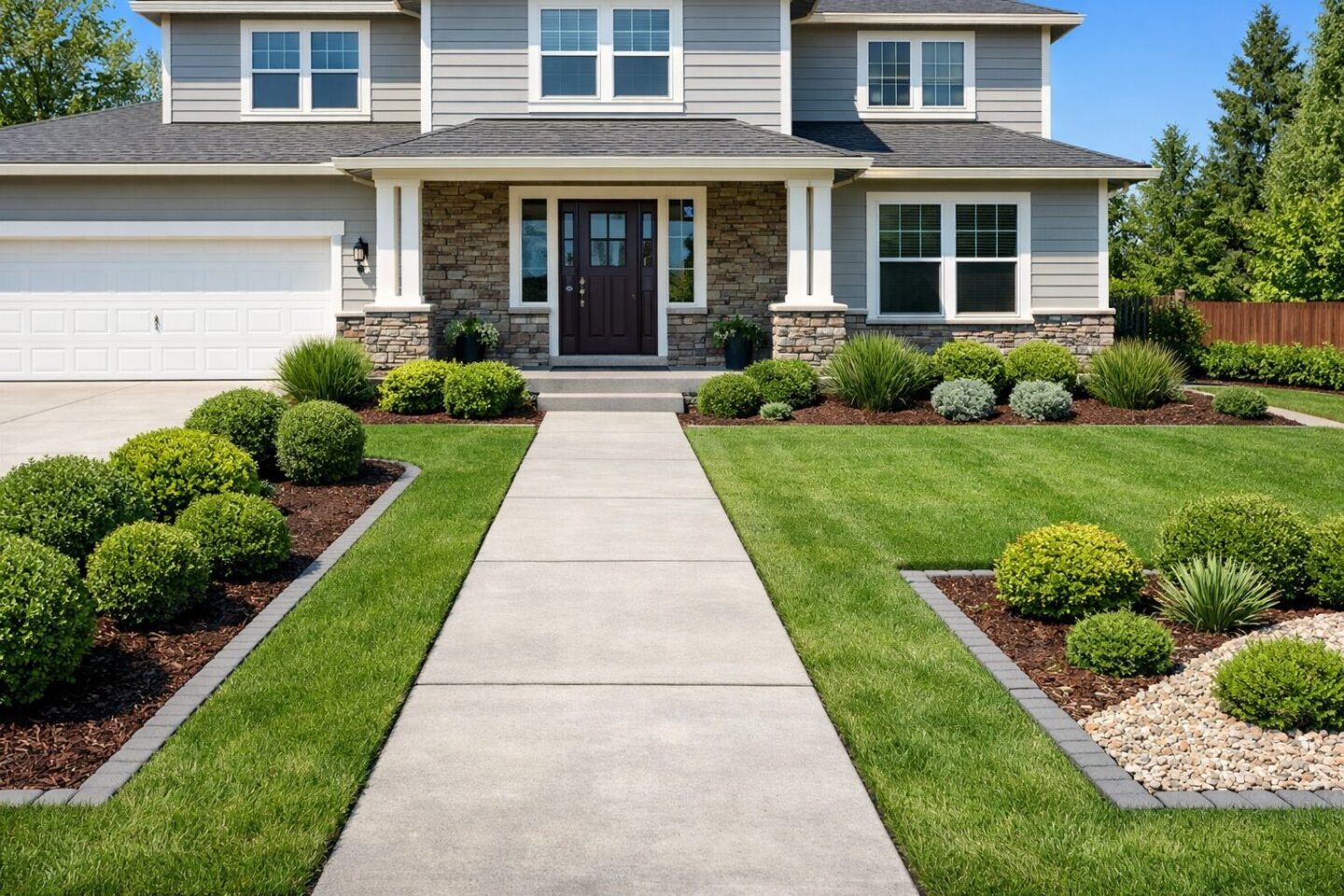
Your front yard is the first thing guests and neighbours notice, but that doesn’t mean it has to eat up every weekend. Low maintenance front yard landscaping is all about working smarter: choosing a clean layout, relying on plants that don’t need babying, and using materials that hold their shape season after season.
The good news? A yard that practically takes care of itself can look just as polished—sometimes more polished—than one that demands constant attention. In this guide, you’ll walk through a simple planning method, explore ten layout ideas you can mix and match, and pick up practical tips on plants, materials, and an easy upkeep routine. Whether you’re starting from scratch or just tired of trimming every Saturday, there’s something here you can use right away.
What Makes a Front Yard Truly Low Maintenance
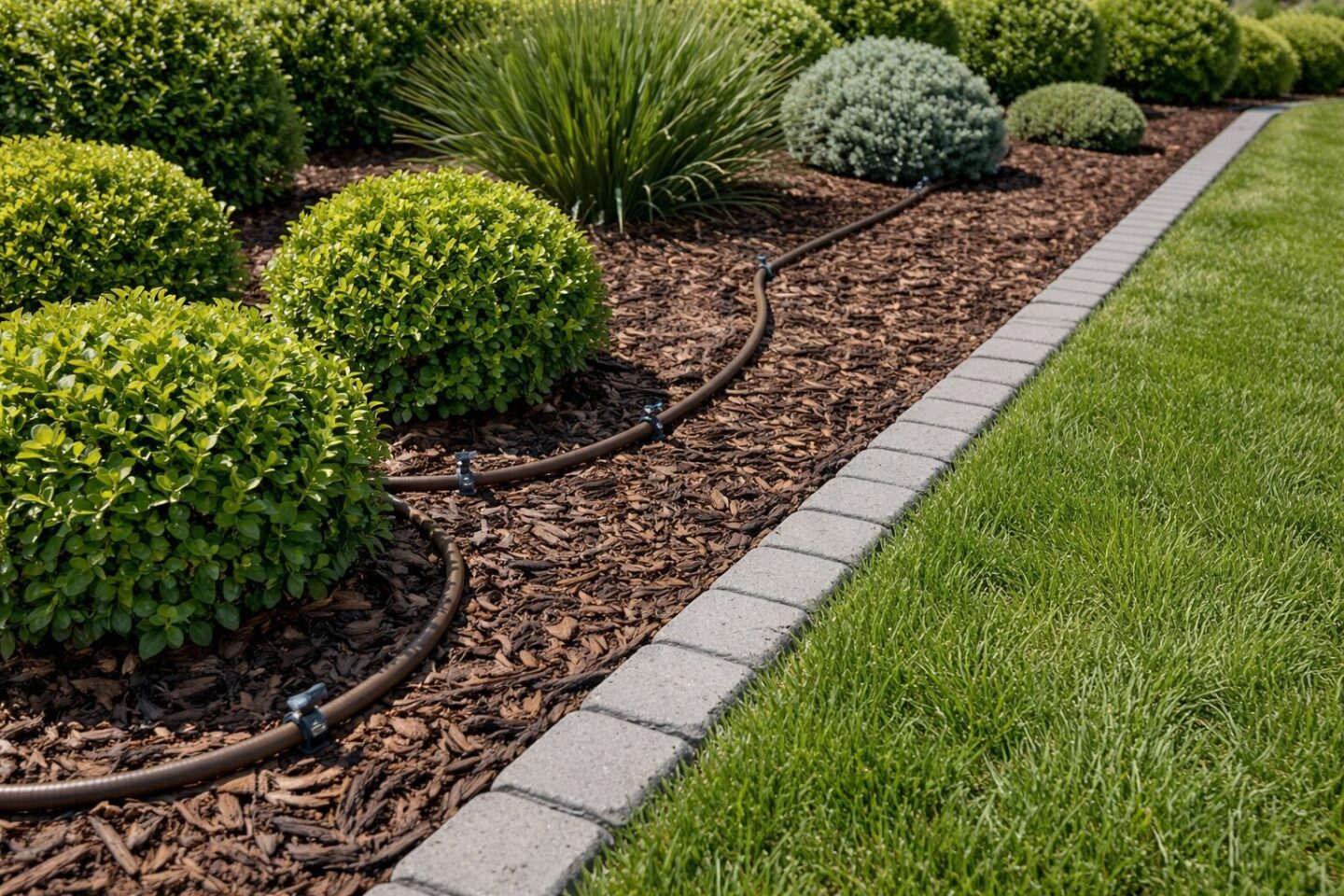
Low maintenance doesn’t mean “no effort ever.” It means the design itself does most of the heavy lifting so you don’t have to. Here’s how that works in practice.
Fewer edges and beds mean fewer chores. Every curved border or tiny planting pocket is another line you’ll need to edge and weed. Simplify the shapes, and you’ll cut your weekend to-do list in half.
Ground coverage blocks weeds before they start. A generous layer of mulch, gravel, or a low-growing groundcover shades the soil so weed seeds struggle to sprout. Think of it as a built-in defense.
Repeating the same plants creates calm and saves time. When you use three to five plant types instead of fifteen, your beds look intentional and you only need to learn a handful of care routines.
A drip or micro-irrigation upgrade can help, too. According to the EPA’s WaterSense program, micro-irrigation systems can use 20 to 50 percent less water than conventional sprinkler setups because they deliver water directly to plant roots, reducing loss from wind, runoff, and evaporation (source: EPA WaterSense, epa.gov/watersense/microirrigation). If watering chores are what wear you out, even a basic drip line in your main beds can make a real difference.
A Quick Front-Yard Plan That Prevents Weekend Chores
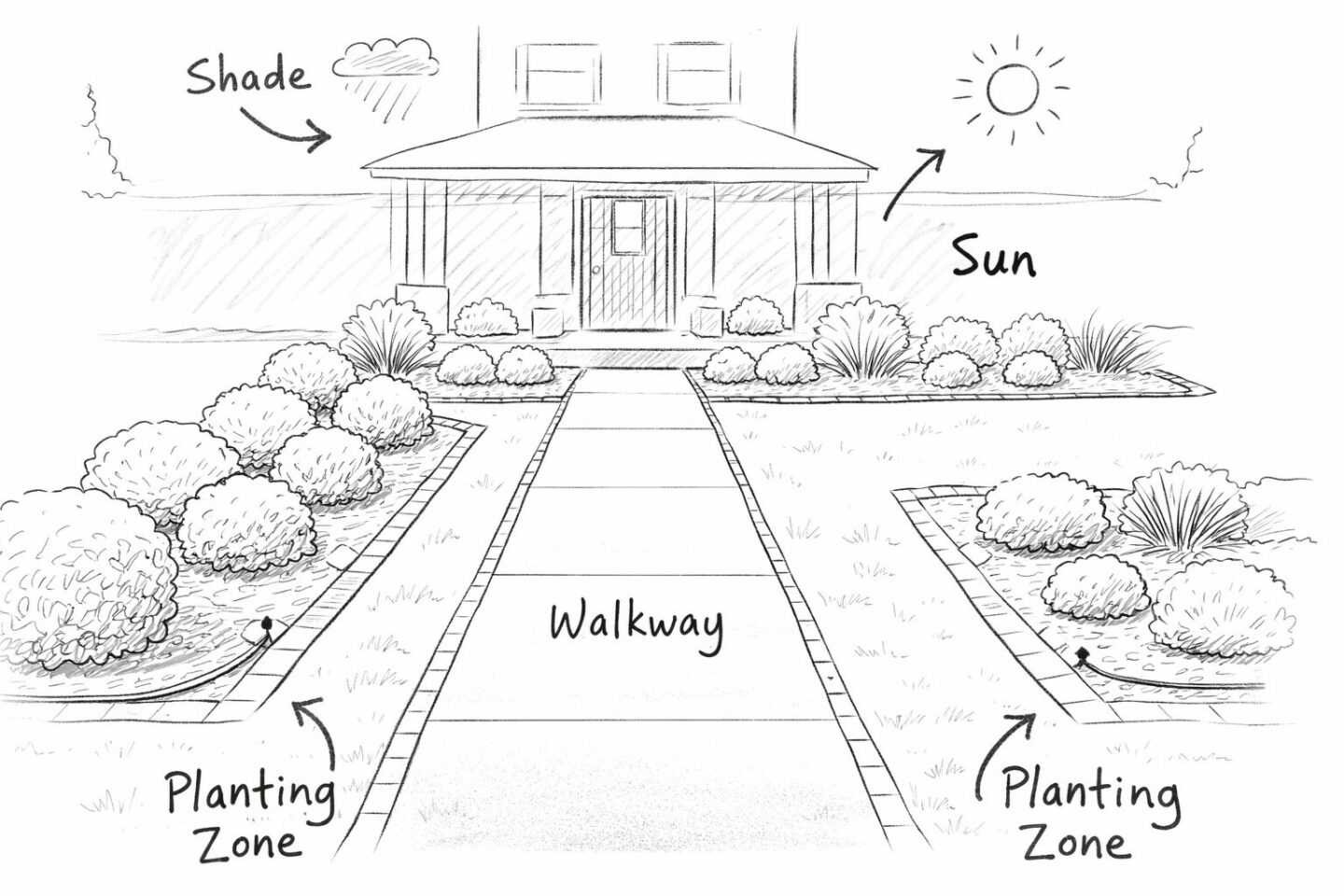
Before you buy a single plant, spend 20 minutes on a yard audit. Walk your front yard at different times of day and jot down what you see. This tiny step prevents the most expensive mistake in landscaping: putting the right plant in the wrong spot.
Your three-step yard audit:
- Sun exposure: Note which zones get full sun, partial shade, or full shade throughout the day.
- Water flow and slope: Watch where water pools or runs off after rain. Soggy corners need different plants than dry slopes.
- Foot traffic: Where do you, the mail carrier, and guests actually walk? That’s where hardscape should go—not delicate plants.
Then follow this simple design rule:
- Pick one main path from the sidewalk or driveway to your front door.
- Create two planting zones on either side of that path.
- Fill zones with groups of the same plant, not a patchwork of singles.
- Add one accent feature—a boulder, a pot cluster, or a low-voltage light—for visual interest.
Tip: Plant performance depends on your local climate, soil, and sun exposure. If you’re unsure which varieties thrive in your area, your local university extension office or nursery is the best resource.
10 Low-Maintenance Front Yard Landscaping Ideas
Below are ten layout ideas. The trick is to pick one main layout and one accent detail, then build outward. You don’t need all ten—just one combo that fits your space. A front yard that knows what it’s trying to be always looks better than one that’s trying everything.
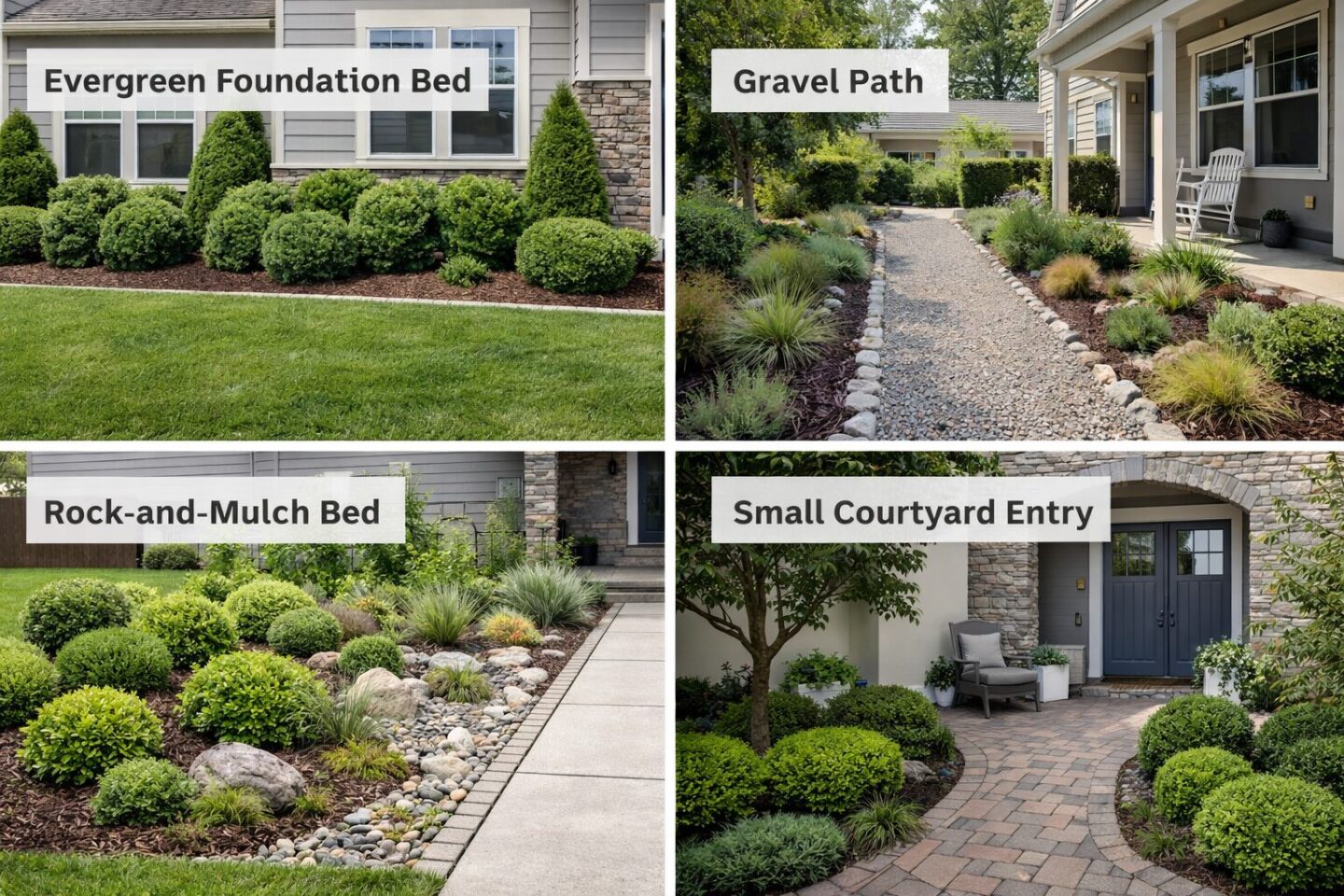
- Evergreen Foundation Bed With Clean Lines
Best for: Classic and traditional-style homes where you want year-round structure.
Why it stays easy: Evergreen shrubs keep their shape with one or two light trims a year. Since they don’t drop leaves the way deciduous plants do, you skip the fall cleanup scramble.
Style tip: Line shrubs along the front of the house at a consistent height and leave a mulched strip between the bed and the wall for airflow. Choose compact, slow-growing varieties suited to your region.
- Mulch ‘Island’ Beds (Less Edging, Fewer Weeds)
Best for: Yards with open lawn where you want to reduce mowing without eliminating grass entirely.
Why it stays easy: Rounded island beds are quicker to edge than beds with lots of corners. A thick mulch layer suppresses weeds and holds moisture.
Style tip: Group three to five plants of the same type in each island for a tidy, intentional look instead of a random mix.
- Rock + Mulch Blend (Modern, Tidy, Minimal)
Best for: Contemporary or desert-inspired styles where you want a clean, architectural feel.
Why it stays easy: Rock doesn’t decompose, so it rarely needs refreshing. Pairing it with mulch in planting pockets gives plants the organic material they need while the rock handles open areas.
How to keep it from looking harsh: Add one or two soft-textured plants—an ornamental grass or a mounding perennial—to break up the hard surfaces.
- Driveway Border That Can Handle Heat
Best for: Homes where the driveway dominates the front view and reflected heat bakes nearby plants.
Why it stays easy: A simple strip of heat-tolerant groundcover or gravel between the driveway and lawn eliminates the awkward strip that’s always too hot to grow grass well.
Material tip: Decomposed granite or river rock works well here. Avoid dark-colored stone near asphalt—it amplifies heat.
- Simple Gravel or Permeable Paver Path
Best for: Any yard size. A clear path prevents guests from cutting through beds and compacting soil.
Why it stays easy: Gravel or permeable pavers don’t crack the way poured concrete can, and they let rainwater drain through instead of pooling.
Safety and comfort note: Choose pea gravel or a fine, compacted aggregate for stable footing. Loose, round stones can shift underfoot.
- Small Entry Courtyard (Less Lawn, More Structure)
Best for: Small front yards or homes where you want an inviting transition between the sidewalk and front door.
Why it stays easy: Hardscape—stone, brick, or pavers—replaces turf, eliminating mowing in that zone entirely.
Decor tip: Add two matching planters on either side of the door and a single low-voltage path light. Simple symmetry does the styling for you.
- Native-Style Planting With Crisp Edges
Best for: Eco-minded homeowners who want a natural look without a “wild” vibe.
Why it stays easy: Plants native to your area are adapted to the local rainfall and soil, which means less watering and fewer replacements. Choose varieties suited to your specific region for best results.
Keep-it-neat trick: Use a crisp metal or stone edge around every bed. The contrast between natural plantings and a sharp border keeps the yard looking intentional.
- Container-Heavy Front Porch Look
Best for: Renters, condo owners, or anyone who wants flexibility to swap seasonal color without re-landscaping.
Why it stays easy: Containers limit root spread and weeds. You can move pots to chase sunlight or tuck them away in extreme weather.
Watering shortcut: Use large pots (they dry out slower) and consider self-watering inserts or a drip line threaded through your pot grouping.
- Shade-First Layout That Stops Plant Struggle
Best for: Front yards with mature trees or north-facing exposure where sun-loving plants refuse to thrive.
Why it stays easy: When you stop fighting the shade and choose plants that actually want it, everything performs better with less intervention.
Texture tip: Layer different leaf sizes—broad hostas behind fine ferns, for example—to add depth without relying on flowers.
- The ‘One Accent + One Texture’ Rule
Best for: Anyone who feels overwhelmed by choices. This rule simplifies every decision.
Why it stays easy: Pick one accent material (a boulder, a pot cluster, a small ornamental tree) and one ground texture (mulch, gravel, or a groundcover). Pair them and repeat. Done.
Examples of pairings: A single Japanese maple with a mulch bed. A trio of tall planters on a gravel pad. One ornamental grass drift with a stone edge.
Planting Choices That Stay Neat With Less Pruning
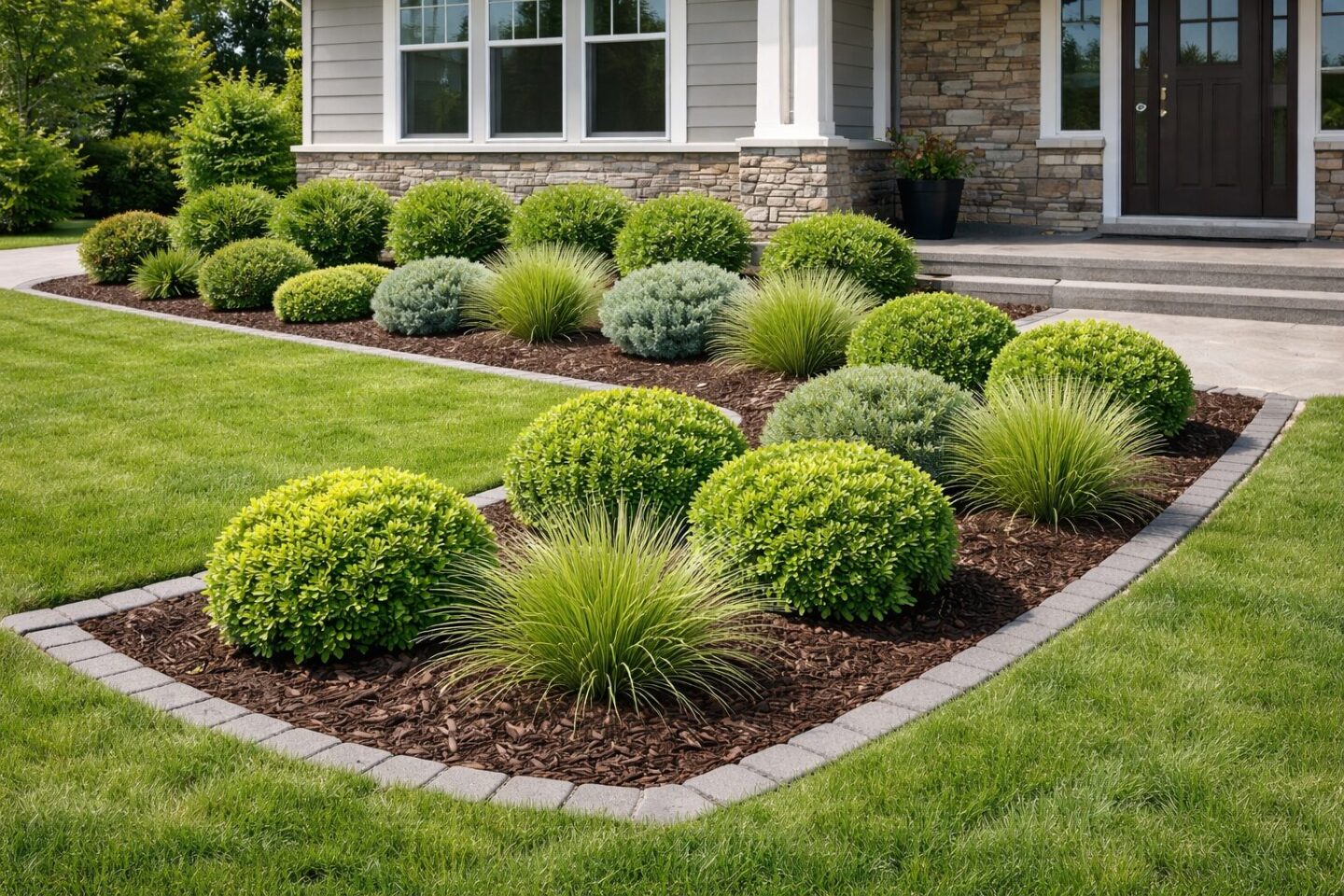
The single biggest time-saver in any front yard is choosing plants that grow to the size you actually want—without constant trimming. Look for compact, slow-growing varieties and repeat them across your beds. Repetition reads as intentional design, not laziness.
Lean on these plant categories:
- Evergreen shrubs: Provide year-round structure and need only one or two shaping trims per year.
- Ornamental grasses: Add movement and texture, tolerate heat, and only need cutting back once in late winter.
- Hardy perennials: Come back each year without replanting. Choose varieties with long bloom seasons for more impact with less effort.
- Groundcovers: Spread to fill gaps, suppress weeds, and reduce the area you need to mulch.
Limit annuals to containers or one small accent bed. They add color, but they need replacing every season, which adds cost and work. Instead, let your shrubs and perennials handle the structure, and use annuals as a seasonal bonus.
Group plants by water needs. Keeping thirsty plants together and drought-tolerant plants together means you water efficiently instead of overwatering half your beds to keep the other half alive.
Disclaimer: Plant performance varies by climate, sun exposure, and soil type. Check with your local nursery or cooperative extension office before purchasing.
Materials That Reduce Weeding and Edging
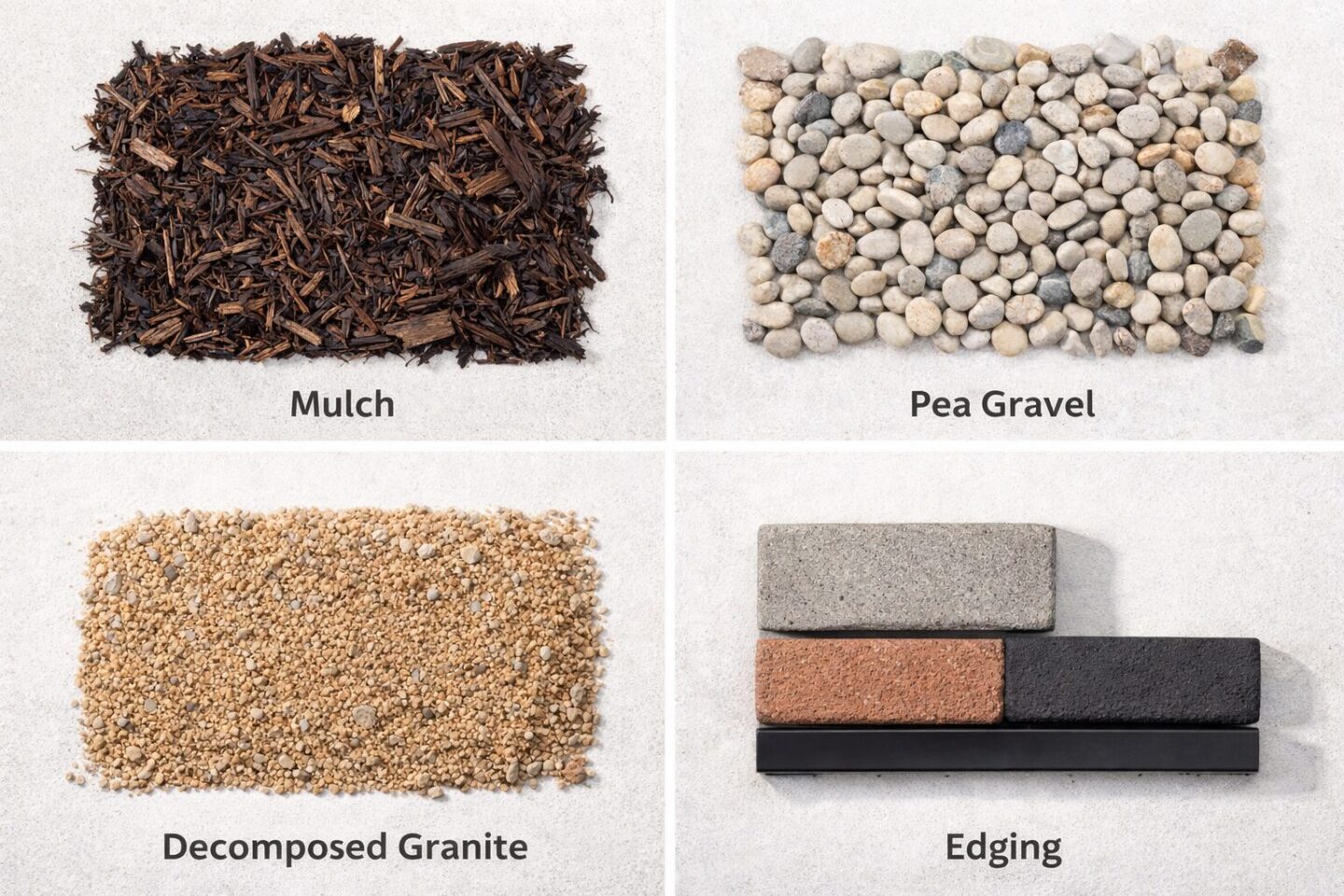
The right ground material does double duty: it looks polished and it blocks weeds. Here’s a quick comparison of the three most popular options.
| Material | Pros | Cons | Best Use |
| Mulch (wood/bark) | Affordable; enriches soil as it breaks down; holds moisture | Needs refreshing every 1–2 years; can wash away on slopes | Planting beds around shrubs and perennials |
| Pea gravel | Long-lasting; drains well; modern look | Migrates out of beds without edging; uncomfortable to walk on in large areas | Paths, borders, rock-garden accents |
| Decomposed granite | Compacts for stable surface; natural color blends easily | Can get muddy without stabilizer; limited color options | Walkways, driveway strips, open ground areas |
Edging options that hold their shape: Metal landscape edging, natural stone, and brick are the top performers. They keep mulch and gravel where they belong and give beds a finished look. Plastic edging is cheaper upfront but tends to buckle and pop up over time.
A note on weed barriers: Landscape fabric can help under gravel or rock, but use it thoughtfully. Under organic mulch, it can trap moisture and break down, creating a mess. In most planting beds, a thick layer of mulch alone is enough to suppress weeds without fabric.
A Simple Upkeep Routine (So It Stays Easy)
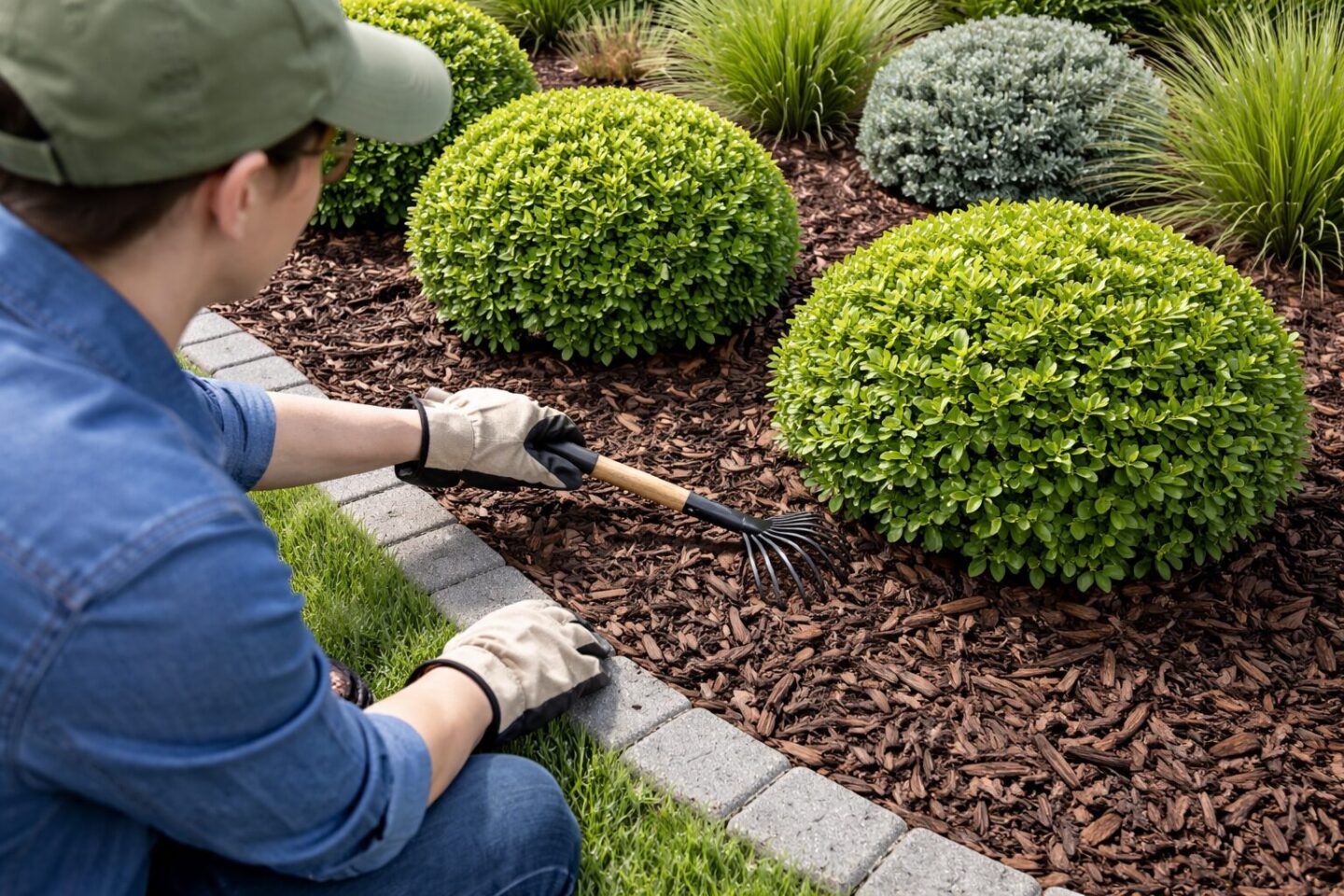
A low-maintenance yard still needs a little love—just not much. Here’s a realistic rhythm that keeps things sharp without turning into a project.
Weekly (about 10 minutes): Take a walk-through with a cup of coffee. Pull any weeds while they’re small—tiny weeds come out in seconds; big ones fight back. Scan for anything out of place, like a shifted paver or a knocked-over pot.
Monthly (about 30 minutes): Touch up bed edges with a half-moon edger or flat spade. Check mulch coverage—if you can see bare soil in spots, add a thin top-up. Rinse off dusty hardscape or pavers with a garden hose.
Seasonal (an hour or two, 2–3 times a year): Give shrubs a light shape-up in early spring and again in late summer if needed. Refresh mulch depth. Adjust your watering schedule for the season—less in fall and winter, more in peak summer. Cut back ornamental grasses once in late winter before new growth appears.
The whole point is to prevent problems instead of reacting to them. Spending ten minutes a week now saves a full weekend rescue mission later.
Budget Lanes (So You Can Start Small)
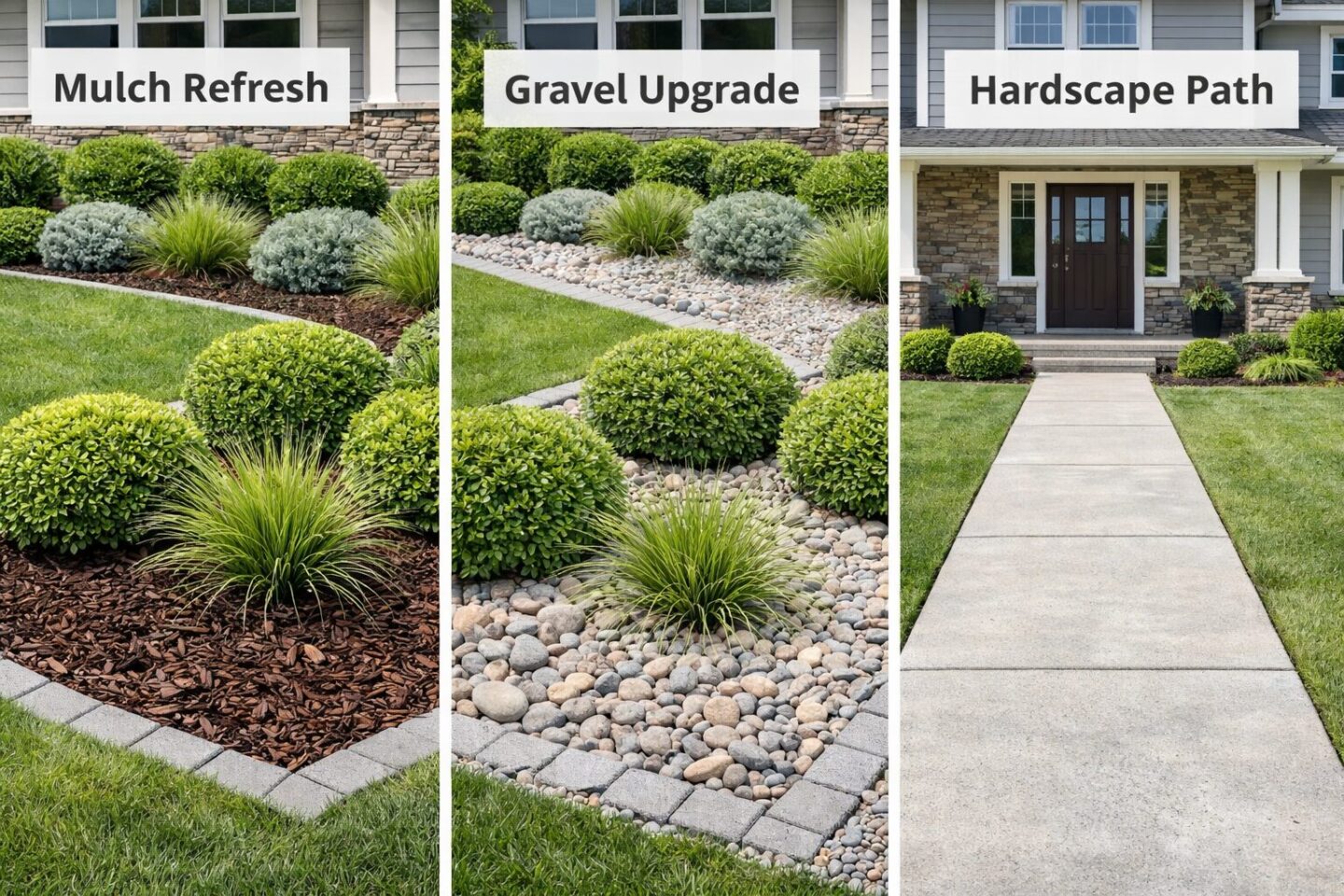
You don’t have to overhaul everything at once. Pick the tier that fits your wallet right now and build from there. All costs below are rough estimates and will vary by region.
Under $250 (the refresh): Re-edge your beds, lay fresh mulch, and add two or three strong, reliable plants. This alone can make a tired front yard look intentional.
$250–$1,000 (the upgrade): Expand a bed, add a gravel or decomposed granite strip, and upgrade your main walkway. You might also add a few low-voltage solar path lights.
$1,000+ (the transformation): Install hardscape elements like a new paver path or entry courtyard, set up a basic drip irrigation system, and plant larger specimens for faster impact. This tier is where your yard starts looking like a professional did it.
Note: Prices are estimates and depend on your location, material availability, and whether you DIY or hire help.
Frequently Asked Questions
What’s the easiest low-maintenance front yard landscaping idea that still looks finished?
A simple mulch bed with a clean metal edge and a small group of evergreen shrubs is the quickest way to look polished with almost no upkeep. Add one accent—like a potted plant by the door—and you’re done.
How do I reduce weeding the most?
Cover every inch of bare soil. A thick layer of mulch (or gravel in non-planted areas) blocks sunlight from reaching weed seeds. Pair that with dense groundcover plants and you’ll spend very little time weeding.
Is rock landscaping actually low maintenance?
Mostly, yes. Rock doesn’t decompose or need replacing, but leaves and debris show up more on rock than on mulch. You’ll want to blow or rake it occasionally. Adding a few plants softens the look and breaks up the monotony.
Can I keep some lawn and still cut maintenance?
Absolutely. Shrink the lawn to a simple rectangle or oval and convert the edges to mulch beds or gravel. Simpler lawn shapes are faster to mow and easier to edge.
What if my front yard is mostly shade?
Shade is an advantage, not a problem. Shade-loving groundcovers, ferns, and hostas thrive with less water and rarely need pruning. Lean into textured foliage instead of chasing blooms, and your shady yard will look lush year-round. Choose varieties suited to your specific climate zone.
Here’s the thing worth remembering: you don’t have to do it all in a single weekend. Swap one messy bed for a clean mulch zone. Replace a worn path with gravel. Plant three of the same shrub instead of twelve different ones. Small, deliberate changes add up fast, and each one buys back a little more of your free time.
If you’re ready to get started, we’d love to hear what you’re tackling first. Is it the path, the beds, the lawn, or the plants? Drop a comment and let us know—your idea might inspire someone else to finally take the first step.