


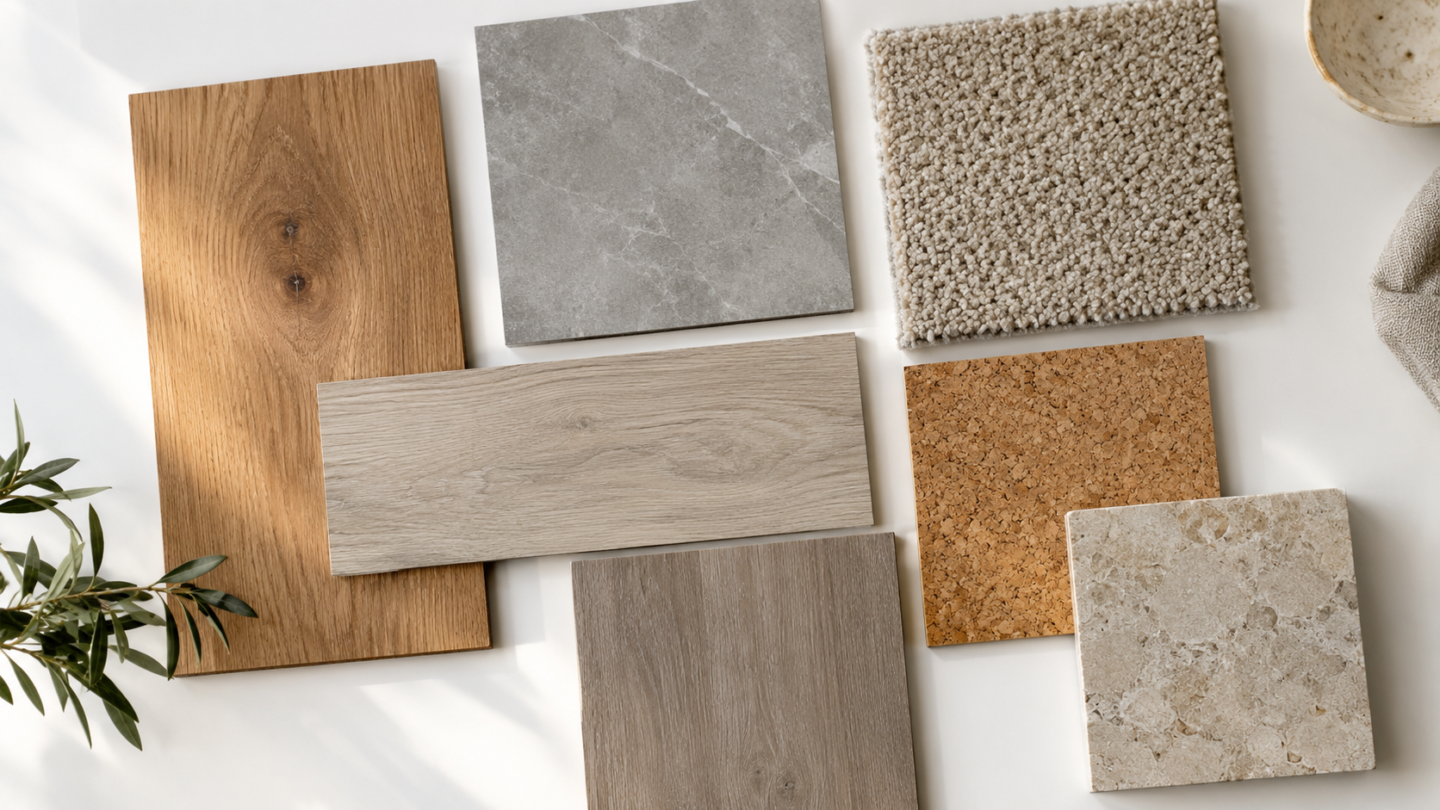
Choosing the right flooring can change how a room looks, feels, and functions. Some materials offer the warmth of natural wood, while others stand up to spills, heavy foot traffic, pets, and everyday wear. The best choice depends on your budget, the room you are updating, and how much maintenance you are willing to handle.
The different types of flooring available today include hardwood, engineered wood, laminate, luxury vinyl, tile, carpet, natural stone, cork, bamboo, concrete, and several other options. Each comes with its own benefits, limitations, and installation needs.
This guide compares 16 popular types of flooring, including their pros and cons, estimated costs, durability, and ideal uses. You will also learn how to choose flooring for each room, compare installation methods, avoid common mistakes, and find an option that suits your home and budget.
How to Choose the Right Flooring for Your Home

Before comparing flooring materials, think about how you use each room. A beautiful floor may not be the right choice if it cannot handle the moisture, traffic, or maintenance demands of that space.
Consider these six factors before making a decision.
- Moisture exposure: Bathrooms, laundry rooms, and basements need materials that can handle the conditions in those spaces.
- Foot traffic: Hallways, entryways, and family rooms benefit from durable surfaces that resist everyday wear.
- Comfort: Carpet and cork offer a softer feel, while tile and concrete are harder underfoot.
- Maintenance: Some floors need periodic sealing or refinishing, while others require routine sweeping and mopping.
- Budget: Compare material costs, installation, underlayment, subfloor preparation, and removal of existing flooring.
- Indoor air quality: Check product specifications and relevant low-emission certifications if you are concerned about volatile organic compounds (VOCs).
Your subfloor matters, too. Concrete, plywood, and existing tile have different preparation requirements. The condition and moisture level of the subfloor can determine which flooring products are suitable.
Different Types of Flooring at a Glance

Use this table to narrow your choices before exploring each material in detail.
| Flooring type | Main advantage | Main drawback | Best suited for |
|---|---|---|---|
| Solid hardwood | Can be refinished multiple times | Sensitive to moisture | Living rooms and bedrooms |
| Engineered hardwood | Real wood surface with a layered core | Refinishing depends on wear-layer thickness | Living rooms and upper-grade spaces |
| Laminate | Affordable wood-look designs | Standard products can swell when wet | Dry living areas and bedrooms |
| Luxury vinyl plank (LVP) | Many options have waterproof cores | Cannot be refinished | Kitchens, bathrooms, and basements when product-approved |
| Luxury vinyl tile (LVT) | Stone- and tile-look designs | Quality and wear resistance vary | Kitchens and living areas |
| Sheet vinyl | Few seams and a budget-friendly price | Can tear or gouge | Kitchens, bathrooms, and laundry rooms |
| Ceramic and porcelain tile | Durable and moisture-resistant | Hard and cold underfoot | Bathrooms, kitchens, and entryways |
| Natural stone | Unique patterns and textures | Often expensive and requires care | Entryways, kitchens, and living areas |
| Broadloom carpet | Soft and comfortable | Can trap dust and stains | Bedrooms and family rooms |
| Carpet tiles | Individual tiles can be replaced | Seams may be visible | Home offices and playrooms |
| Bamboo | Natural appearance and renewable source material | Quality and moisture performance vary | Bedrooms and living areas |
| Cork | Cushioned and naturally sound-absorbing | Can dent and fade | Bedrooms, offices, and selected kitchens |
| Concrete | Durable and low-maintenance when properly finished | Hard and potentially cold | Basements, garages, and modern interiors |
| Linoleum | Made with renewable raw materials | Needs suitable moisture protection | Kitchens and living areas |
| Epoxy | Seamless, easy-to-clean finish | Requires careful surface preparation | Garages and workshops |
| Rubber | Cushioned and slip-resistant in suitable products | Limited fit with some interior styles | Home gyms and play areas |
Performance depends on the exact product, installation, subfloor, and maintenance. No single flooring type is best for every home.
1. Solid Hardwood Flooring
Solid hardwood flooring is made from a single piece of wood, commonly oak, maple, walnut, or hickory. Its natural grain and warm appearance suit a wide range of interior styles, from traditional homes to modern spaces.
One of its biggest advantages is repairability. Many solid hardwood floors can be sanded and refinished several times, depending on plank thickness and the condition of the wood.
Best for: Living rooms, dining rooms, bedrooms, and hallways.
Pros
- Natural wood grain and a classic appearance.
- Can often be refinished to remove surface wear.
- Available in different wood species, stains, and plank widths.
- Can last for decades with proper care.
Cons
- Moisture can cause swelling, cupping, or gaps.
- Softer wood species may scratch and dent.
- Usually costs more than laminate or basic vinyl.
- Installation often requires professional skills.
Cost: Approximately $11 to $25 per square foot installed for many standard hardwood projects, with premium products costing more.
Maintenance: Sweep regularly, wipe up spills promptly, and use cleaners made for wood floors. Avoid excessive water.
Hardwood is a good choice if you value natural materials and long-term repairability. However, it is not the default choice for bathrooms or moisture-prone basements.
2. Engineered Hardwood Flooring
Engineered hardwood has a real wood surface bonded to a layered core. The construction helps it handle changes in humidity better than many solid wood floors, although it is not immune to moisture damage.
It provides the appearance of real hardwood and can work in spaces where solid planks are less suitable, including some installations over concrete.
Best for: Living rooms, bedrooms, dining rooms, and suitable kitchens.
Pros
- Real wood surface.
- Generally more dimensionally stable than solid hardwood.
- Available in a range of wood species and finishes.
- Some products can be refinished, depending on the thickness of the top wood layer.
Cons
- Refinishing options vary by product.
- Water damage can still affect the wood surface and core.
- Product quality and construction differ considerably.
- Installation requirements depend on the subfloor and product.
Cost: Approximately $7 to $20 per square foot installed.
Maintenance: Follow the manufacturer’s cleaning instructions and prevent standing water from reaching seams.
Choose engineered hardwood if you want the look of real wood with greater flexibility in installation. Check the wear-layer thickness before buying if future refinishing matters to you.
3. Laminate Flooring
Laminate flooring combines a decorative image layer with a protective wear layer and a dense fiberboard core. It can imitate oak, walnut, stone, and other materials without the price of many natural alternatives.
Most modern laminate floors use a click-lock installation system, which makes them popular with DIY renovators.
Best for: Bedrooms, living rooms, hallways, and playrooms.
Pros
- Often more affordable than hardwood.
- Available in many colors and patterns.
- Resistant to everyday surface wear when the product is well made.
- Click-lock products can be relatively easy to install.
Cons
- Standard laminate can swell when water reaches the core.
- Damaged planks generally cannot be refinished.
- Lower-quality products may sound hollow.
- The printed surface does not have the same texture as natural wood.
Cost: Approximately $4 to $14 per square foot installed.
Maintenance: Sweep or vacuum regularly and clean with a product approved for laminate. Avoid leaving standing water on the floor.
Some laminate products are designed with improved water resistance. However, water-resistant does not automatically mean waterproof, so check the manufacturer’s specifications and warranty.
4. Luxury Vinyl Plank (LVP)
Luxury vinyl plank flooring is designed to resemble wood planks. It usually consists of a printed decorative layer, a protective wear layer, and a vinyl construction that may include a rigid core.
Many LVP products have waterproof cores, making them useful in areas where spills are common. However, water can still affect the subfloor or enter through poorly installed edges and seams.
Best for: Kitchens, bathrooms, laundry rooms, entryways, and suitable basements.
Pros
- Many products have waterproof cores.
- Generally comfortable underfoot compared with ceramic tile.
- Available in realistic wood-look designs.
- Routine cleaning is straightforward.
- Some click-lock products are suitable for DIY installation.
Cons
- Cannot be sanded and refinished like wood.
- Heavy furniture may dent some products.
- Cheap designs can look artificial.
- Installation over an uneven subfloor can cause problems.
Cost: Approximately $4 to $16 per square foot installed.
Maintenance: Sweep regularly and use a compatible floor cleaner. Follow product instructions for furniture pads and protection against scratches.
LVP is worth considering if you want a wood-look floor that handles everyday spills well without the maintenance demands of natural hardwood.
5. Luxury Vinyl Tile (LVT)
Luxury vinyl tile uses a similar construction to LVP but typically comes in tile-shaped pieces. It can imitate marble, slate, ceramic tile, or concrete.
LVT offers more design flexibility than a simple wood-plank pattern. Some products are flexible and glue-down, while others use a rigid core and click-lock installation.
Best for: Kitchens, bathrooms, entryways, and living areas where the product is approved for the conditions.
Pros
- Available in stone-look and decorative patterns.
- Often easier to maintain than natural stone.
- Many products resist water and everyday stains.
- Can provide a softer feel than ceramic or porcelain tile.
Cons
- Cannot be refinished.
- Product quality and wear-layer thickness vary.
- Heavy furniture can cause indentations.
- Subfloor preparation remains important.
Cost: Approximately $4 to $16 per square foot installed.
Maintenance: Sweep and damp-mop with an approved cleaner. Avoid abrasive tools that could damage the wear layer.
Choose LVT if you like the appearance of stone or tile but prefer a vinyl surface. Compare its wear layer, installation method, and warranty before deciding.
6. Sheet Vinyl Flooring
Sheet vinyl is sold in large rolls, often in widths of six or twelve feet. Because it can cover a room with relatively few seams, it is a practical option for spaces exposed to everyday spills.
It is available in designs that imitate wood, stone, and ceramic tile.
Best for: Kitchens, bathrooms, laundry rooms, and utility spaces.
Pros
- Usually one of the more affordable flooring options.
- Fewer seams can reduce the number of places water may enter.
- Softer underfoot than many hard tile surfaces.
- Easy to clean with suitable products.
Cons
- Can tear, gouge, or puncture.
- Repairs may be difficult to conceal.
- Large sheets can be challenging to install accurately.
- Some designs have a less realistic appearance than premium vinyl products.
Cost: Approximately $2 to $7 per square foot installed.
Maintenance: Sweep regularly, wipe up spills, and use a compatible cleaner.
Sheet vinyl is worth considering when affordability and a low-seam surface are more important than the appearance of individual planks or tiles.
7. Ceramic and Porcelain Tile
Ceramic and porcelain tiles are made from fired clay. Porcelain is generally denser and less porous than standard ceramic tile, making it a popular choice for areas exposed to moisture.
Both are available in a wide range of colors, sizes, finishes, and patterns, including designs that resemble wood or natural stone.
Best for: Bathrooms, kitchens, entryways, laundry rooms, and mudrooms.
Pros
- Durable when properly installed.
- Resistant to water when the tile system is correctly designed and maintained.
- Available in many styles and sizes.
- Suitable products can work with radiant floor heating.
Cons
- Hard and cold underfoot without heating or rugs.
- Grout needs cleaning and may require sealing.
- Installation can be labor-intensive.
- Some finishes become slippery when wet.
Cost: Approximately $10 to $50 per square foot installed, depending on the tile and project complexity.
Maintenance: Sweep or vacuum to remove grit, clean with a compatible product, and maintain grout as recommended.
For bathrooms and kitchens, consider slip resistance as well as water resistance. The tile surface, grout, drainage, and installation all affect how the floor performs.
8. Natural Stone Flooring
Natural stone flooring includes marble, slate, travertine, granite, and limestone. Each stone has its own grain, color variations, porosity, and maintenance requirements.
Because natural stone forms with unique patterns, no two floors look exactly alike. The trade-off is that some stones need regular sealing and more careful cleaning.
Best for: Entryways, living rooms, kitchens, and selected bathrooms.
Pros
- Distinctive natural patterns.
- Can last for decades with proper installation and care.
- Works with many classic and contemporary interior styles.
- Some stone products are suitable for radiant heating.
Cons
- Material and installation costs can be high.
- Porous stones may need periodic sealing.
- Some stones can stain or react to acidic cleaners.
- Hardness and slip resistance vary by stone and finish.
Cost: Approximately $10 to $40 per square foot installed for many projects, with premium stone installations costing more.
Maintenance: Use a cleaner suitable for the specific stone. Follow professional guidance on sealing and stain removal.
Natural stone is a strong option when appearance and material character are priorities. Before buying, ask about slip resistance, sealing, and the long-term care the particular stone requires.
9. Broadloom Carpet
Broadloom carpet is installed wall to wall over a suitable underlay. It adds warmth, softens a room, and absorbs sound, making it especially appealing in bedrooms and family spaces.
Carpet is available in different fibers, pile heights, textures, and colors. Synthetic fibers are often budget-friendly, while wool and some premium blends cost more.
Best for: Bedrooms, family rooms, stairs, and suitable finished basements.
Pros
- Soft and comfortable underfoot.
- Helps absorb sound.
- Available in many colors and textures.
- Some synthetic options are relatively affordable.
Cons
- Can collect dust, pet dander, and other particles.
- Spills may cause stains.
- Requires regular vacuuming.
- Unsuitable for areas with frequent standing water.
Cost: Approximately $2 to $8 per square foot installed for many projects.
Maintenance: Vacuum regularly and treat spills promptly according to the manufacturer’s instructions. Professional cleaning may be needed periodically.
Carpet can be a good choice for quiet, comfortable spaces. For homes with allergies, consider individual sensitivities, carpet construction, cleaning routines, and the quality of indoor air rather than assuming one flooring material will solve the problem.
10. Carpet Tiles
Carpet tiles are individual carpet squares that fit together to cover a floor. If one tile becomes stained or damaged, you may be able to replace that piece instead of removing the entire carpet.
They are available in different colors and patterns, making them useful for offices and multipurpose rooms.
Best for: Home offices, playrooms, finished basements, and rental properties.
Pros
- Individual tiles can be replaced.
- Some products are easy to install.
- Patterns can be created using different colors.
- Useful for rooms that need occasional repairs.
Cons
- Seams may be visible.
- Poor installation can cause movement.
- Carpet fibers still need regular cleaning.
- Adhesive requirements vary by product and subfloor.
Cost: Approximately $2 to $8 per square foot installed, depending on the product and preparation.
Maintenance: Vacuum regularly and replace damaged tiles when needed.
Carpet tiles are especially useful where a practical, repairable surface matters more than the seamless appearance of broadloom carpet.
11. Bamboo Flooring
Bamboo flooring is manufactured from bamboo grass. Depending on the process, the product may use horizontal, vertical, or strand-woven construction.
Strand-woven bamboo is often very hard, but performance varies by manufacturer, finish, and construction. Bamboo is also marketed as a renewable material because the plant can regenerate after harvesting.
Best for: Bedrooms, living rooms, and home offices.
Pros
- Distinctive grain and a natural appearance.
- Some products offer strong resistance to everyday wear.
- Bamboo is a rapidly renewable plant.
- Certain products can be refinished.
Cons
- Quality varies widely.
- Humidity and moisture can cause expansion or warping.
- Adhesives and finishes differ in emissions.
- Refinishing depends on product construction.
Cost: Approximately $7 to $17 per square foot installed.
Maintenance: Clean with approved products, control indoor humidity, and protect the floor from standing water.
If environmental impact matters to you, look beyond the material name. Ask about manufacturing practices, adhesives, emissions testing, and relevant environmental certifications.
12. Cork Flooring
Cork flooring is made from the bark of cork oak trees. Harvesting the bark does not normally require cutting down the tree, which makes cork a renewable material when sourced responsibly.
Its natural cushioning can make it more comfortable than many hard flooring materials. Cork also helps absorb sound, which can be useful in bedrooms and home offices.
Best for: Bedrooms, home offices, playrooms, and selected kitchens.
Pros
- Naturally cushioned underfoot.
- Helps reduce impact noise.
- Made from renewable source material.
- Offers a warm, distinctive appearance.
Cons
- Heavy furniture can leave dents.
- Sunlight can cause fading or color changes.
- Moisture protection depends on the product and finish.
- Fewer styles are available than with vinyl or laminate.
Cost: Approximately $5 to $15 per square foot installed.
Maintenance: Follow the manufacturer’s guidance for sealing, cleaning, furniture protection, and moisture control.
Cork is worth considering if comfort and sound absorption are priorities. Choose a product specifically rated for the intended room, particularly if spills or humidity are concerns.
13. Sealed or Polished Concrete Flooring
Concrete flooring uses an existing concrete slab as the finished surface. The slab may be polished, stained, or coated to achieve different appearances.
It suits modern, industrial, and minimalist interiors. Where a suitable concrete slab already exists, finishing it may reduce the need for a separate floor covering.
Best for: Basements, garages, lofts, utility spaces, and selected kitchens.
Pros
- Durable when correctly installed and maintained.
- Easy to clean once appropriately finished.
- Can be polished or stained for different looks.
- May work with radiant floor heating.
Cons
- Hard on feet and joints during long periods of standing.
- Can feel cold without heating or rugs.
- May crack as the building or slab moves.
- Moisture conditions must be assessed before adding coatings or coverings.
Cost: Approximately $6 to $12 per square foot for many concrete flooring projects, although decorative finishes and repairs can increase the cost.
Maintenance: Follow the coating or finish manufacturer’s instructions. Check for cracks, moisture problems, and worn sealers.
Concrete can be a practical long-term surface, but the slab needs proper assessment before installation or refinishing work begins.
14. Linoleum Flooring
True linoleum is different from vinyl. It is typically manufactured using linseed oil, wood flour, cork or other fillers, mineral pigments, and a backing material.
Linoleum has been used for decades and is available in a range of colors and patterns. Its composition makes it appealing to buyers looking for flooring made with renewable raw materials.
Best for: Kitchens, living areas, craft rooms, and other spaces approved by the manufacturer.
Pros
- Made with renewable raw materials.
- Available in many colors and patterns.
- Can be durable with suitable care.
- Surface wear may be less noticeable in some products because color extends through the material.
Cons
- Can be damaged by excessive moisture.
- Some products require periodic maintenance or protective treatment.
- Fewer retailers carry it than common vinyl flooring.
- Sunlight can cause color changes.
Cost: Approximately $3 to $11 per square foot installed.
Maintenance: Use compatible cleaning products and follow the manufacturer’s guidance on sealing, moisture protection, and repairs.
Linoleum is worth considering if you prefer a traditional resilient floor with a different material composition from vinyl. Confirm the product type before purchasing, since the two names are often confused.
15. Epoxy Flooring
Epoxy flooring is a coating system applied to a properly prepared concrete surface. It creates a smooth, continuous finish and is often used in garages, workshops, and utility spaces.
Different systems offer different levels of chemical resistance, abrasion resistance, and decorative effects. The result depends heavily on surface preparation and the coating selected.
Best for: Garages, workshops, storage rooms, and some utility areas.
Pros
- Seamless surface that is easy to clean.
- Can resist many common stains and chemicals when properly specified.
- Available in solid colors and decorative finishes.
- Can protect suitable concrete surfaces.
Cons
- Surface preparation is essential.
- Moisture in the slab can cause coating failure.
- Some products require careful handling and ventilation during installation.
- Scratches, chips, or peeling may require repair.
Cost: Approximately $4 to $10 per square foot installed for many epoxy flooring projects.
Maintenance: Sweep away grit, clean spills promptly, and use cleaners compatible with the coating.
Epoxy can work well in garages and workshops, but it is not interchangeable with every concrete coating. Check the intended use, surface preparation requirements, curing time, and moisture limits.
16. Rubber Flooring
Rubber flooring is made from natural rubber, synthetic rubber, or a blend of materials. It is often supplied in rolls, tiles, or interlocking pieces.
Its cushioning makes it useful in spaces where people exercise, stand for extended periods, or need a more forgiving surface.
Best for: Home gyms, exercise rooms, play areas, and selected utility spaces.
Pros
- Cushioned underfoot.
- Offers good traction in suitable products.
- Helps absorb impact and noise.
- Available in rolls, tiles, and interlocking formats.
Cons
- Some products have a noticeable odor when new.
- Heavy equipment can leave marks in some materials.
- Appearance may not suit every living space.
- Performance depends on the rubber composition and finish.
Cost: Approximately $4 to $10 per square foot installed for many basic projects.
Maintenance: Sweep or vacuum regularly and use a cleaner approved for the specific rubber product.
For a home gym, check the thickness, impact protection, slip resistance, and compatibility with your exercise equipment. Not every rubber floor is suitable for every activity.
How Much Does Flooring Cost?
Flooring prices depend on the material, product quality, room size, installation method, and condition of the subfloor. The following estimates provide a starting point for budgeting.
Estimated flooring cost per square foot
| Flooring material | Approximate installed cost |
|---|---|
| Sheet vinyl | $2 to $7 |
| Carpet | $2 to $8 |
| Epoxy flooring | $4 to $10 |
| Laminate | $4 to $14 |
| Luxury vinyl plank | $4 to $16 |
| Luxury vinyl tile | $4 to $16 |
| Bamboo | $7 to $17 |
| Engineered hardwood | $7 to $20 |
| Solid hardwood | $11 to $25 |
| Ceramic or porcelain tile | $10 to $50 |
| Natural stone | $10 to $40 |
| Cork | $5 to $15 |
| Concrete flooring | $6 to $12 |
| Linoleum | $3 to $11 |
| Rubber flooring | $4 to $10 |
* Prices can vary from time to time
These are broad US price ranges, not quotes. Actual costs can fall outside them, particularly for premium materials, complex patterns, extensive floor preparation, or specialty finishes. The estimates draw on published US flooring cost guides, including HomeGuide’s flooring installation estimates: https://homeguide.com/costs/flooring-installation-cost.
Your final project budget should also account for:
- Removal and disposal of existing flooring.
- Subfloor repairs or leveling.
- Moisture testing and moisture-control systems.
- Underlayment, adhesives, or mortar.
- Baseboards, trim, and transition strips.
- Furniture moving and other labor.
- Extra material for cuts, waste, and future repairs.
Budget tip: Compare quotes for the complete installed project rather than comparing material prices alone. A low-cost tile can still lead to an expensive project if installation and subfloor preparation are complex.
Which Flooring Is Best for Each Room?

Different rooms have different requirements. The right flooring for a bedroom may not be appropriate for a bathroom or basement.
| Room | Flooring options to consider | Main things to check |
|---|---|---|
| Kitchen | LVP, LVT, porcelain tile, sheet vinyl | Spills, cleaning, slip resistance |
| Bathroom | Porcelain tile, suitable LVP, sheet vinyl | Water exposure, seams, slip resistance |
| Living room | Hardwood, engineered wood, laminate, LVP, carpet | Style, traffic, comfort |
| Bedroom | Carpet, hardwood, engineered wood, cork | Warmth, sound, cleaning |
| Entryway | Porcelain tile, LVP, sealed concrete | Grit, wet shoes, durability |
| Basement | Approved LVP, tile, carpet tiles | Slab moisture and humidity |
| Home office | LVP, engineered wood, carpet tiles | Chair casters, noise, comfort |
| Home gym | Rubber flooring, suitable resilient flooring | Impact protection, equipment, grip |
| Garage | Epoxy coating, suitable concrete finish, rubber in selected areas | Vehicle traffic, chemicals, moisture |
Before choosing flooring for a basement, test the concrete using an appropriate method and follow the flooring manufacturer’s moisture requirements. A plastic sheet taped to the slab can provide a rough preliminary indication of moisture, but it is not a substitute for a proper moisture assessment.
Which Flooring Is Best for Your Needs?
If you are still comparing the different types of flooring, start with your biggest priority.
Best flooring for a tight budget
Sheet vinyl, carpet, and laminate can be affordable choices. Compare the full installed price, expected maintenance, and likely replacement needs rather than focusing only on the cost of the material.
Best flooring for pets and children
Quality LVP and suitable porcelain tile are worth considering because they are easy to clean and handle many everyday spills. Look for scratch resistance, slip resistance, and a surface that fits your household’s needs.
Best flooring for comfort
Carpet and cork offer cushioning. If you prefer a hard surface, consider how much time you spend standing and whether rugs or radiant heating would improve comfort.
Best flooring for longevity
Well-maintained hardwood, suitable porcelain tile, natural stone, and properly finished concrete can last for decades. Their longevity depends on installation quality, maintenance, and the conditions in which they are used.
Best flooring for natural materials
Solid hardwood, engineered hardwood, bamboo, cork, and true linoleum are options to explore. Their environmental impact varies with sourcing, manufacturing, adhesives, finishes, and expected service life.
Best flooring for moisture-prone rooms
Porcelain tile, suitable sheet vinyl, and approved waterproof-core vinyl products are common options. The complete installation must be suitable for the room, not just the flooring surface itself.
Flooring Installation Methods Explained
The installation method affects cost, durability, repairability, and whether a floor can be installed over a particular subfloor.
Floating installation
The flooring pieces connect to one another without being permanently attached to the subfloor. Many laminate and rigid-core vinyl products use this method.
Floating floors often suit DIY projects, but the subfloor must meet the product’s flatness and moisture requirements.
Glue-down installation
Adhesive secures the flooring to the subfloor. Some vinyl products and engineered wood floors use this method.
Adhesive choice, subfloor preparation, and moisture conditions are important. Incorrect installation can lead to movement, gaps, or adhesive failure.
Nail-down installation
Nails or staples secure compatible wood flooring to a suitable wood subfloor. Solid hardwood commonly uses this method.
It requires the correct subfloor construction, tools, and installation technique.
Mortar-set installation
Ceramic tile, porcelain tile, and some stone flooring are installed using an appropriate mortar or setting material.
This method requires careful layout, suitable surface preparation, and attention to tile spacing, grout, and movement joints.
Whatever the method, follow the product’s installation instructions. For wood flooring over concrete, the National Wood Flooring Association emphasizes moisture testing and compliance with the flooring and adhesive manufacturers’ requirements.
How to Maintain Different Types of Flooring
Good maintenance can extend the useful life of a floor and help it look better over time. The right routine depends on the material.
- Hardwood and engineered wood: Remove grit regularly, wipe up spills, and avoid excessive moisture.
- Laminate: Use approved cleaners and avoid standing water.
- Vinyl: Sweep or vacuum regularly and clean with a compatible product.
- Tile and stone: Clean grout and use products suitable for the tile or stone finish.
- Carpet and carpet tiles: Vacuum regularly, treat stains promptly, and arrange deeper cleaning when needed.
- Cork and bamboo: Follow the product’s moisture, cleaning, and sunlight protection guidelines.
- Concrete and epoxy: Clean away dirt and inspect the surface for cracks, worn coatings, or other damage.
- Linoleum and rubber: Use compatible cleaners and follow any specific maintenance or protective-treatment requirements.
For nearly every flooring type, doormats, felt furniture pads, and prompt spill cleanup help reduce wear.
Indoor air quality also deserves attention. If VOC emissions are a concern, check product documentation and relevant third-party certifications. The US Environmental Protection Agency lists certifications such as FloorScore and GREENGUARD among labels that may meet its criteria for certain flooring products. Certification indicates compliance with particular standards, not that a product is free from every potentially harmful substance. See the EPA’s Indoor AirPlus building product guidance.
7 Common Flooring Mistakes to Avoid
Even a good flooring material can disappoint if it is chosen or installed incorrectly.
1. Choosing appearance over performance
A floor may look perfect in a showroom but fail to suit your daily routine. Consider spills, pets, foot traffic, and cleaning needs before committing.
2. Ignoring moisture
Moisture can damage wood, laminate, adhesives, and subfloors. Assess the room and subfloor before installing any product.
3. Skipping sample testing
Colors and textures can look different under your home’s lighting. Bring samples home and view them beside your walls, cabinets, furniture, and trim.
4. Forgetting transitions and trim
Plan how flooring will meet other materials, doorways, stairs, and cabinets. Poor transitions can look untidy and create trip hazards.
5. Overlooking sound
Hard floors can transmit impact noise, particularly in multi-story homes. Suitable underlayment, rugs, and flooring choices can help manage sound.
6. Underestimating installation costs
Tile, stone, and some wood installations require skilled labor and careful preparation. Request detailed quotes that list materials, labor, removal, and subfloor work.
7. Ignoring product specifications
Check the warranty, approved rooms, installation instructions, moisture limits, cleaning requirements, and repair options. Do not assume that two products with similar appearances perform the same way.
Frequently Asked Questions About Different Types of Flooring
What are the most common types of flooring in homes?
Common choices include hardwood, engineered hardwood, laminate, luxury vinyl, ceramic and porcelain tile, carpet, and sheet vinyl. The best option depends on the room, budget, and expected wear.
What is the cheapest type of flooring?
Sheet vinyl and some carpet products are often among the most affordable options. Laminate can also be budget-friendly. Compare installed costs because preparation and labor can change the total considerably.
Which flooring lasts the longest?
Properly maintained hardwood, porcelain tile, natural stone, and suitable concrete finishes can last for decades. Actual lifespan depends on product quality, installation, maintenance, and exposure to moisture or heavy wear.
What is the difference between laminate and vinyl flooring?
Laminate usually has a decorative layer over a fiberboard core, while vinyl flooring uses a vinyl-based construction. Many vinyl products handle moisture better, but performance varies by product. Standard laminate can swell when water reaches its core.
Which flooring is easiest to install yourself?
Click-lock laminate and many rigid-core vinyl products are popular DIY options. Carpet tiles can also be straightforward to install. The best choice depends on your skills, the subfloor, and the manufacturer’s instructions.
Can you install new flooring over existing flooring?
Sometimes. The existing surface must be stable, clean, sufficiently flat, and compatible with the new flooring. Moisture, floor height, door clearance, and manufacturer requirements may prevent installation over the old surface.
Which flooring is best for uneven subfloors?
There is no universal answer. The subfloor may need leveling or repair before installation. Some floating floors tolerate small variations within specified limits, but no flooring type should be used to hide major unevenness or structural problems.
Which flooring is best for allergy sufferers?
There is no single best choice for everyone. Hard surfaces can be easier to clean than carpet, while carpet can retain particles until they are removed through cleaning. Consider your specific sensitivities, cleaning habits, and indoor air quality.
Is waterproof flooring completely waterproof?
Not necessarily. A waterproof core does not guarantee that water cannot reach the subfloor through seams, edges, transitions, or installation defects. Check the product’s specific claims and use requirements.
What flooring adds the most value to a home?
Hardwood is often valued for its appearance and potential to be refinished, but resale results depend on the local market, property type, buyer preferences, and the condition of the floor. No material guarantees a particular increase in home value.
How do I choose a flooring color that will not look dated?
Natural wood tones, balanced neutrals, and colors that work with your existing finishes can offer flexibility as your style changes. Test samples in different lighting and consider how easily the floor will coordinate with future furniture and wall colors.
Final Thoughts
The different types of flooring offer a wide range of choices for every budget, room, and design preference. Hardwood and engineered wood provide natural character, laminate offers affordable wood-look designs, and vinyl gives homeowners practical options for busy spaces. Tile, stone, carpet, cork, concrete, and other materials each serve different needs.
Before making your decision, compare the installed cost, moisture requirements, maintenance, comfort, and expected lifespan. Check the subfloor, read the manufacturer’s instructions, and request detailed installation quotes.
The right flooring is not necessarily the most expensive or fashionable option. It is the one that suits your home, supports your daily routine, and gives you the performance you need for years to come.
